
Israel's airspace has closed and reopened multiple times amid the Iran conflict in 2026, driven by US and Israeli strikes on Iranian targets followed by Tehran's missile and drone responses. As of mid-August 2026, the Tel Aviv FIR remains open with commercial flights operating, though EASA continues to advise caution due to renewed regional military activity after the earlier ceasefire breakdown. Official statements from Israeli transport and airport authorities in July emphasized no planned closures despite US refueling aircraft presence and broader tensions. Trader assessments hinge on escalation signals such as additional strikes, Iranian retaliation threats, or diplomatic pauses, alongside scheduled developments like potential summits or force posture changes that could trigger temporary shutdowns for security reasons. The volatile security environment keeps the probability of future closures sensitive to short-term military and diplomatic moves.
Eksperymentalne podsumowanie AI odwołujące się do danych Polymarket. To nie jest porada handlowa i nie ma wpływu na rozstrzyganie tego rynku. · Zaktualizowano$27,104,480 Wol.
August 31
3%
$27,104,480 Wol.
August 31
3%
A “major closure” is defined as a broad closure, cancellation, or complete suspension of commercial aviation across the entirety of Israeli civilian airspace or a region encompassing a majority of Israeli civilian airspace, including commercial flights transiting, arriving in, and departing from that airspace. A qualifying closure must apply generally to all flights across Israel or a qualifying subset of Israeli airspace. Limited cancellations, delays, temporary ground stops or isolated regional closures will not qualify. Limited exceptions to a broad closure, however, will not disqualify such a closure from counting (e.g. exceptions for certain pre-approved flights may be permitted).
Warnings, No-Fly-Zones, flight suspensions, or other flight restrictions imposed by airlines or countries other than Israel will not be sufficient for a “Yes” resolution.
Airspace closures which occur solely due to weather conditions will not qualify.
The primary resolution source for this market will be official information from Israeli aviation authorities; however, a consensus of credible reporting may also be used.
Rynek otwarty: Jun 29, 2026, 10:46 AM ET
Resolver
0x65070BE91...A “major closure” is defined as a broad closure, cancellation, or complete suspension of commercial aviation across the entirety of Israeli civilian airspace or a region encompassing a majority of Israeli civilian airspace, including commercial flights transiting, arriving in, and departing from that airspace. A qualifying closure must apply generally to all flights across Israel or a qualifying subset of Israeli airspace. Limited cancellations, delays, temporary ground stops or isolated regional closures will not qualify. Limited exceptions to a broad closure, however, will not disqualify such a closure from counting (e.g. exceptions for certain pre-approved flights may be permitted).
Warnings, No-Fly-Zones, flight suspensions, or other flight restrictions imposed by airlines or countries other than Israel will not be sufficient for a “Yes” resolution.
Airspace closures which occur solely due to weather conditions will not qualify.
The primary resolution source for this market will be official information from Israeli aviation authorities; however, a consensus of credible reporting may also be used.
Resolver
0x65070BE91...Israel's airspace has closed and reopened multiple times amid the Iran conflict in 2026, driven by US and Israeli strikes on Iranian targets followed by Tehran's missile and drone responses. As of mid-August 2026, the Tel Aviv FIR remains open with commercial flights operating, though EASA continues to advise caution due to renewed regional military activity after the earlier ceasefire breakdown. Official statements from Israeli transport and airport authorities in July emphasized no planned closures despite US refueling aircraft presence and broader tensions. Trader assessments hinge on escalation signals such as additional strikes, Iranian retaliation threats, or diplomatic pauses, alongside scheduled developments like potential summits or force posture changes that could trigger temporary shutdowns for security reasons. The volatile security environment keeps the probability of future closures sensitive to short-term military and diplomatic moves.
Eksperymentalne podsumowanie AI odwołujące się do danych Polymarket. To nie jest porada handlowa i nie ma wpływu na rozstrzyganie tego rynku. · Zaktualizowano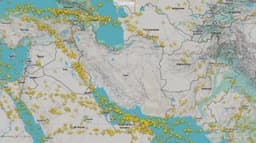
Uważaj na linki zewnętrzne.
Uważaj na linki zewnętrzne.
Często zadawane pytania