

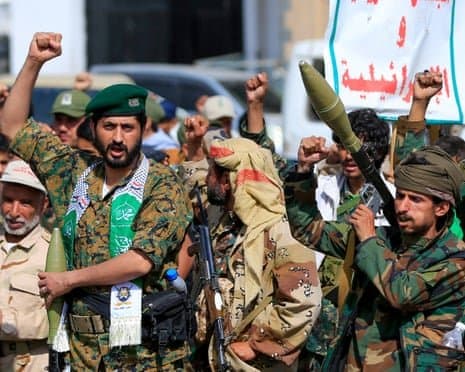
Saudi Arabia has navigated a broader US-Iran conflict that erupted earlier in 2026 by focusing on defensive intercepts and proxy responses rather than direct strikes on Iranian territory. Recent escalation centers on Iran-backed Houthi attacks from Yemen, including claimed missile and drone strikes on Saudi airbases, Riyadh-area targets, and Red Sea oil facilities in mid-September, met with Saudi airstrikes on Yemeni positions and emergency alerts in the capital. Parallel incidents involve Iraqi militia drone strikes on Saudi pipelines, while Iran has conveyed conditions for ending hostilities—including asset releases and blockade relief—through Qatari channels to Washington. Diplomatic meetings between Gulf states and Iran have been postponed amid these tensions, with Saudi actions emphasizing self-defense and support for Yemen's recognized government over direct confrontation. These developments underscore proxy dynamics and de-escalation signals as key influences on trader assessments of direct military action risks.
สรุปจาก AI ทดลองที่อ้างอิงข้อมูลจาก Polymarket ไม่ใช่คำแนะนำในการเทรดและไม่มีผลต่อการตัดสินตลาดนี้ · อัปเดตแล้วSaudi Arabia military action against Iran by...?
Saudi Arabia military action against Iran by...?
September 30
3%
October 31
6%
December 31
6%
$1,568 ปริมาณ
September 30
3%
October 31
6%
December 31
6%
A qualifying military action refers to an air strike or a surface-to-surface missile strike, initiated by Saudi Arabia, that directly impacts Iran. An air strike includes bombs, air-to-surface missiles, and air-launched drones. A surface-to-surface missile strike includes one-way attack drones and surface-to-surface missiles such as cruise or ballistic missiles.
The qualifying military action must be carried out by the armed forces of Saudi Arabia. Actions carried out by private military contractors, mercenaries, or proxy forces will not qualify. Where a qualifying action is carried out in the course of a coalition or multinational operation, it will qualify only if the armed forces of Saudi Arabia directly conducted the strike.
The following actions do not constitute a qualifying military action:
Munitions destroyed or intercepted before impact;
Surface-to-air missile strikes;
Small-arms fire;
Ground incursions;
Cyber operations;
Naval gunfire and artillery fire;
Howitzers, artillery pieces, mortars, and rocket artillery (e.g. MLRS systems);
Minor surface-to-surface strikes, including short range loitering munitions, FPV drones, and ATGM strikes;
Any threat, authorization, or announcement of force that has not been executed.
Any munition that is intercepted or destroyed before impact does not constitute a qualifying military action. Debris, fragments, or any wreckage from intercepted munitions that land on Iran do not constitute a military action regardless of any damage incurred.
“Iran” refers to the terrestrial territory of Iran, including its internal waters. Iran’s maritime territory and airspace are not encompassed. Where territorial borders are disputed, all territory claimed by and under the de facto control of Iran as of market creation will qualify.
The occurrence, attribution, and timing of a qualifying military action will be primarily determined based on a consensus of information available from the resolution sources. Where multiple sources conflict regarding the occurrence, attribution, or timing of a relevant military action, this market will remain open until the earlier of: i) the confirmation of the occurrence, attribution, and timing of the action based on a consensus of information available from the resolution sources or ii) 3 full calendar days (IRST) from the date of the first credibly reported evidence of the action. If this period would extend past the end date, this market will remain open to allow for 3 full calendar days to pass. At the end of the third calendar day, if conflicting reports remain, the incident will be adjudicated based on the totality of information available from the resolution sources at that time. No single statement, denial, or presentation of evidence will govern where it is contradicted by the totality of information.
The resolution sources for this market will be official information from the governments and militaries of Saudi Arabia and Iran and a consensus of credible reporting.
ตลาดเปิดเมื่อ: Sep 17, 2026, 10:26 AM ET
ผู้ตัดสินผล
0x65070BE91...A qualifying military action refers to an air strike or a surface-to-surface missile strike, initiated by Saudi Arabia, that directly impacts Iran. An air strike includes bombs, air-to-surface missiles, and air-launched drones. A surface-to-surface missile strike includes one-way attack drones and surface-to-surface missiles such as cruise or ballistic missiles.
The qualifying military action must be carried out by the armed forces of Saudi Arabia. Actions carried out by private military contractors, mercenaries, or proxy forces will not qualify. Where a qualifying action is carried out in the course of a coalition or multinational operation, it will qualify only if the armed forces of Saudi Arabia directly conducted the strike.
The following actions do not constitute a qualifying military action:
Munitions destroyed or intercepted before impact;
Surface-to-air missile strikes;
Small-arms fire;
Ground incursions;
Cyber operations;
Naval gunfire and artillery fire;
Howitzers, artillery pieces, mortars, and rocket artillery (e.g. MLRS systems);
Minor surface-to-surface strikes, including short range loitering munitions, FPV drones, and ATGM strikes;
Any threat, authorization, or announcement of force that has not been executed.
Any munition that is intercepted or destroyed before impact does not constitute a qualifying military action. Debris, fragments, or any wreckage from intercepted munitions that land on Iran do not constitute a military action regardless of any damage incurred.
“Iran” refers to the terrestrial territory of Iran, including its internal waters. Iran’s maritime territory and airspace are not encompassed. Where territorial borders are disputed, all territory claimed by and under the de facto control of Iran as of market creation will qualify.
The occurrence, attribution, and timing of a qualifying military action will be primarily determined based on a consensus of information available from the resolution sources. Where multiple sources conflict regarding the occurrence, attribution, or timing of a relevant military action, this market will remain open until the earlier of: i) the confirmation of the occurrence, attribution, and timing of the action based on a consensus of information available from the resolution sources or ii) 3 full calendar days (IRST) from the date of the first credibly reported evidence of the action. If this period would extend past the end date, this market will remain open to allow for 3 full calendar days to pass. At the end of the third calendar day, if conflicting reports remain, the incident will be adjudicated based on the totality of information available from the resolution sources at that time. No single statement, denial, or presentation of evidence will govern where it is contradicted by the totality of information.
The resolution sources for this market will be official information from the governments and militaries of Saudi Arabia and Iran and a consensus of credible reporting.
ผู้ตัดสินผล
0x65070BE91...Saudi Arabia has navigated a broader US-Iran conflict that erupted earlier in 2026 by focusing on defensive intercepts and proxy responses rather than direct strikes on Iranian territory. Recent escalation centers on Iran-backed Houthi attacks from Yemen, including claimed missile and drone strikes on Saudi airbases, Riyadh-area targets, and Red Sea oil facilities in mid-September, met with Saudi airstrikes on Yemeni positions and emergency alerts in the capital. Parallel incidents involve Iraqi militia drone strikes on Saudi pipelines, while Iran has conveyed conditions for ending hostilities—including asset releases and blockade relief—through Qatari channels to Washington. Diplomatic meetings between Gulf states and Iran have been postponed amid these tensions, with Saudi actions emphasizing self-defense and support for Yemen's recognized government over direct confrontation. These developments underscore proxy dynamics and de-escalation signals as key influences on trader assessments of direct military action risks.
สรุปจาก AI ทดลองที่อ้างอิงข้อมูลจาก Polymarket ไม่ใช่คำแนะนำในการเทรดและไม่มีผลต่อการตัดสินตลาดนี้ · อัปเดตแล้ว

ระวังลิงก์ภายนอก
ระวังลิงก์ภายนอก
คำถามที่พบบ่อย