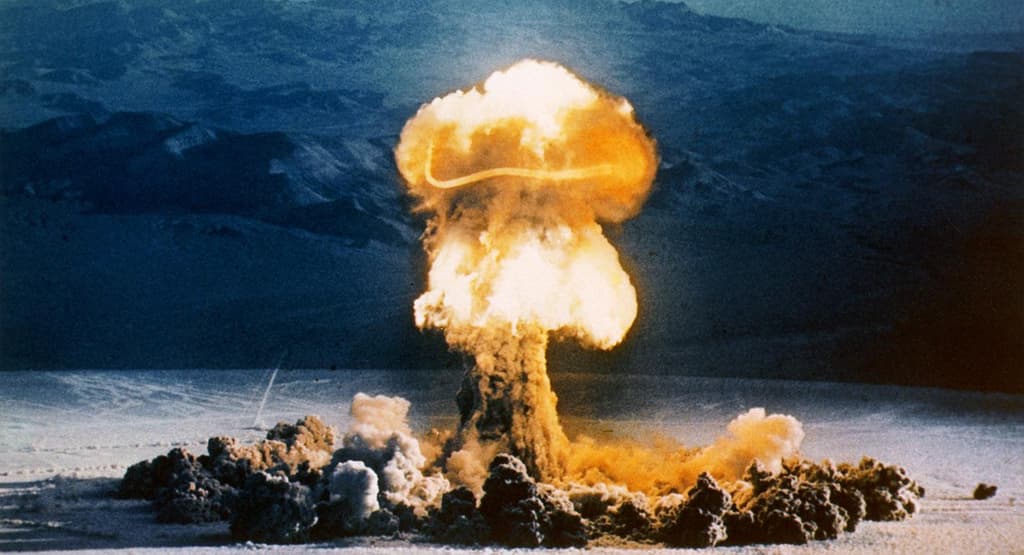
This market will resolve to "Yes" if Russia conducts a nuclear test by the listed date (ET). Otherwise, this market will resolve to "No".
A nuclear test is defined as the intentional non-combat detonation of a device by Russia that produces a nuclear chain reaction (fission or fusion), regardless of yield.
Accidents, radiological dispersal devices (bombs that spread radioactive material using conventional explosives such as "dirty bombs"), or actions by third parties will not count toward this market's resolution.
Tests not explicitly claimed by Russia may still qualify if a clear consensus of credible reporting attributes the nuclear detonation to Russia. For example, an unclaimed nuclear test analogous to the 1979 "Vela Incident" would count if credible reporting attributes it to Russia.
The resolution source for this market will be a broad consensus of credible reporting.Russia maintains a voluntary moratorium on nuclear explosion tests since its last detonation in 1990 at Novaya Zemlya, despite revoking CTBT ratification in 2023 and preparing the site for potential resumption. The freshest catalyst driving trader sentiment is the May 12 successful test launch of the RS-28 Sarmat ICBM—nuclear-capable but non-explosive—from Plesetsk to Kura range, hailed by President Putin as advancing deployment by late 2026 amid Ukraine war nuclear rhetoric. Earlier May 6–10 drills similarly showcased delivery systems. With New START expired in February, markets hinge on verifiable detonations amid mutual US-Russia accusations; CTBTO warnings and escalation signals in Ukraine remain key monitors for shifts.
This market will resolve to "Yes" if Russia conducts a nuclear test by the listed date (ET). Otherwise, this market will resolve to "No".
A nuclear test is defined as the intentional non-combat detonation of a device by Russia that produces a nuclear chain reaction (fission or fusion), regardless of yield.
Accidents, radiological dispersal devices (bombs that spread radioactive material using conventional explosives such as "dirty bombs"), or actions by third parties will not count toward this market's resolution.
Tests not explicitly claimed by Russia may still qualify if a clear consensus of credible reporting attributes the nuclear detonation to Russia. For example, an unclaimed nuclear test analogous to the 1979 "Vela Incident" would count if credible reporting attributes it to Russia.
The resolution source for this market will be a broad consensus of credible reporting.
This market will resolve to "Yes" if Russia conducts a nuclear test by the listed date (ET). Otherwise, this market will resolve to "No".
A nuclear test is defined as the intentional non-combat detonation of a device by Russia that produces a nuclear chain reaction (fission or fusion), regardless of yield.
Accidents, radiological dispersal devices (bombs that spread radioactive material using conventional explosives such as "dirty bombs"), or actions by third parties will not count toward this market's resolution.
Tests not explicitly claimed by Russia may still qualify if a clear consensus of credible reporting attributes the nuclear detonation to Russia. For example, an unclaimed nuclear test analogous to the 1979 "Vela Incident" would count if credible reporting attributes it to Russia.
The resolution source for this market will be a broad consensus of credible reporting.
Russia maintains a voluntary moratorium on nuclear explosion tests since its last detonation in 1990 at Novaya Zemlya, despite revoking CTBT ratification in 2023 and preparing the site for potential resumption. The freshest catalyst driving trader sentiment is the May 12 successful test launch of the RS-28 Sarmat ICBM—nuclear-capable but non-explosive—from Plesetsk to Kura range, hailed by President Putin as advancing deployment by late 2026 amid Ukraine war nuclear rhetoric. Earlier May 6–10 drills similarly showcased delivery systems. With New START expired in February, markets hinge on verifiable detonations amid mutual US-Russia accusations; CTBTO warnings and escalation signals in Ukraine remain key monitors for shifts.
Eksperimental na AI-generated summary na nire-reference ang Polymarket data. Hindi ito trading advice at wala itong papel sa kung paano nire-resolve ang market na ito. · Na-update
May 8 2026
Analysts note that the expiration of New START removes legal barrier to testing but political costs remain high
Commentary emphasizing that while the treaty’s end technically allows testing, the diplomatic fallout and lack of strategic need keep the probability low, cementing the market’s low price.
May 7 2026
Russia uses nuclear-capable Oreshnik missile in massive strike on Ukraine
September 30, 2026 dips to 5%1%
Russia launched a massive missile and drone strike on Ukraine, including the use of the nuclear-capable Oreshnik intermediate-range ballistic missile. While this demonstrated Russia’s willingness to deploy nuclear-capable weapons, no nuclear test was reported, and the strike was conventional in nature, influencing market perceptions downward for a nuclear test occurring soon.
May 6 2026
Russia and Ukraine envoys meet in Abu Dhabi for US-brokered peace talks
Diplomatic talks between Russia and Ukraine, brokered by the U.S., aimed at ending the nearly four-year war, signaled ongoing efforts to avoid escalation including nuclear testing. The talks coincided with the expiration of the last nuclear arms treaty, reinforcing market expectations against a nuclear test by Russia in the near term.
May 2 2026
U.S. Energy Secretary says any Trump‑ordered tests would be non‑nuclear
Clarification that any U.S. tests would not involve nuclear explosions reduced the perceived trigger for a Russian nuclear test, contributing to the final drop to 4%‑5%.
Apr 29 2026
Russia’s nuclear-capable Oreshnik missiles enter active service in Belarus
September 30, 2026 dips to 6%1%
Russia announced that its nuclear-capable Oreshnik missile system had entered active service in Belarus, demonstrating enhanced nuclear delivery capabilities. This development raised concerns about nuclear escalation but did not indicate an actual nuclear test, contributing to market uncertainty and price adjustments.
Apr 26 2026
Russia reiterates readiness to keep New START limits for another year
Putin’s reaffirmation that Russia would honor the treaty’s caps for an additional year if the U.S. does so removed a key catalyst for a test, pushing prices toward single‑digit levels.
Apr 22 2026
Russia’s deputy security council head Medvedev warns of “proportional” response to U.S. missile defenses
Medvedev’s warning that Russia would act proportionately if the U.S. pursues new missile defenses was interpreted as a diplomatic threat rather than an imminent test, further lowering market odds.
Apr 18 2026
Ukraine drone strike hits Russian oil facility in Tuapse
The attack raised concerns about Russia’s domestic stability and its need to conserve strategic assets, reducing the perceived incentive for a risky nuclear test.
Apr 13 2026
U.S. imposes naval blockade on Iranian ports amid fragile ceasefire with Iran
December 31, 2026 dips to 8%4%
The U.S. military blockade of Iranian ports near the Strait of Hormuz raised regional tensions and cast doubt on the fragile ceasefire, increasing global security concerns but not directly implicating Russia in nuclear testing. This heightened geopolitical risk may have influenced market perceptions of nuclear escalation risks generally.
Apr 12 2026
U.S. President Trump signals intent to resume nuclear testing
Trump’s public remarks about restarting U.S. nuclear tests heightened the risk of reciprocal Russian testing, initially spiking the market before the subsequent diplomatic reassurance pulled prices down further.
Apr 10 2026
Russian diplomat says Moscow will observe New START limits as long as the U.S. does
Dmitry Medvedev’s statement that Russia will stick to the treaty’s caps if the U.S. follows suit reassured markets that Moscow is not seeking to expand its arsenal through testing.
Apr 7 2026
Russia commits to adhering to New START nuclear arms limits despite treaty expiration
September 30, 2026 plunges to 10%41%
On April 7, 2026, Russian officials stated that Russia would continue to observe the limits of the expired New START treaty as long as the United States did the same. This commitment reduced market fears of imminent Russian nuclear testing, contributing to a sharp decline in the market price for a test by September 30, 2026.
Apr 5 2026
Russia says its nuclear‑capable Oreshnik missiles have entered service in Belarus
Moscow announced the operational deployment of the Oreshnik hypersonic system, a move seen as a deterrent rather than a prelude to testing, which helped push prices lower.
Apr 3 2026
Russia conducts missile strikes including nuclear-capable missiles but no nuclear test
June 30, 2026 plunges to 3%47%
Russia launched a massive missile strike on Ukraine using nuclear-capable missiles, heightening fears of escalation. Despite the use of nuclear-capable weapons, no nuclear test detonation occurred, leading to further market price declines for the June 30, 2026 outcome.
Apr 3 2026
U.S. and Russia’s nuclear arms pact expires, raising fears of a new arms race
The New START treaty expired on Feb. 5, and analysts warned that the lack of limits could trigger a competitive buildup, prompting traders to reassess the likelihood of a Russian test.
Apr 2 2026
Russia launches massive missile and drone strike on Ukraine including nuclear-capable missile
June 30, 2026 plunges to 2%48%
On April 2, 2026, Russia conducted a large-scale missile and drone attack on Ukraine, using a nuclear-capable intermediate-range ballistic missile. While this demonstrated Russia's nuclear-capable strike capability, it was not a nuclear test, contributing to market price drops as fears of an actual nuclear test diminished.
Apr 2 2026
Russia deploys nuclear-capable Oreshnik missiles but no nuclear test reported
December 31, 2026 plunges to 13%37%
Russia announced the active service deployment of nuclear-capable Oreshnik missiles in Belarus, increasing nuclear tensions. However, no nuclear test was conducted or reported, contributing to the market's reassessment and price drop for the December 31, 2026 outcome.
Apr 2 2026
No credible reports of Russia conducting nuclear test amid heightened tensions
December 31, 2026 plunges to 9%42%
Despite military escalations and deployment of nuclear-capable weapons, no credible reports or confirmations emerged of Russia conducting a nuclear test during the analysis window. This absence of evidence led to a significant market reassessment and price decline for the likelihood of a nuclear test by Russia by the listed dates.
Apr 1 2026
No credible reports of Russian nuclear test emerge amid heightened tensions
September 30, 2026 plunges to 10%41%
Despite increased military activity and deployment of nuclear-capable missiles by Russia, no credible news or official confirmation of a nuclear test by Russia was reported during the analysis window. This absence of evidence led to a sharp decline in market prices for the likelihood of a Russian nuclear test by September 30, 2026.
Apr 1 2026
Russia deploys nuclear-capable Oreshnik missiles in Belarus amid Ukraine conflict
September 30, 2026 drops to 46%5%
On April 1, 2026, Russia announced that its nuclear-capable Oreshnik missile system had entered active service in Belarus, signaling a strategic military escalation. This deployment raised concerns about potential nuclear use but did not constitute a nuclear test, leading to initial market uncertainty reflected in prices around this date.
This market will resolve to "Yes" if Russia conducts a nuclear test by the listed date (ET). Otherwise, this market will resolve to "No".
A nuclear test is defined as the intentional non-combat detonation of a device by Russia that produces a nuclear chain reaction (fission or fusion), regardless of yield.
Accidents, radiological dispersal devices (bombs that spread radioactive material using conventional explosives such as "dirty bombs"), or actions by third parties will not count toward this market's resolution.
Tests not explicitly claimed by Russia may still qualify if a clear consensus of credible reporting attributes the nuclear detonation to Russia. For example, an unclaimed nuclear test analogous to the 1979 "Vela Incident" would count if credible reporting attributes it to Russia.
The resolution source for this market will be a broad consensus of credible reporting.Russia maintains a voluntary moratorium on nuclear explosion tests since its last detonation in 1990 at Novaya Zemlya, despite revoking CTBT ratification in 2023 and preparing the site for potential resumption. The freshest catalyst driving trader sentiment is the May 12 successful test launch of the RS-28 Sarmat ICBM—nuclear-capable but non-explosive—from Plesetsk to Kura range, hailed by President Putin as advancing deployment by late 2026 amid Ukraine war nuclear rhetoric. Earlier May 6–10 drills similarly showcased delivery systems. With New START expired in February, markets hinge on verifiable detonations amid mutual US-Russia accusations; CTBTO warnings and escalation signals in Ukraine remain key monitors for shifts.
This market will resolve to "Yes" if Russia conducts a nuclear test by the listed date (ET). Otherwise, this market will resolve to "No".
A nuclear test is defined as the intentional non-combat detonation of a device by Russia that produces a nuclear chain reaction (fission or fusion), regardless of yield.
Accidents, radiological dispersal devices (bombs that spread radioactive material using conventional explosives such as "dirty bombs"), or actions by third parties will not count toward this market's resolution.
Tests not explicitly claimed by Russia may still qualify if a clear consensus of credible reporting attributes the nuclear detonation to Russia. For example, an unclaimed nuclear test analogous to the 1979 "Vela Incident" would count if credible reporting attributes it to Russia.
The resolution source for this market will be a broad consensus of credible reporting.
This market will resolve to "Yes" if Russia conducts a nuclear test by the listed date (ET). Otherwise, this market will resolve to "No".
A nuclear test is defined as the intentional non-combat detonation of a device by Russia that produces a nuclear chain reaction (fission or fusion), regardless of yield.
Accidents, radiological dispersal devices (bombs that spread radioactive material using conventional explosives such as "dirty bombs"), or actions by third parties will not count toward this market's resolution.
Tests not explicitly claimed by Russia may still qualify if a clear consensus of credible reporting attributes the nuclear detonation to Russia. For example, an unclaimed nuclear test analogous to the 1979 "Vela Incident" would count if credible reporting attributes it to Russia.
The resolution source for this market will be a broad consensus of credible reporting.
Russia maintains a voluntary moratorium on nuclear explosion tests since its last detonation in 1990 at Novaya Zemlya, despite revoking CTBT ratification in 2023 and preparing the site for potential resumption. The freshest catalyst driving trader sentiment is the May 12 successful test launch of the RS-28 Sarmat ICBM—nuclear-capable but non-explosive—from Plesetsk to Kura range, hailed by President Putin as advancing deployment by late 2026 amid Ukraine war nuclear rhetoric. Earlier May 6–10 drills similarly showcased delivery systems. With New START expired in February, markets hinge on verifiable detonations amid mutual US-Russia accusations; CTBTO warnings and escalation signals in Ukraine remain key monitors for shifts.
Eksperimental na AI-generated summary na nire-reference ang Polymarket data. Hindi ito trading advice at wala itong papel sa kung paano nire-resolve ang market na ito. · Na-update
May 8 2026
Analysts note that the expiration of New START removes legal barrier to testing but political costs remain high
Commentary emphasizing that while the treaty’s end technically allows testing, the diplomatic fallout and lack of strategic need keep the probability low, cementing the market’s low price.
May 7 2026
Russia uses nuclear-capable Oreshnik missile in massive strike on Ukraine
September 30, 2026 dips to 5%1%
Russia launched a massive missile and drone strike on Ukraine, including the use of the nuclear-capable Oreshnik intermediate-range ballistic missile. While this demonstrated Russia’s willingness to deploy nuclear-capable weapons, no nuclear test was reported, and the strike was conventional in nature, influencing market perceptions downward for a nuclear test occurring soon.
May 6 2026
Russia and Ukraine envoys meet in Abu Dhabi for US-brokered peace talks
Diplomatic talks between Russia and Ukraine, brokered by the U.S., aimed at ending the nearly four-year war, signaled ongoing efforts to avoid escalation including nuclear testing. The talks coincided with the expiration of the last nuclear arms treaty, reinforcing market expectations against a nuclear test by Russia in the near term.
May 2 2026
U.S. Energy Secretary says any Trump‑ordered tests would be non‑nuclear
Clarification that any U.S. tests would not involve nuclear explosions reduced the perceived trigger for a Russian nuclear test, contributing to the final drop to 4%‑5%.
Apr 29 2026
Russia’s nuclear-capable Oreshnik missiles enter active service in Belarus
September 30, 2026 dips to 6%1%
Russia announced that its nuclear-capable Oreshnik missile system had entered active service in Belarus, demonstrating enhanced nuclear delivery capabilities. This development raised concerns about nuclear escalation but did not indicate an actual nuclear test, contributing to market uncertainty and price adjustments.
Apr 26 2026
Russia reiterates readiness to keep New START limits for another year
Putin’s reaffirmation that Russia would honor the treaty’s caps for an additional year if the U.S. does so removed a key catalyst for a test, pushing prices toward single‑digit levels.
Apr 22 2026
Russia’s deputy security council head Medvedev warns of “proportional” response to U.S. missile defenses
Medvedev’s warning that Russia would act proportionately if the U.S. pursues new missile defenses was interpreted as a diplomatic threat rather than an imminent test, further lowering market odds.
Apr 18 2026
Ukraine drone strike hits Russian oil facility in Tuapse
The attack raised concerns about Russia’s domestic stability and its need to conserve strategic assets, reducing the perceived incentive for a risky nuclear test.
Apr 13 2026
U.S. imposes naval blockade on Iranian ports amid fragile ceasefire with Iran
December 31, 2026 dips to 8%4%
The U.S. military blockade of Iranian ports near the Strait of Hormuz raised regional tensions and cast doubt on the fragile ceasefire, increasing global security concerns but not directly implicating Russia in nuclear testing. This heightened geopolitical risk may have influenced market perceptions of nuclear escalation risks generally.
Apr 12 2026
U.S. President Trump signals intent to resume nuclear testing
Trump’s public remarks about restarting U.S. nuclear tests heightened the risk of reciprocal Russian testing, initially spiking the market before the subsequent diplomatic reassurance pulled prices down further.
Apr 10 2026
Russian diplomat says Moscow will observe New START limits as long as the U.S. does
Dmitry Medvedev’s statement that Russia will stick to the treaty’s caps if the U.S. follows suit reassured markets that Moscow is not seeking to expand its arsenal through testing.
Apr 7 2026
Russia commits to adhering to New START nuclear arms limits despite treaty expiration
September 30, 2026 plunges to 10%41%
On April 7, 2026, Russian officials stated that Russia would continue to observe the limits of the expired New START treaty as long as the United States did the same. This commitment reduced market fears of imminent Russian nuclear testing, contributing to a sharp decline in the market price for a test by September 30, 2026.
Apr 5 2026
Russia says its nuclear‑capable Oreshnik missiles have entered service in Belarus
Moscow announced the operational deployment of the Oreshnik hypersonic system, a move seen as a deterrent rather than a prelude to testing, which helped push prices lower.
Apr 3 2026
Russia conducts missile strikes including nuclear-capable missiles but no nuclear test
June 30, 2026 plunges to 3%47%
Russia launched a massive missile strike on Ukraine using nuclear-capable missiles, heightening fears of escalation. Despite the use of nuclear-capable weapons, no nuclear test detonation occurred, leading to further market price declines for the June 30, 2026 outcome.
Apr 3 2026
U.S. and Russia’s nuclear arms pact expires, raising fears of a new arms race
The New START treaty expired on Feb. 5, and analysts warned that the lack of limits could trigger a competitive buildup, prompting traders to reassess the likelihood of a Russian test.
Apr 2 2026
Russia launches massive missile and drone strike on Ukraine including nuclear-capable missile
June 30, 2026 plunges to 2%48%
On April 2, 2026, Russia conducted a large-scale missile and drone attack on Ukraine, using a nuclear-capable intermediate-range ballistic missile. While this demonstrated Russia's nuclear-capable strike capability, it was not a nuclear test, contributing to market price drops as fears of an actual nuclear test diminished.
Apr 2 2026
Russia deploys nuclear-capable Oreshnik missiles but no nuclear test reported
December 31, 2026 plunges to 13%37%
Russia announced the active service deployment of nuclear-capable Oreshnik missiles in Belarus, increasing nuclear tensions. However, no nuclear test was conducted or reported, contributing to the market's reassessment and price drop for the December 31, 2026 outcome.
Apr 2 2026
No credible reports of Russia conducting nuclear test amid heightened tensions
December 31, 2026 plunges to 9%42%
Despite military escalations and deployment of nuclear-capable weapons, no credible reports or confirmations emerged of Russia conducting a nuclear test during the analysis window. This absence of evidence led to a significant market reassessment and price decline for the likelihood of a nuclear test by Russia by the listed dates.
Apr 1 2026
No credible reports of Russian nuclear test emerge amid heightened tensions
September 30, 2026 plunges to 10%41%
Despite increased military activity and deployment of nuclear-capable missiles by Russia, no credible news or official confirmation of a nuclear test by Russia was reported during the analysis window. This absence of evidence led to a sharp decline in market prices for the likelihood of a Russian nuclear test by September 30, 2026.
Apr 1 2026
Russia deploys nuclear-capable Oreshnik missiles in Belarus amid Ukraine conflict
September 30, 2026 drops to 46%5%
On April 1, 2026, Russia announced that its nuclear-capable Oreshnik missile system had entered active service in Belarus, signaling a strategic military escalation. This deployment raised concerns about potential nuclear use but did not constitute a nuclear test, leading to initial market uncertainty reflected in prices around this date.
Mag-ingat sa mga external link.
Mga Madalas na Tanong
Ang "Russia nuclear test sa pamamagitan ng...?" ay isang prediction market sa Polymarket na may 6 posibleng outcomes kung saan bumibili at nagbebenta ang mga trader ng shares batay sa kanilang pinaniniwalaan na mangyayari. Ang kasalukuyang nangunguna ay "Disyembre 31, 2026" sa 5%, sinusundan ng "Setyembre 30, 2026" sa 4%. Ang mga presyo ay sumasalamin sa real-time crowd-sourced probabilities. Halimbawa, ang isang share na naka-presyo sa 5¢ ay nagpapahiwatig na kolektibong itinatakda ng market ang 5% na tsansa sa outcome na iyon. Patuloy na nagbabago ang mga odds na ito habang tumutugon ang mga trader sa mga bagong development at impormasyon. Ang mga shares sa tamang outcome ay mare-redeem sa $1 bawat isa sa market resolution.
Sa ngayon, ang "Russia nuclear test sa pamamagitan ng...?" ay naka-generate ng $1.4 million sa kabuuang trading volume mula nang ilunsad ang market noong Nov 5, 2025. Ang antas na ito ng trading activity ay sumasalamin sa malakas na engagement mula sa Polymarket community at tumutulong na matiyak na ang kasalukuyang odds ay sinusuportahan ng malawak na pool ng mga market participant. Maaari mong subaybayan ang live price movements at mag-trade sa anumang outcome nang direkta sa pahinang ito.
Para mag-trade sa "Russia nuclear test sa pamamagitan ng...?," i-browse ang 6 available na outcomes na nakalista sa pahinang ito. Ang bawat outcome ay may kasalukuyang presyo na kumakatawan sa implied probability ng market. Para kumuha ng posisyon, piliin ang outcome na pinaniniwalaan mong pinaka-malamang, piliin ang "Yes" para mag-trade pabor dito o "No" para mag-trade laban dito, ilagay ang iyong halaga, at i-click ang "Trade." Kung tama ang iyong napiling outcome kapag na-resolve ang market, nagbabayad ang iyong "Yes" shares ng $1 bawat isa. Kung mali, nagbabayad ang mga ito ng $0. Maaari ka ring magbenta ng iyong shares anumang oras bago ang resolution kung gusto mong i-lock in ang kita o bawasan ang pagkalugi.
Isa itong wide-open market. Ang kasalukuyang nangunguna para sa "Russia nuclear test sa pamamagitan ng...?" ay "Disyembre 31, 2026" sa 5% lang, na may "Setyembre 30, 2026" na malapit sa likod sa 4%. Walang outcome na may malakas na mayorya, kaya nakikita ito ng mga trader bilang highly uncertain, na maaaring magbigay ng mga kakaibang trading opportunity. Nag-a-update ang mga odds na ito sa real-time, kaya i-bookmark ang pahinang ito para panoorin kung paano nag-e-evolve ang probabilities.
Ang mga resolution rules para sa "Russia nuclear test sa pamamagitan ng...?" ay tiyak na nagde-define kung ano ang kailangang mangyari para sa bawat outcome na maideklara bilang panalo — kasama ang mga opisyal na data source na ginagamit para matukoy ang resulta. Maaari mong i-review ang kumpletong resolution criteria sa "Rules" section sa pahinang ito sa itaas ng mga komento. Inirerekomenda namin na basahin nang mabuti ang mga patakaran bago mag-trade, dahil tinutukoy nila ang mga tiyak na kondisyon, edge cases, at mga source na namamahala kung paano nise-settle ang market na ito.
Oo. Hindi mo kailangang mag-trade para manatiling informed. Ang pahinang ito ay nagsisilbing live tracker para sa "Russia nuclear test sa pamamagitan ng...?." Nag-a-update ang outcome probabilities sa real-time habang pumasok ang mga bagong trade. Maaari mong i-bookmark ang pahinang ito at tingnan ang comments section para makita kung ano ang sinasabi ng ibang mga trader. Maaari mo ring gamitin ang time-range filters sa chart para makita kung paano nagbago ang odds sa paglipas ng panahon. Isang libre, real-time na bintana ito sa kung ano ang inaasahan ng market na mangyayari.
Ang Polymarket odds ay itinatakda ng mga tunay na trader na naglalagay ng tunay na pera sa kanilang mga paniniwala, na may tendensiyang maglabas ng mga tumpak na prediksiyon. Sa $1.4 million na na-trade sa "Russia nuclear test sa pamamagitan ng...?," pinagsasama-sama ng mga presyong ito ang kolektibong kaalaman at conviction ng libu-libong kalahok — na kadalasang mas mahusay kaysa sa mga poll, expert forecast, at tradisyonal na survey. Ang mga prediction market tulad ng Polymarket ay may malakas na track record ng accuracy, lalo na habang papalapit ang mga event sa kanilang resolution date. Halimbawa, ang Polymarket ay may one month accuracy score na 94%. Para sa pinakabagong stats sa prediction accuracy ng Polymarket, bisitahin ang accuracy page sa Polymarket.
Para ilagay ang iyong unang trade sa "Russia nuclear test sa pamamagitan ng...?," mag-sign up para sa libreng Polymarket account at i-fund ito gamit ang crypto, credit o debit card, o bank transfer. Kapag na-fund na ang iyong account, bumalik sa pahinang ito, piliin ang outcome na gusto mong i-trade, ilagay ang iyong halaga, at i-click ang "Trade." Kung bago ka sa prediction markets, i-click ang "How it works" link sa itaas ng anumang Polymarket page para sa mabilis na step-by-step walkthrough kung paano gumagana ang trading.
Sa Polymarket, ang presyo ng bawat outcome ay kumakatawan sa implied probability ng market. Ang presyong 5¢ para sa "Disyembre 31, 2026" sa "Russia nuclear test sa pamamagitan ng...?" market ay nangangahulugang kolektibong naniniwala ang mga trader na may halos 5% na tsansa na ang "Disyembre 31, 2026" ang magiging tamang resulta. Kung bibili ka ng "Yes" shares sa 5¢ at tama ang outcome, makakatanggap ka ng $1.00 per share — isang kita na 95¢ per share. Kung mali, ang mga share na iyon ay nagkakahalaga ng $0.
Ang naka-schedule na end date ng "Russia nuclear test sa pamamagitan ng...?" market ay lumipas na, pero hindi pa opisyal na na-resolve ang market. Ang end date ay nagpapahiwatig kung kailan inaasahang mangyayari o malalaman ang underlying event. Hindi ito ang sandali na hihinto ang trading. Ang market ay nananatiling bukas para sa trading hanggang opisyal na ma-resolve ang outcome sa pamamagitan ng resolution process. Maaari ka pa ring bumili, magbenta, o isara ang iyong posisyon habang pending ang resolution ng market. Tingnan ang resolution status tracker at "Rules" section sa pahinang ito para sa mga update sa resolution timeline.
Ang "Russia nuclear test sa pamamagitan ng...?" market ay may isang lumalaking diskusyon ng 7 mga komento kung saan nagbabahagi ang mga trader ng kanilang analysis, nag-debate ng mga outcome, at pinag-uusapan ang mga breaking development. Mag-scroll pababa sa comments section sa ibaba para basahin kung ano ang iniisip ng ibang kalahok. Maaari mo ring i-filter ayon sa "Top Holders" para makita kung saan nakaposisyon ang mga pinakamalaking trader ng market, o tingnan ang "Activity" tab para sa real-time feed ng mga trade.
Ang Polymarket ang pinakamalaking prediction market sa mundo, kung saan maaari kang manatiling informed at kumita mula sa iyong kaalaman sa mga real-world events. Bumibili at nagbebenta ang mga trader ng shares sa mga outcome para sa mga paksang mula pulitika at eleksyon hanggang crypto, finance, sports, tech, at kultura, kasama ang mga market tulad ng "Russia nuclear test sa pamamagitan ng...?." Ang mga presyo ay sumasalamin sa real-time, crowd-sourced probabilities na sinusuportahan ng financial conviction, na kadalasang nagbibigay ng mas mabilis at mas tumpak na signal kaysa sa mga poll, pundit, o tradisyonal na survey.
Mag-ingat sa mga external link.
Mga Madalas na Tanong