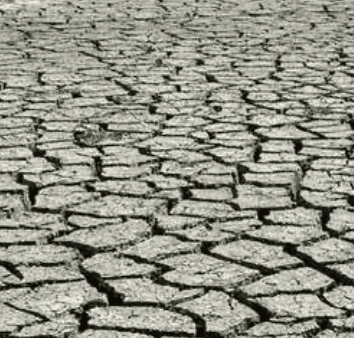
**A strengthening El Niño event, now forecast with >90% probability of becoming very strong through fall and winter 2026–27, is the dominant near-term driver shaping USDM D4 probabilities for early September.** Current conditions as of late August show D4 (the most severe category, typically <2nd percentile of historical moisture) limited primarily to portions of Idaho and scattered western and southern Plains/Rockies sites, with overall D1–D4 coverage near 47–48% of the contiguous US but D4 area only ~1.5–1.8%. NOAA’s September 2026 outlook favors above-normal precipitation across much of the western CONUS and southern tier due to El Niño composites and monsoon influences, supporting potential localized improvement or removal in the Southwest, while above-normal temperatures and drier signals favor persistence or modest expansion in the Pacific Northwest. These dynamics create tight differentiation among the closely matched leading outcomes (10+ states at 44.5%, 5–6 or 7–9 states at 38%), as D4 boundaries depend on precise precipitation deficits, soil moisture recovery, and USDM author delineation; rapid monsoon surges or frontal systems could shift state counts within days. The next USDM release and updated CPC monthly/seasonal outlooks will provide key resolution signals.
Tóm tắt AI thử nghiệm tham chiếu dữ liệu Polymarket. Đây không phải tư vấn giao dịch và không ảnh hưởng đến cách thị trường này được giải quyết. · Cập nhậtHow many states will be in D4 (Exceptional Drought) — week of September 1, 2026?
How many states will be in D4 (Exceptional Drought) — week of September 1, 2026?
10 or more states 44%
5-6 states 38%
7-9 states 38%
0 states 26%
0 states
26%
1-2 states
26%
3-4 states
26%
5-6 states
38%
7-9 states
38%
10 or more states
44%
10 or more states 44%
5-6 states 38%
7-9 states 38%
0 states 26%
0 states
26%
1-2 states
26%
3-4 states
26%
5-6 states
38%
7-9 states
38%
10 or more states
44%
Brackets: 0 / 1-2 / 3-4 / 5-6 / 7-9 / 10+. Exactly one bracket resolves "Yes".
The count ranges over all 48 coterminous states — the 48 states excluding Alaska and Hawaii. The District of Columbia and U.S. territories are not considered.
Each USDM release covers the seven-day period ending Tuesday at 8:00 AM ET and is published the following Thursday.
Resolution is based on the first published US Drought Monitor release for the listed week. Subsequent revisions will not be considered; the first published release is final.
The resolution source for this market is the US Drought Monitor at droughtmonitor.unl.edu.
Thị trường mở: Aug 27, 2026, 9:00 AM ET
Nguồn giải quyết
https://droughtmonitor.unl.edu/DmData/DataTables.aspxResolver
0x69c47De9D...Brackets: 0 / 1-2 / 3-4 / 5-6 / 7-9 / 10+. Exactly one bracket resolves "Yes".
The count ranges over all 48 coterminous states — the 48 states excluding Alaska and Hawaii. The District of Columbia and U.S. territories are not considered.
Each USDM release covers the seven-day period ending Tuesday at 8:00 AM ET and is published the following Thursday.
Resolution is based on the first published US Drought Monitor release for the listed week. Subsequent revisions will not be considered; the first published release is final.
The resolution source for this market is the US Drought Monitor at droughtmonitor.unl.edu.
Nguồn giải quyết
https://droughtmonitor.unl.edu/DmData/DataTables.aspxResolver
0x69c47De9D...**A strengthening El Niño event, now forecast with >90% probability of becoming very strong through fall and winter 2026–27, is the dominant near-term driver shaping USDM D4 probabilities for early September.** Current conditions as of late August show D4 (the most severe category, typically <2nd percentile of historical moisture) limited primarily to portions of Idaho and scattered western and southern Plains/Rockies sites, with overall D1–D4 coverage near 47–48% of the contiguous US but D4 area only ~1.5–1.8%. NOAA’s September 2026 outlook favors above-normal precipitation across much of the western CONUS and southern tier due to El Niño composites and monsoon influences, supporting potential localized improvement or removal in the Southwest, while above-normal temperatures and drier signals favor persistence or modest expansion in the Pacific Northwest. These dynamics create tight differentiation among the closely matched leading outcomes (10+ states at 44.5%, 5–6 or 7–9 states at 38%), as D4 boundaries depend on precise precipitation deficits, soil moisture recovery, and USDM author delineation; rapid monsoon surges or frontal systems could shift state counts within days. The next USDM release and updated CPC monthly/seasonal outlooks will provide key resolution signals.
Tóm tắt AI thử nghiệm tham chiếu dữ liệu Polymarket. Đây không phải tư vấn giao dịch và không ảnh hưởng đến cách thị trường này được giải quyết. · Cập nhật
Cẩn thận với liên kết bên ngoài.
Cẩn thận với liên kết bên ngoài.
Câu hỏi thường gặp