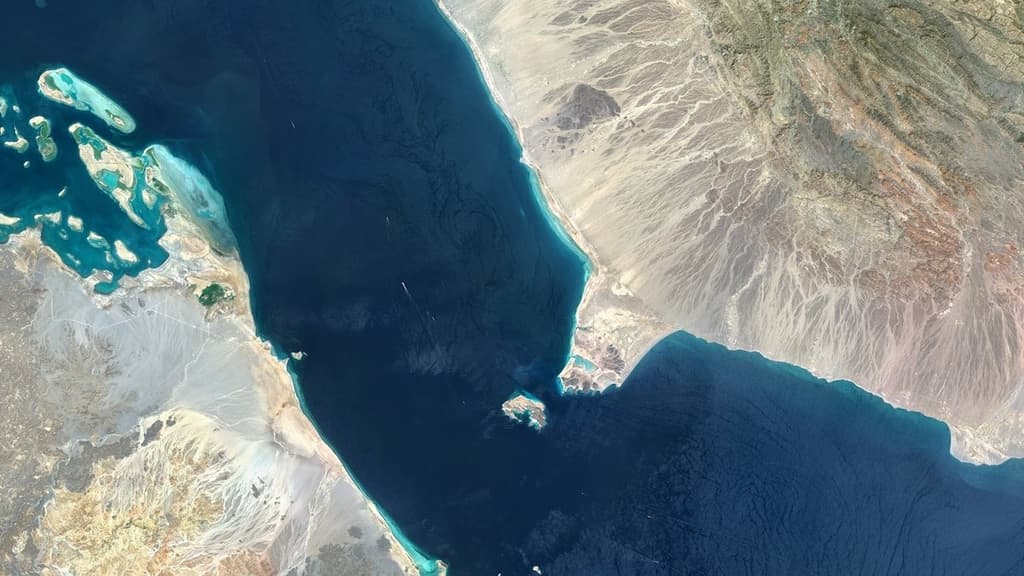
Recent Houthi threats, including the July 20, 2026, announcement of a blockade targeting Saudi-linked shipping through the Bab el-Mandeb Strait, triggered an immediate roughly 25-50% drop in transits from prior weekly levels near 350. Data from Clarksons and Kpler show volumes stabilizing around 260-270 transits per week by late July and early August, with daily averages falling to the low 30s amid heightened insurance costs, vessel rerouting around the Cape, and selective avoidance by major carriers. These geopolitical risks, compounded by broader Red Sea security concerns, have elevated freight and war-risk premiums while compressing throughput in a key chokepoint linking Asia-Europe trade routes. With outcomes clustered tightly between 180-219 and 220+, trader consensus reflects uncertainty over any modest rebound in the August 10 week versus sustained suppression or minor volatility from unresolved tensions. Key swing factors include the pace of carrier risk assessments, potential de-escalation signals, and real-time tracking of VLCC, bulk, and container movements.
Polymarket ডেটা রেফারেন্স করে পরীক্ষামূলক AI-জেনারেটেড সারাংশ। এটি ট্রেডিং পরামর্শ নয় এবং এই মার্কেট কীভাবে রেজলভ হয় তাতে কোনো ভূমিকা রাখে না। · আপডেটেডHow many ships transit Bab el-Mandeb Strait week of August 10?
How many ships transit Bab el-Mandeb Strait week of August 10?
180-199 35%
220+ 17%
<180 0
200-219 0
$12,247 Vol.
$12,247 Vol.
<180
32%
180-199
35%
200-219
38%
220+
35%
180-199 35%
220+ 17%
<180 0
200-219 0
$12,247 Vol.
$12,247 Vol.
<180
32%
180-199
35%
200-219
38%
220+
35%
Transit calls include container, dry bulk, roll-on/roll-off, general cargo, and tanker ships. Ships not reported by IMF Portwatch will not be considered.
This market will resolve as soon as all relevant data has been published. If the relevant data is not published within 14 calendar days of the specified date, this market will resolve based on the most recent data published up to that point.
In case of obvious data integrity issues (i.e., erroneous data), the market may remain open until the end of the third calendar day (ET) after the date on which such data is first released to allow for corrections. Data integrity issues refer only to clerical or other similar errors in the underlying data, and do not include cases where IMF Portwatch differs from alternative sources.
Only revisions to previously published data points made before all relevant data has been published will be considered.
The resolution source for this market will be IMF PortWatch, specifically the “Arrivals of Ships” data published for the Bab el-Mandeb Strait at https://portwatch.imf.org/pages/6b1814d64903461b98144a6cc25eb79c.
মার্কেট ওপেন হয়েছে: Aug 8, 2026, 12:07 PM ET
Resolver
0x69c47De9D...Transit calls include container, dry bulk, roll-on/roll-off, general cargo, and tanker ships. Ships not reported by IMF Portwatch will not be considered.
This market will resolve as soon as all relevant data has been published. If the relevant data is not published within 14 calendar days of the specified date, this market will resolve based on the most recent data published up to that point.
In case of obvious data integrity issues (i.e., erroneous data), the market may remain open until the end of the third calendar day (ET) after the date on which such data is first released to allow for corrections. Data integrity issues refer only to clerical or other similar errors in the underlying data, and do not include cases where IMF Portwatch differs from alternative sources.
Only revisions to previously published data points made before all relevant data has been published will be considered.
The resolution source for this market will be IMF PortWatch, specifically the “Arrivals of Ships” data published for the Bab el-Mandeb Strait at https://portwatch.imf.org/pages/6b1814d64903461b98144a6cc25eb79c.
Resolver
0x69c47De9D...Recent Houthi threats, including the July 20, 2026, announcement of a blockade targeting Saudi-linked shipping through the Bab el-Mandeb Strait, triggered an immediate roughly 25-50% drop in transits from prior weekly levels near 350. Data from Clarksons and Kpler show volumes stabilizing around 260-270 transits per week by late July and early August, with daily averages falling to the low 30s amid heightened insurance costs, vessel rerouting around the Cape, and selective avoidance by major carriers. These geopolitical risks, compounded by broader Red Sea security concerns, have elevated freight and war-risk premiums while compressing throughput in a key chokepoint linking Asia-Europe trade routes. With outcomes clustered tightly between 180-219 and 220+, trader consensus reflects uncertainty over any modest rebound in the August 10 week versus sustained suppression or minor volatility from unresolved tensions. Key swing factors include the pace of carrier risk assessments, potential de-escalation signals, and real-time tracking of VLCC, bulk, and container movements.
Polymarket ডেটা রেফারেন্স করে পরীক্ষামূলক AI-জেনারেটেড সারাংশ। এটি ট্রেডিং পরামর্শ নয় এবং এই মার্কেট কীভাবে রেজলভ হয় তাতে কোনো ভূমিকা রাখে না। · আপডেটেড
বাহ্যিক লিংক থেকে সাবধান।
বাহ্যিক লিংক থেকে সাবধান।
সচরাচর জিজ্ঞাসা