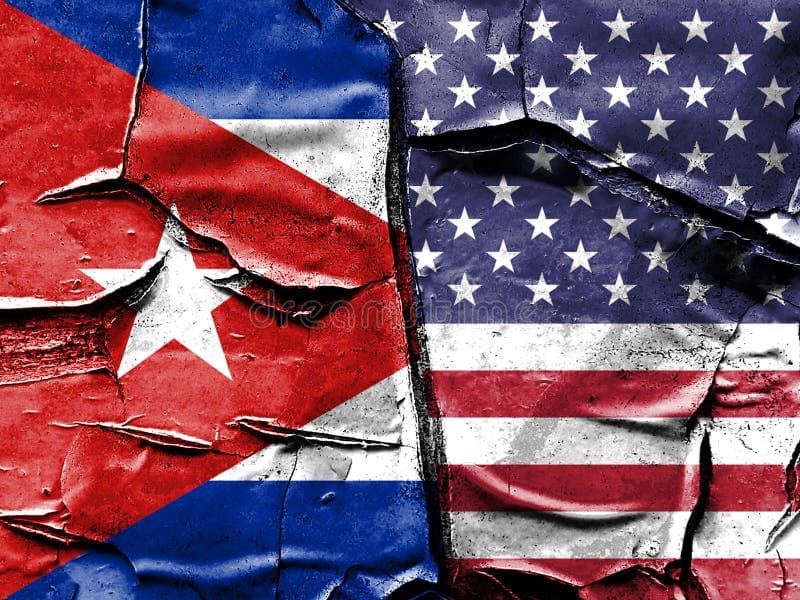
U.S. policy toward Cuba in 2026 centers on sustained economic pressure and sanctions rather than direct military action. Since January, the Trump administration has enforced a fuel blockade through executive orders, targeted sanctions on oil suppliers and Cuban military entities, and additional measures in May and August against arms procurement networks. Officials have framed regime change as a year-end objective achievable via negotiations or a "friendly takeover," while publicly noting the high costs and regional risks of invasion. Ongoing commitments in the Iran conflict limit available assets, and analysts assess a full-scale operation as the least probable among military options. Traders interpret the absence of large troop deployments or invasion staging, combined with continued diplomatic signaling and Cuban engagement in talks, as evidence that the 92.5% "No" consensus reflects the administration's preference for coercive diplomacy over territorial intervention through year-end.
Experimentelle KI-generierte Zusammenfassung mit Polymarket-Daten. Dies ist keine Handelsberatung und spielt keine Rolle bei der Auflösung dieses Marktes. · AktualisiertJa
$3,250,920 Vol.
$3,250,920 Vol.
Ja
$3,250,920 Vol.
$3,250,920 Vol.
For the purposes of this market, land de facto controlled by Cuba or the United States as market creation, will be considered the sovereign territory of that country.
The resolution source for this market will be a consensus of credible sources.
Markt eröffnet: Jan 4, 2026, 3:24 PM ET
Resolver
0x65070BE91...For the purposes of this market, land de facto controlled by Cuba or the United States as market creation, will be considered the sovereign territory of that country.
The resolution source for this market will be a consensus of credible sources.
Resolver
0x65070BE91...U.S. policy toward Cuba in 2026 centers on sustained economic pressure and sanctions rather than direct military action. Since January, the Trump administration has enforced a fuel blockade through executive orders, targeted sanctions on oil suppliers and Cuban military entities, and additional measures in May and August against arms procurement networks. Officials have framed regime change as a year-end objective achievable via negotiations or a "friendly takeover," while publicly noting the high costs and regional risks of invasion. Ongoing commitments in the Iran conflict limit available assets, and analysts assess a full-scale operation as the least probable among military options. Traders interpret the absence of large troop deployments or invasion staging, combined with continued diplomatic signaling and Cuban engagement in talks, as evidence that the 92.5% "No" consensus reflects the administration's preference for coercive diplomacy over territorial intervention through year-end.
Experimentelle KI-generierte Zusammenfassung mit Polymarket-Daten. Dies ist keine Handelsberatung und spielt keine Rolle bei der Auflösung dieses Marktes. · Aktualisiert


Vorsicht bei externen Links.
Vorsicht bei externen Links.
Häufig gestellte Fragen