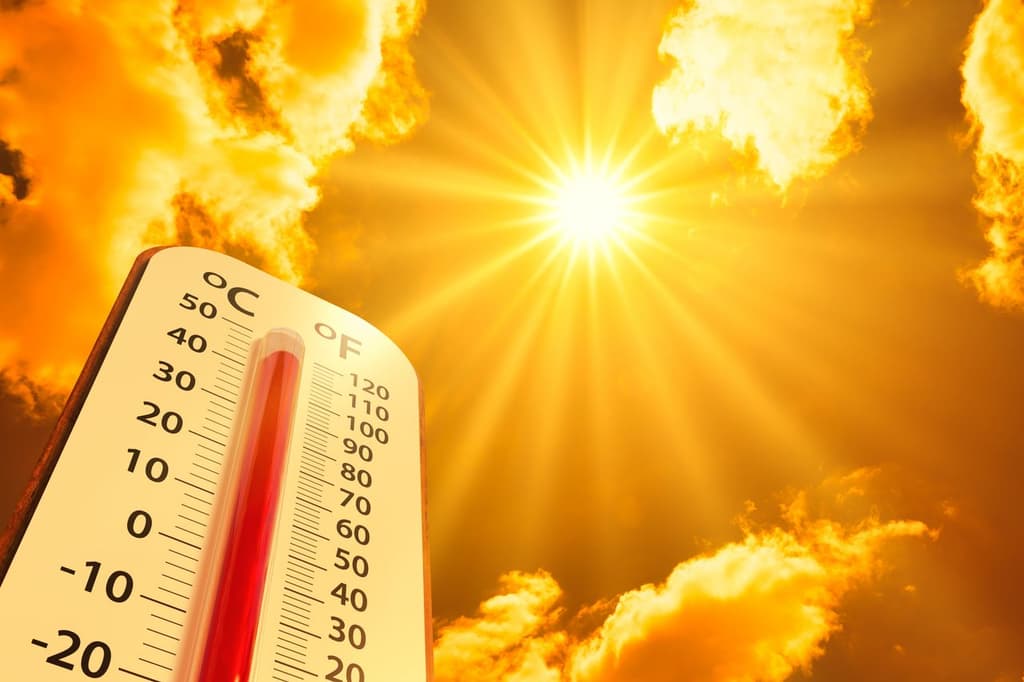
A rapidly intensifying El Niño, with Niño 3.4 sea surface temperature anomalies already exceeding +2.0°C and multi-model forecasts pointing toward a record peak near +3.5–4.0°C by November, serves as the dominant near-term driver of September 2026 global mean temperature expectations. This event overlays the long-term anthropogenic warming trend, elevating the likelihood of anomalies in the 1.4–1.6°C range above pre-industrial levels, though the exact September value hinges on the lag between Pacific warming and global response, plus internal variability. Official outlooks from NOAA and WMO note high confidence in widespread above-normal temperatures during August–October, yet model spread and the timing of peak influence introduce meaningful uncertainty across the narrow resolution brackets. Traders are weighing the balance between the emerging super El Niño signal and baseline climatology as September begins.
Resumen experimental generado por IA con datos de Polymarket. Esto no es asesoramiento de trading y no influye en cómo se resuelve este mercado. · ActualizadoSeptiembre 2026 Aumento de Temperatura (ºC)
Septiembre 2026 Aumento de Temperatura (ºC)
<1,30ºC 50%
1,30–1,34°C 50%
1,35–1,39ºC 50%
1,40–1,44ºC 50%
<1,30ºC
50%
1,30–1,34°C
50%
1,35–1,39ºC
50%
1,40–1,44ºC
50%
1,45–1,49ºC
50%
>1,49ºC
50%
<1,30ºC 50%
1,30–1,34°C 50%
1,35–1,39ºC 50%
1,40–1,44ºC 50%
<1,30ºC
50%
1,30–1,34°C
50%
1,35–1,39ºC
50%
1,40–1,44ºC
50%
1,45–1,49ºC
50%
>1,49ºC
50%
An anomaly within a named bracket for September 2026 is necessary and sufficient to resolve this market immediately once the data becomes available, regardless of whether the figure for September 2026 is later revised.
The brackets are mutually exclusive and collectively exhaustive: each range is inclusive of both of its stated endpoints, and the reported anomaly (to the nearest 0.01ºC) falls within exactly one bracket.
The primary resolution source for this market will be the figure found in the table titled "GLOBAL Land-Ocean Temperature Index in 0.01 degrees Celsius" under the column "Sep" in the row "2026" (https://data.giss.nasa.gov/gistemp/tabledata_v4/GLB.Ts+dSST.txt).
If NASA's "Global Temperature Index" is rendered permanently unavailable, other information from NASA may be used.
If no information for September 2026 is provided by NASA by November 1, 2026, 11:59 PM ET, this market will resolve to the lowest range bracket.
Mercado abierto: Aug 31, 2026, 9:36 AM ET
Fuente de resolución
https://data.giss.nasa.gov/gistemp/tabledata_v4/GLB.Ts+dSST.txtResolver
0x69c47De9D...An anomaly within a named bracket for September 2026 is necessary and sufficient to resolve this market immediately once the data becomes available, regardless of whether the figure for September 2026 is later revised.
The brackets are mutually exclusive and collectively exhaustive: each range is inclusive of both of its stated endpoints, and the reported anomaly (to the nearest 0.01ºC) falls within exactly one bracket.
The primary resolution source for this market will be the figure found in the table titled "GLOBAL Land-Ocean Temperature Index in 0.01 degrees Celsius" under the column "Sep" in the row "2026" (https://data.giss.nasa.gov/gistemp/tabledata_v4/GLB.Ts+dSST.txt).
If NASA's "Global Temperature Index" is rendered permanently unavailable, other information from NASA may be used.
If no information for September 2026 is provided by NASA by November 1, 2026, 11:59 PM ET, this market will resolve to the lowest range bracket.
Fuente de resolución
https://data.giss.nasa.gov/gistemp/tabledata_v4/GLB.Ts+dSST.txtResolver
0x69c47De9D...A rapidly intensifying El Niño, with Niño 3.4 sea surface temperature anomalies already exceeding +2.0°C and multi-model forecasts pointing toward a record peak near +3.5–4.0°C by November, serves as the dominant near-term driver of September 2026 global mean temperature expectations. This event overlays the long-term anthropogenic warming trend, elevating the likelihood of anomalies in the 1.4–1.6°C range above pre-industrial levels, though the exact September value hinges on the lag between Pacific warming and global response, plus internal variability. Official outlooks from NOAA and WMO note high confidence in widespread above-normal temperatures during August–October, yet model spread and the timing of peak influence introduce meaningful uncertainty across the narrow resolution brackets. Traders are weighing the balance between the emerging super El Niño signal and baseline climatology as September begins.
Resumen experimental generado por IA con datos de Polymarket. Esto no es asesoramiento de trading y no influye en cómo se resuelve este mercado. · Actualizado
Cuidado con los enlaces externos.
Cuidado con los enlaces externos.
Preguntas frecuentes