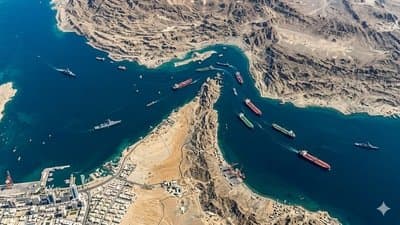
President Donald Trump proposed in mid-July 2026 that the United States assume responsibility for protecting shipping through the Strait of Hormuz and impose a 20% reimbursement fee on cargo value to offset naval costs, prompting immediate pushback from the International Maritime Organization, which stated there is no legal basis for mandatory tolls. Within days, the administration reversed course, shifting emphasis to trade and investment commitments from Gulf states in place of direct fees. Iran has separately advanced plans for its own maritime service charges or controlled-transit arrangements, sometimes involving Oman, while facing U.S. sanctions warnings on related payments. These developments, alongside ongoing U.S.-Iran framework talks and legal constraints under international maritime rules, explain the low trader-implied probabilities for U.S. fee implementation by late 2026. Potential near-term catalysts include further executive statements, Gulf state responses, or shifts in enforcement posture.
Resumen experimental generado por IA con datos de Polymarket. Esto no es asesoramiento de trading y no influye en cómo se resuelve este mercado. · Actualizado¿Estados Unidos cobra las tarifas de Hormuz por...?
¿Estados Unidos cobra las tarifas de Hormuz por...?
$962,352 Vol.
31 de agosto
1%
31 de diciembre
7%
$962,352 Vol.
31 de agosto
1%
31 de diciembre
7%
Any payment amount or rate will count. Payments may be monetary or in-kind (e.g., a share of cargo or oil) and may be collected directly by the US government or by an agent, contractor, or intermediary collecting on its behalf, provided the payment is made under a US-imposed fee or a compensation arrangement.
The announcement, signing, or establishment of a fee program, executive order, regulation, or collection mechanism will not by itself qualify; at least one payment must actually be received by the listed date, 11:59 PM ET.
Payments collected by Iran or any other party acting on its own behalf will not count. Payments under preexisting obligations, including US customs duties, tariffs on goods imported into the United States, or standard port charges, will not count unless newly imposed as a condition of Strait of Hormuz transit or protection.
The resolution sources will be official announcements from the government of the United States and a consensus of credible reporting.
Mercado abierto: Jul 13, 2026, 12:00 PM ET
Resolver
0x65070BE91...Any payment amount or rate will count. Payments may be monetary or in-kind (e.g., a share of cargo or oil) and may be collected directly by the US government or by an agent, contractor, or intermediary collecting on its behalf, provided the payment is made under a US-imposed fee or a compensation arrangement.
The announcement, signing, or establishment of a fee program, executive order, regulation, or collection mechanism will not by itself qualify; at least one payment must actually be received by the listed date, 11:59 PM ET.
Payments collected by Iran or any other party acting on its own behalf will not count. Payments under preexisting obligations, including US customs duties, tariffs on goods imported into the United States, or standard port charges, will not count unless newly imposed as a condition of Strait of Hormuz transit or protection.
The resolution sources will be official announcements from the government of the United States and a consensus of credible reporting.
Resolver
0x65070BE91...President Donald Trump proposed in mid-July 2026 that the United States assume responsibility for protecting shipping through the Strait of Hormuz and impose a 20% reimbursement fee on cargo value to offset naval costs, prompting immediate pushback from the International Maritime Organization, which stated there is no legal basis for mandatory tolls. Within days, the administration reversed course, shifting emphasis to trade and investment commitments from Gulf states in place of direct fees. Iran has separately advanced plans for its own maritime service charges or controlled-transit arrangements, sometimes involving Oman, while facing U.S. sanctions warnings on related payments. These developments, alongside ongoing U.S.-Iran framework talks and legal constraints under international maritime rules, explain the low trader-implied probabilities for U.S. fee implementation by late 2026. Potential near-term catalysts include further executive statements, Gulf state responses, or shifts in enforcement posture.
Resumen experimental generado por IA con datos de Polymarket. Esto no es asesoramiento de trading y no influye en cómo se resuelve este mercado. · Actualizado
Cuidado con los enlaces externos.
Cuidado con los enlaces externos.
Preguntas frecuentes