
Rising gas prices linked to U.S. and Israeli operations against Iran since February 2026 prompted President Trump and lawmakers from both parties to back a temporary federal excise tax suspension on gasoline and diesel. Multiple bills introduced in May 2026, including Senate measures for 90-day or longer pauses, remain stalled in committee with no floor votes scheduled. Congressional action is required for any change, and revenue losses to the Highway Trust Fund plus limited consumer relief have tempered momentum. Traders assign low probabilities to near-term suspension, reflecting ongoing legislative priorities and uncertainty ahead of the November 2026 midterm elections.
Résumé expérimental généré par IA à partir des données Polymarket. Ceci n'est pas un conseil de trading et ne joue aucun rôle dans la résolution de ce marché. · Mis à jour$31,988 Vol.
2 nov. 2026
November 2
20%
$31,988 Vol.
November 2
$9,622 Vol.
20%
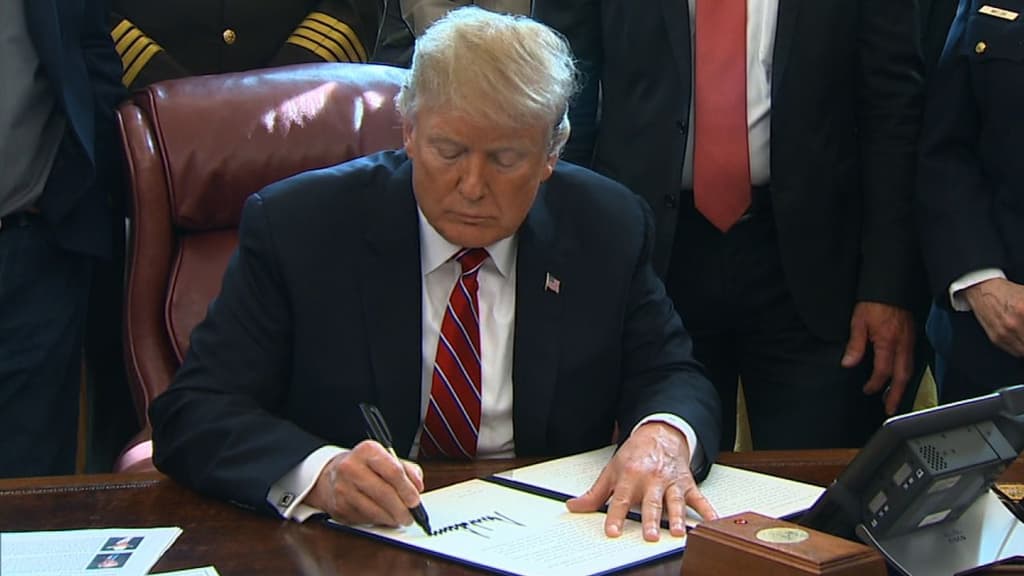
On May 11, 2026, Trump proposed suspending the federal gas tax.
This market will resolve to "Yes" if legislation that would, at least temporarily, suspend the federal excise tax on gasoline is passed by both chambers of the U.S. Congress and signed into law by the specified date (ET). Otherwise, this market will resolve to "No".
Qualifying legislation may include joint resolutions and must pass both the House and the Senate, and must be signed by the President, become law without signature while Congress remains in session, or become law through veto override. Presidential pocket vetoes that expire will not qualify.
The primary resolution sources for this market will be Congress.gov’s legislation tracker (https://www.congress.gov/bill/119th-congress/house-bill/22), the Library of Congress (congress.gov), and other official information from the government of the United States; however, a consensus of credible reporting may also be used.Rising gas prices linked to U.S. and Israeli operations against Iran since February 2026 prompted President Trump and lawmakers from both parties to back a temporary federal excise tax suspension on gasoline and diesel. Multiple bills introduced in May 2026, including Senate measures for 90-day or longer pauses, remain stalled in committee with no floor votes scheduled. Congressional action is required for any change, and revenue losses to the Highway Trust Fund plus limited consumer relief have tempered momentum. Traders assign low probabilities to near-term suspension, reflecting ongoing legislative priorities and uncertainty ahead of the November 2026 midterm elections.
On May 11, 2026, Trump proposed suspending the federal gas tax.
This market will resolve to "Yes" if legislation that would, at least temporarily, suspend the federal excise tax on gasoline is passed by both chambers of the U.S. Congress and signed into law by the specified date (ET). Otherwise, this market will resolve to "No".
Qualifying legislation may include joint resolutions and must pass both the House and the Senate, and must be signed by the President, become law without signature while Congress remains in session, or become law through veto override. Presidential pocket vetoes that expire will not qualify.
The primary resolution sources for this market will be Congress.gov’s legislation tracker (https://www.congress.gov/bill/119th-congress/house-bill/22), the Library of Congress (congress.gov), and other official information from the government of the United States; however, a consensus of credible reporting may also be used.
This market will resolve to "Yes" if legislation that would, at least temporarily, suspend the federal excise tax on gasoline is passed by both chambers of the U.S. Congress and signed into law by the specified date (ET). Otherwise, this market will resolve to "No".
Qualifying legislation may include joint resolutions and must pass both the House and the Senate, and must be signed by the President, become law without signature while Congress remains in session, or become law through veto override. Presidential pocket vetoes that expire will not qualify.
The primary resolution sources for this market will be Congress.gov’s legislation tracker (https://www.congress.gov/bill/119th-congress/house-bill/22), the Library of Congress (congress.gov), and other official information from the government of the United States; however, a consensus of credible reporting may also be used.
Marché ouvert : May 12, 2026, 1:38 PM ET
Volume
$31,988Date de fin
31 déc. 2026Marché ouvert
May 12, 2026, 1:38 PM ETResolver
0x65070BE91...On May 11, 2026, Trump proposed suspending the federal gas tax.
This market will resolve to "Yes" if legislation that would, at least temporarily, suspend the federal excise tax on gasoline is passed by both chambers of the U.S. Congress and signed into law by the specified date (ET). Otherwise, this market will resolve to "No".
Qualifying legislation may include joint resolutions and must pass both the House and the Senate, and must be signed by the President, become law without signature while Congress remains in session, or become law through veto override. Presidential pocket vetoes that expire will not qualify.
The primary resolution sources for this market will be Congress.gov’s legislation tracker (https://www.congress.gov/bill/119th-congress/house-bill/22), the Library of Congress (congress.gov), and other official information from the government of the United States; however, a consensus of credible reporting may also be used.Rising gas prices linked to U.S. and Israeli operations against Iran since February 2026 prompted President Trump and lawmakers from both parties to back a temporary federal excise tax suspension on gasoline and diesel. Multiple bills introduced in May 2026, including Senate measures for 90-day or longer pauses, remain stalled in committee with no floor votes scheduled. Congressional action is required for any change, and revenue losses to the Highway Trust Fund plus limited consumer relief have tempered momentum. Traders assign low probabilities to near-term suspension, reflecting ongoing legislative priorities and uncertainty ahead of the November 2026 midterm elections.
On May 11, 2026, Trump proposed suspending the federal gas tax.
This market will resolve to "Yes" if legislation that would, at least temporarily, suspend the federal excise tax on gasoline is passed by both chambers of the U.S. Congress and signed into law by the specified date (ET). Otherwise, this market will resolve to "No".
Qualifying legislation may include joint resolutions and must pass both the House and the Senate, and must be signed by the President, become law without signature while Congress remains in session, or become law through veto override. Presidential pocket vetoes that expire will not qualify.
The primary resolution sources for this market will be Congress.gov’s legislation tracker (https://www.congress.gov/bill/119th-congress/house-bill/22), the Library of Congress (congress.gov), and other official information from the government of the United States; however, a consensus of credible reporting may also be used.
This market will resolve to "Yes" if legislation that would, at least temporarily, suspend the federal excise tax on gasoline is passed by both chambers of the U.S. Congress and signed into law by the specified date (ET). Otherwise, this market will resolve to "No".
Qualifying legislation may include joint resolutions and must pass both the House and the Senate, and must be signed by the President, become law without signature while Congress remains in session, or become law through veto override. Presidential pocket vetoes that expire will not qualify.
The primary resolution sources for this market will be Congress.gov’s legislation tracker (https://www.congress.gov/bill/119th-congress/house-bill/22), the Library of Congress (congress.gov), and other official information from the government of the United States; however, a consensus of credible reporting may also be used.
Volume
$31,988Date de fin
31 déc. 2026Marché ouvert
May 12, 2026, 1:38 PM ETResolver
0x65070BE91...Rising gas prices linked to U.S. and Israeli operations against Iran since February 2026 prompted President Trump and lawmakers from both parties to back a temporary federal excise tax suspension on gasoline and diesel. Multiple bills introduced in May 2026, including Senate measures for 90-day or longer pauses, remain stalled in committee with no floor votes scheduled. Congressional action is required for any change, and revenue losses to the Highway Trust Fund plus limited consumer relief have tempered momentum. Traders assign low probabilities to near-term suspension, reflecting ongoing legislative priorities and uncertainty ahead of the November 2026 midterm elections.
Résumé expérimental généré par IA à partir des données Polymarket. Ceci n'est pas un conseil de trading et ne joue aucun rôle dans la résolution de ce marché. · Mis à jour

Méfiez-vous des liens externes.
Méfiez-vous des liens externes.
Questions fréquentes