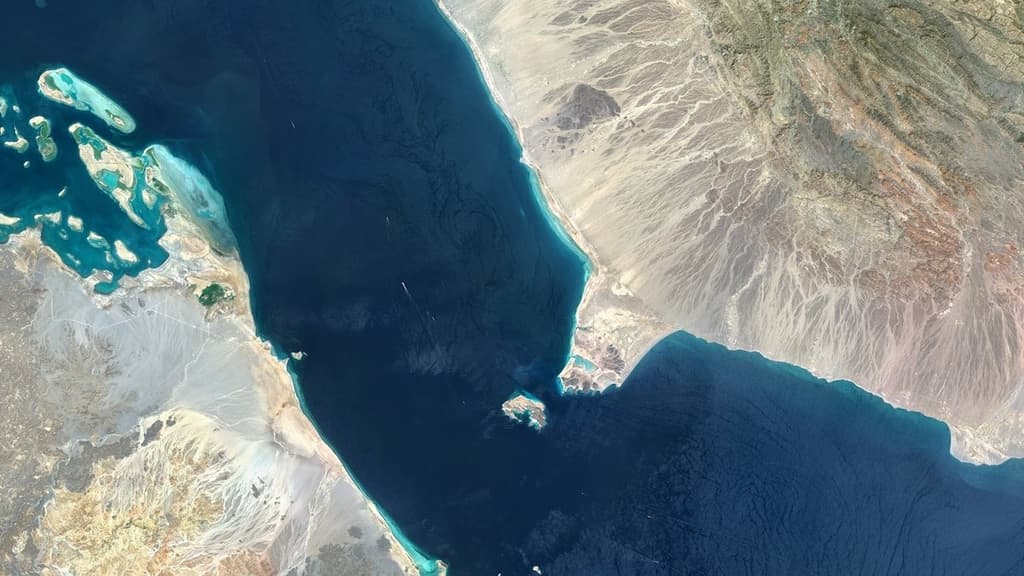
Persistent Houthi threats and attacks amid Iran-related regional tensions remain the dominant driver keeping average daily transits through the Bab el-Mandeb Strait low. Recent incidents, including missile strikes that killed six crew members and a July blockade announcement targeting Saudi-linked vessels, have sustained war-risk insurance premiums at elevated levels and reinforced carrier preference for Cape of Good Hope rerouting. Shipping data through mid-August shows daily crossings fluctuating between roughly 10–30 vessels with 7-day moving averages near 25, well below pre-disruption norms, as operators weigh added fuel costs and transit delays against security risks. With no clear de-escalation signal before month-end, trader positioning reflects these ongoing supply-chain frictions and elevated volatility in maritime risk pricing.
Ringkasan eksperimental yang dihasilkan AI dengan referensi data Polymarket. Ini bukan saran trading dan tidak berperan dalam bagaimana pasar ini diselesaikan. · DiperbaruiAvg. # of ships transiting Bab el-Mandeb Strait end of August?
Avg. # of ships transiting Bab el-Mandeb Strait end of August?
<25 44.8%
25-29 27%
30-34 20%
35-39 6%
$14,964 Vol.
$14,964 Vol.
<25
45%
25-29
27%
30-34
20%
35-39
6%
40+
2%
<25 44.8%
25-29 27%
30-34 20%
35-39 6%
$14,964 Vol.
$14,964 Vol.
<25
45%
25-29
27%
30-34
20%
35-39
6%
40+
2%
Transit calls include container, dry bulk, roll-on/roll-off, general cargo, and tanker ships. Ships not reported by IMF Portwatch will not be considered.
This market will resolve as soon as the relevant data has been published. If the relevant data is not published within 14 calendar days of the specified date, this market will resolve based on the most recent data published up to that point.
In case of obvious data integrity issues (i.e., erroneous data), the market may remain open until the end of the third calendar day (ET) after the date on which such data is first released to allow for corrections. Data integrity issues refer only to clerical or other similar errors in the underlying data, and do not include cases where IMF Portwatch differs from alternative sources.
The resolution source for this market will be IMF PortWatch, specifically the “Arrivals of Ships” data published for the Bab el-Mandeb Strait at https://portwatch.imf.org/pages/6b1814d64903461b98144a6cc25eb79c.
Pasar Dibuka: Jul 31, 2026, 2:13 PM ET
Sumber Resolusi
IMF PortWatchResolver
0x69c47De9D...Transit calls include container, dry bulk, roll-on/roll-off, general cargo, and tanker ships. Ships not reported by IMF Portwatch will not be considered.
This market will resolve as soon as the relevant data has been published. If the relevant data is not published within 14 calendar days of the specified date, this market will resolve based on the most recent data published up to that point.
In case of obvious data integrity issues (i.e., erroneous data), the market may remain open until the end of the third calendar day (ET) after the date on which such data is first released to allow for corrections. Data integrity issues refer only to clerical or other similar errors in the underlying data, and do not include cases where IMF Portwatch differs from alternative sources.
The resolution source for this market will be IMF PortWatch, specifically the “Arrivals of Ships” data published for the Bab el-Mandeb Strait at https://portwatch.imf.org/pages/6b1814d64903461b98144a6cc25eb79c.
Sumber Resolusi
IMF PortWatchResolver
0x69c47De9D...Persistent Houthi threats and attacks amid Iran-related regional tensions remain the dominant driver keeping average daily transits through the Bab el-Mandeb Strait low. Recent incidents, including missile strikes that killed six crew members and a July blockade announcement targeting Saudi-linked vessels, have sustained war-risk insurance premiums at elevated levels and reinforced carrier preference for Cape of Good Hope rerouting. Shipping data through mid-August shows daily crossings fluctuating between roughly 10–30 vessels with 7-day moving averages near 25, well below pre-disruption norms, as operators weigh added fuel costs and transit delays against security risks. With no clear de-escalation signal before month-end, trader positioning reflects these ongoing supply-chain frictions and elevated volatility in maritime risk pricing.
Ringkasan eksperimental yang dihasilkan AI dengan referensi data Polymarket. Ini bukan saran trading dan tidak berperan dalam bagaimana pasar ini diselesaikan. · Diperbarui
Hati-hati dengan link eksternal.
Hati-hati dengan link eksternal.
Pertanyaan yang Sering Diajukan