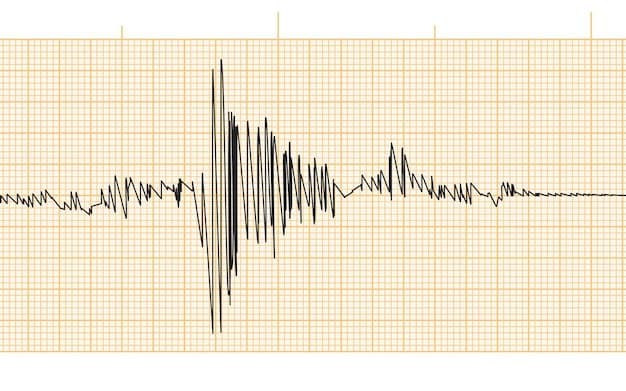
Recent seismic activity along subduction zones of the Pacific Ring of Fire, including a magnitude 7.7 event near Ende, Indonesia, on August 14 and a 6.9 near Pematangsiantar on August 15, has shaped trader focus on regions with elevated baseline rates. USGS real-time catalogs show multiple M6.0+ quakes in the prior week, consistent with global averages of roughly four to six such events monthly driven by ongoing tectonic plate interactions rather than clustering. Short-term forecasting remains limited by the stochastic nature of fault rupture, with resolution hinging on confirmed epicenters and magnitudes through August 31. Traders track USGS feeds and aftershock sequences for any additional events meeting criteria, noting historical patterns favor active margins over stable interiors while acknowledging inherent uncertainty in exact timing and location.
Eksperymentalne podsumowanie AI odwołujące się do danych Polymarket. To nie jest porada handlowa i nie ma wpływu na rozstrzyganie tego rynku. · ZaktualizowanoWhere will a 6.0+ earthquake occur by end of August?
Where will a 6.0+ earthquake occur by end of August?

Indonesia
100%

Japan
33%

Chile
28%

Philippines
28%

United States
16%

Mexico
23%
$8,611 Wol.
Indonesia
100%
Japan
33%
Chile
28%
Philippines
28%
United States
16%
Mexico
23%
A qualifying earthquake must be counted for a country's market only if USGS attributes its location to that country (or its offshore territory) in the event's location description, lists the earthquake with a preferred magnitude of 6.0 or higher, and lists it as occurring within the specified timeframe. Earthquakes without a preferred magnitude classification will not qualify.
If an earthquake with an origin time within a market's window has not yet appeared on the resolution source by the end of the third calendar day after the specified month, this market end date may be extended for up to one week after the specified month and will resolve based on the first preferred magnitude, country attribution and timestamp of the event in question. If the relevant data is not released by the end of the extension period, this market will resolve based on the data released up until that point.
Revisions to the underlying data, such as country attribution and preferred magnitude, will be considered until the end of the third calendar day after the specified month or until the end of an applicable extension period. Revisions made after the end of the third calendar day after the specified month or after the end of an applicable extension period will not be considered.
The resolution source for this event is the United States Geological Survey (USGS) Earthquake Hazards Program earthquake catalog (https://earthquake.usgs.gov/earthquakes/search/), and only data released by USGS will be considered, regardless of other sources. If the resolution source becomes temporarily unavailable, the market will remain open until it resumes; if it remains unavailable through the end of the third calendar day after the specified month, this market will resolve to "No."
Rynek otwarty: Aug 11, 2026, 6:03 PM ET
Źródło rozstrzygnięcia
https://earthquake.usgs.gov/earthquakes/search/Resolver
0x65070BE91...A qualifying earthquake must be counted for a country's market only if USGS attributes its location to that country (or its offshore territory) in the event's location description, lists the earthquake with a preferred magnitude of 6.0 or higher, and lists it as occurring within the specified timeframe. Earthquakes without a preferred magnitude classification will not qualify.
If an earthquake with an origin time within a market's window has not yet appeared on the resolution source by the end of the third calendar day after the specified month, this market end date may be extended for up to one week after the specified month and will resolve based on the first preferred magnitude, country attribution and timestamp of the event in question. If the relevant data is not released by the end of the extension period, this market will resolve based on the data released up until that point.
Revisions to the underlying data, such as country attribution and preferred magnitude, will be considered until the end of the third calendar day after the specified month or until the end of an applicable extension period. Revisions made after the end of the third calendar day after the specified month or after the end of an applicable extension period will not be considered.
The resolution source for this event is the United States Geological Survey (USGS) Earthquake Hazards Program earthquake catalog (https://earthquake.usgs.gov/earthquakes/search/), and only data released by USGS will be considered, regardless of other sources. If the resolution source becomes temporarily unavailable, the market will remain open until it resumes; if it remains unavailable through the end of the third calendar day after the specified month, this market will resolve to "No."
Źródło rozstrzygnięcia
https://earthquake.usgs.gov/earthquakes/search/Resolver
0x65070BE91...Recent seismic activity along subduction zones of the Pacific Ring of Fire, including a magnitude 7.7 event near Ende, Indonesia, on August 14 and a 6.9 near Pematangsiantar on August 15, has shaped trader focus on regions with elevated baseline rates. USGS real-time catalogs show multiple M6.0+ quakes in the prior week, consistent with global averages of roughly four to six such events monthly driven by ongoing tectonic plate interactions rather than clustering. Short-term forecasting remains limited by the stochastic nature of fault rupture, with resolution hinging on confirmed epicenters and magnitudes through August 31. Traders track USGS feeds and aftershock sequences for any additional events meeting criteria, noting historical patterns favor active margins over stable interiors while acknowledging inherent uncertainty in exact timing and location.
Eksperymentalne podsumowanie AI odwołujące się do danych Polymarket. To nie jest porada handlowa i nie ma wpływu na rozstrzyganie tego rynku. · Zaktualizowano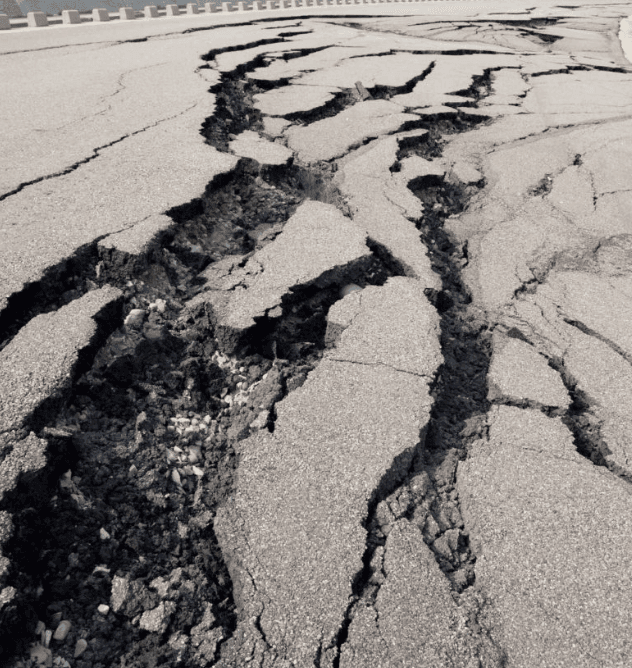

Uważaj na linki zewnętrzne.
Uważaj na linki zewnętrzne.
Często zadawane pytania