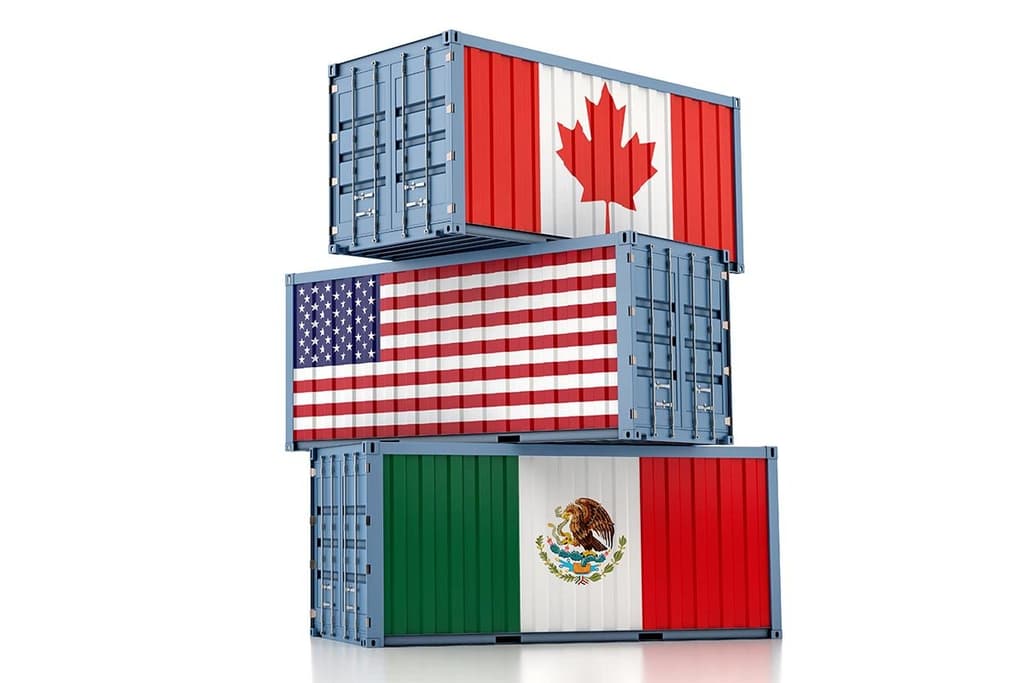
**USMCA extension talks stalled after the United States declined renewal at the July 1, 2026 joint review.** Under Article 34.7, the Free Trade Commission must decide whether to extend the agreement for another 16 years; the U.S. Trade Representative stated the country would not renew it “in its current form,” triggering mandatory annual reviews that continue until extension or expiration in 2036. Mexico and Canada supported immediate renewal, but the U.S. position—centered on concerns over rules of origin, automotive content, non-market inputs, and supply-chain issues—shifted the process into bilateral negotiations, primarily with Mexico. These talks began earlier in 2026 and remain narrowly scoped, with no text yet tabled for a comprehensive update. The Trump administration has signaled interest in targeted changes rather than a clean extension, while Canada has yet to engage in substantive bilateral rounds. With the statutory July 1 decision point passed and complex issues such as autos, energy, and enforcement requiring concessions, the timeline for completing an extension before year-end is compressed. Markets price the low probability of a 2026 extension because the agreement stays fully in force during annual reviews, reducing urgency for immediate consensus while the U.S. seeks leverage for revisions. Late-year breakthroughs remain possible but face significant procedural and substantive hurdles.
Eksperymentalne podsumowanie AI odwołujące się do danych Polymarket. To nie jest porada handlowa i nie ma wpływu na rozstrzyganie tego rynku. · ZaktualizowanoUSMCA extended in 2026?
USMCA extended in 2026?
$10,215 Wol.
$10,215 Wol.
$10,215 Wol.
$10,215 Wol.
A qualifying extension requires all three parties to formally extend the term of the agreement. This may occur through written confirmation of their wish to extend the term for a further period pursuant to USMCA Article 34.7, or through other formal means that clearly and definitively extend the term, such as a unanimous amendment of the agreement. An extension qualifies whether or not it also includes negotiated modifications to the original agreement.
The following will not qualify: announcements unaccompanied by a formal extension; extension of individual provisions that does not extend the agreement's term itself; commitments to extend by fewer than all three parties; and replacement of the USMCA with a separate or successor agreement, as opposed to continuation of the existing agreement.
The primary resolution source is official information from the United States, Canada, and Mexico; however, a consensus of credible reporting may also be used.
Rynek otwarty: Jul 1, 2026, 5:35 PM ET
Resolver
0x65070BE91...A qualifying extension requires all three parties to formally extend the term of the agreement. This may occur through written confirmation of their wish to extend the term for a further period pursuant to USMCA Article 34.7, or through other formal means that clearly and definitively extend the term, such as a unanimous amendment of the agreement. An extension qualifies whether or not it also includes negotiated modifications to the original agreement.
The following will not qualify: announcements unaccompanied by a formal extension; extension of individual provisions that does not extend the agreement's term itself; commitments to extend by fewer than all three parties; and replacement of the USMCA with a separate or successor agreement, as opposed to continuation of the existing agreement.
The primary resolution source is official information from the United States, Canada, and Mexico; however, a consensus of credible reporting may also be used.
Resolver
0x65070BE91...**USMCA extension talks stalled after the United States declined renewal at the July 1, 2026 joint review.** Under Article 34.7, the Free Trade Commission must decide whether to extend the agreement for another 16 years; the U.S. Trade Representative stated the country would not renew it “in its current form,” triggering mandatory annual reviews that continue until extension or expiration in 2036. Mexico and Canada supported immediate renewal, but the U.S. position—centered on concerns over rules of origin, automotive content, non-market inputs, and supply-chain issues—shifted the process into bilateral negotiations, primarily with Mexico. These talks began earlier in 2026 and remain narrowly scoped, with no text yet tabled for a comprehensive update. The Trump administration has signaled interest in targeted changes rather than a clean extension, while Canada has yet to engage in substantive bilateral rounds. With the statutory July 1 decision point passed and complex issues such as autos, energy, and enforcement requiring concessions, the timeline for completing an extension before year-end is compressed. Markets price the low probability of a 2026 extension because the agreement stays fully in force during annual reviews, reducing urgency for immediate consensus while the U.S. seeks leverage for revisions. Late-year breakthroughs remain possible but face significant procedural and substantive hurdles.
Eksperymentalne podsumowanie AI odwołujące się do danych Polymarket. To nie jest porada handlowa i nie ma wpływu na rozstrzyganie tego rynku. · Zaktualizowano


Uważaj na linki zewnętrzne.
Uważaj na linki zewnętrzne.
Często zadawane pytania