
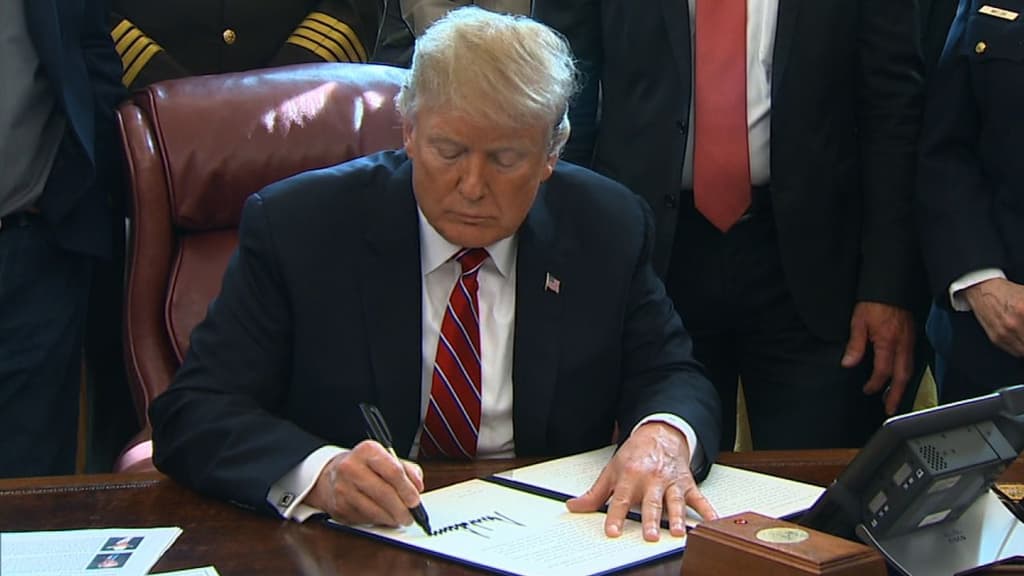
President Trump has repeatedly left open the possibility of declaring a national security emergency tied to foreign interference in U.S. elections, citing stalled legislation such as the SAVE America Act and referencing the ongoing national emergency first established in 2018 and extended through 2025. Recent interviews and public remarks in August 2026 have kept the prospect in play ahead of the November midterms, while prior executive orders on election administration face court challenges asserting that states hold primary constitutional authority over voting procedures. Traders weigh these statements against legal limits on emergency powers, historical precedent for election-related declarations, and the timeline for any action before year-end resolution windows.
Resumo experimental gerado por IA com dados do Polymarket. Isto não é aconselhamento de trading e não tem qualquer papel na resolução deste mercado. · Atualizado$183,696 Vol.
31 de dezembro
32%
$183,696 Vol.
31 de dezembro
32%
A qualifying declaration must include formal language stating that a national emergency exists and must be issued under the National Emergencies Act (50 U.S.C. § 1621 et seq.). The declaration must explicitly reference interference in U.S. elections, election processes, election systems, voting procedures, ballots, or voting machines as the basis for the emergency. Statements, speeches, social media posts, draft orders, executive orders that do not formally declare a national emergency under the National Emergencies Act, or other actions that merely reference election interference without declaring a national emergency will not qualify.
Renewals or extensions of previously existing national emergencies will not qualify unless the text is materially modified to explicitly relate to election interference.
The primary resolution source will be the Federal Register and official White House publications, however a consensus of credible reporting may also be used.
Mercado Aberto: Feb 26, 2026, 4:29 PM ET
Resolver
0x65070BE91...A qualifying declaration must include formal language stating that a national emergency exists and must be issued under the National Emergencies Act (50 U.S.C. § 1621 et seq.). The declaration must explicitly reference interference in U.S. elections, election processes, election systems, voting procedures, ballots, or voting machines as the basis for the emergency. Statements, speeches, social media posts, draft orders, executive orders that do not formally declare a national emergency under the National Emergencies Act, or other actions that merely reference election interference without declaring a national emergency will not qualify.
Renewals or extensions of previously existing national emergencies will not qualify unless the text is materially modified to explicitly relate to election interference.
The primary resolution source will be the Federal Register and official White House publications, however a consensus of credible reporting may also be used.
Resolver
0x65070BE91...President Trump has repeatedly left open the possibility of declaring a national security emergency tied to foreign interference in U.S. elections, citing stalled legislation such as the SAVE America Act and referencing the ongoing national emergency first established in 2018 and extended through 2025. Recent interviews and public remarks in August 2026 have kept the prospect in play ahead of the November midterms, while prior executive orders on election administration face court challenges asserting that states hold primary constitutional authority over voting procedures. Traders weigh these statements against legal limits on emergency powers, historical precedent for election-related declarations, and the timeline for any action before year-end resolution windows.
Resumo experimental gerado por IA com dados do Polymarket. Isto não é aconselhamento de trading e não tem qualquer papel na resolução deste mercado. · Atualizado

Cuidado com os links externos.
Cuidado com os links externos.
Frequently Asked Questions