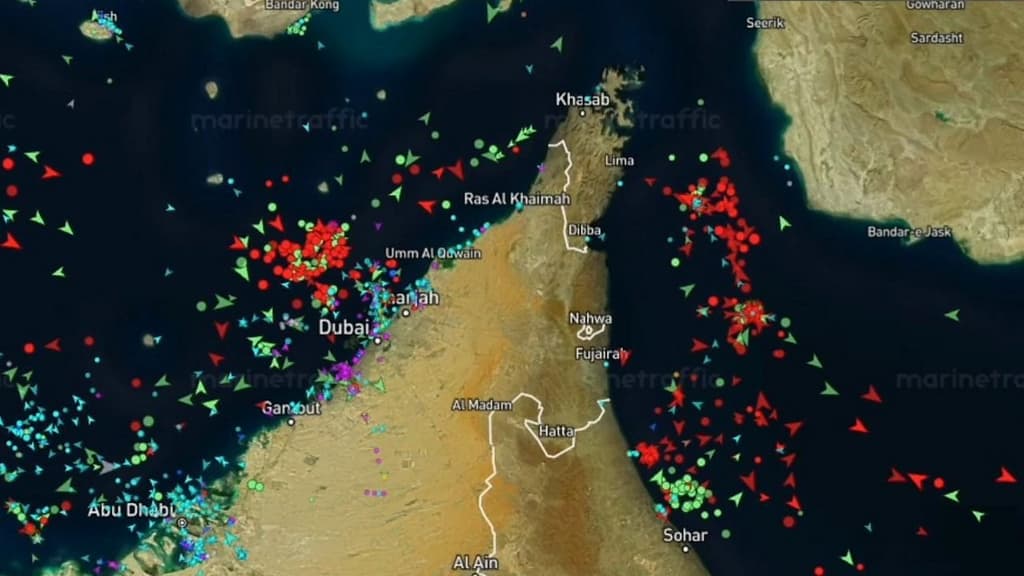
**Ongoing low but non-zero traffic through the Strait of Hormuz reflects Iranian efforts to assert control via route restrictions, coordination requirements, and enforcement by the IRGC, alongside U.S. sanctions and blockade measures that have curtailed Iranian crude exports since the February 2026 conflict escalation.** Since the initial closure announcement in early March 2026, daily commercial transits have fallen from pre-crisis averages of roughly 100–130 vessels to often fewer than 20, with recent weeks showing around 5–15 crossings amid route uncertainty, dark (AIS-disabled) movements, and shadow-fleet activity. Iran has channeled traffic through vetted northern routes under a Persian Gulf Strait Authority framework, imposed high per-vessel fees, and issued warnings against southern or unauthorized paths, while periodic drone or projectile incidents have targeted non-compliant vessels. U.S. Central Command has supported limited escorted or facilitated transits and maintained pressure through sanctions that have kept Iranian oil flows near zero in recent reporting periods, though some LPG, product, and rerouted tankers continue limited movements. War-risk insurance multiples remain elevated (around 40× normal), stranding hundreds of vessels and crews inside the Gulf and deterring standard commercial routing. Recent developments through late August 2026 include ongoing mine hazards, additional vessel strikes, and statements from Iranian officials that passage requires Tehran’s coordination, with no full restoration of pre-war freedom of navigation despite interim understandings. Key variables for any complete daily shutdown include further kinetic exchanges, shifts in U.S. sanctions policy, successful diplomatic arrangements involving Oman or Gulf states, or changes in carrier risk tolerance that could eliminate the remaining trickle of transits.
Экспериментальная сводка, созданная ИИ на основе данных Polymarket. Это не является торговой рекомендацией и не влияет на то, как разрешается этот рынок. · Обновлено0 судов транзитом Ормуз на любую дату..?
0 судов транзитом Ормуз на любую дату..?
$775,804 Объем
August 31
6%
30 сентября
16%
$775,804 Объем
August 31
6%
30 сентября
16%
Transit calls include container, dry bulk, roll-on/roll-off, general cargo, and tanker ships. Ships not reported by IMF PortWatch will not be considered.
This market will resolve as soon as IMF PortWatch publishes a daily number of transit calls equal to 0, or once complete data has been published for the specified period without such a publication. If complete data for the specified period has not been published within 28 calendar days of the end of the specified period, this market will resolve based on data published up to that point.
In case of obvious data integrity issues (i.e., erroneous data), the market may remain open until the end of the third calendar day (ET) after the date on which such data is first released to allow for corrections. Data integrity issues refer only to clerical or other similar errors in the underlying data, and do not include cases where IMF PortWatch differs from alternative sources. Revisions to previously published data points made within this market’s timeframe will be considered. However, they will not disqualify a previously published data point from qualifying except in the case of data integrity issues.
The resolution source for this market will be IMF PortWatch, specifically the transit calls data published for the Strait of Hormuz at https://portwatch.imf.org/pages/cb5856222a5b4105adc6ee7e880a1730, both in the chart and through downloadable files.
Открытие рынка: Jul 29, 2026, 12:28 PM ET
Кто определяет исход
0x65070BE91...Transit calls include container, dry bulk, roll-on/roll-off, general cargo, and tanker ships. Ships not reported by IMF PortWatch will not be considered.
This market will resolve as soon as IMF PortWatch publishes a daily number of transit calls equal to 0, or once complete data has been published for the specified period without such a publication. If complete data for the specified period has not been published within 28 calendar days of the end of the specified period, this market will resolve based on data published up to that point.
In case of obvious data integrity issues (i.e., erroneous data), the market may remain open until the end of the third calendar day (ET) after the date on which such data is first released to allow for corrections. Data integrity issues refer only to clerical or other similar errors in the underlying data, and do not include cases where IMF PortWatch differs from alternative sources. Revisions to previously published data points made within this market’s timeframe will be considered. However, they will not disqualify a previously published data point from qualifying except in the case of data integrity issues.
The resolution source for this market will be IMF PortWatch, specifically the transit calls data published for the Strait of Hormuz at https://portwatch.imf.org/pages/cb5856222a5b4105adc6ee7e880a1730, both in the chart and through downloadable files.
Кто определяет исход
0x65070BE91...**Ongoing low but non-zero traffic through the Strait of Hormuz reflects Iranian efforts to assert control via route restrictions, coordination requirements, and enforcement by the IRGC, alongside U.S. sanctions and blockade measures that have curtailed Iranian crude exports since the February 2026 conflict escalation.** Since the initial closure announcement in early March 2026, daily commercial transits have fallen from pre-crisis averages of roughly 100–130 vessels to often fewer than 20, with recent weeks showing around 5–15 crossings amid route uncertainty, dark (AIS-disabled) movements, and shadow-fleet activity. Iran has channeled traffic through vetted northern routes under a Persian Gulf Strait Authority framework, imposed high per-vessel fees, and issued warnings against southern or unauthorized paths, while periodic drone or projectile incidents have targeted non-compliant vessels. U.S. Central Command has supported limited escorted or facilitated transits and maintained pressure through sanctions that have kept Iranian oil flows near zero in recent reporting periods, though some LPG, product, and rerouted tankers continue limited movements. War-risk insurance multiples remain elevated (around 40× normal), stranding hundreds of vessels and crews inside the Gulf and deterring standard commercial routing. Recent developments through late August 2026 include ongoing mine hazards, additional vessel strikes, and statements from Iranian officials that passage requires Tehran’s coordination, with no full restoration of pre-war freedom of navigation despite interim understandings. Key variables for any complete daily shutdown include further kinetic exchanges, shifts in U.S. sanctions policy, successful diplomatic arrangements involving Oman or Gulf states, or changes in carrier risk tolerance that could eliminate the remaining trickle of transits.
Экспериментальная сводка, созданная ИИ на основе данных Polymarket. Это не является торговой рекомендацией и не влияет на то, как разрешается этот рынок. · Обновлено
Не доверяй внешним ссылкам.
Не доверяй внешним ссылкам.
Часто задаваемые вопросы