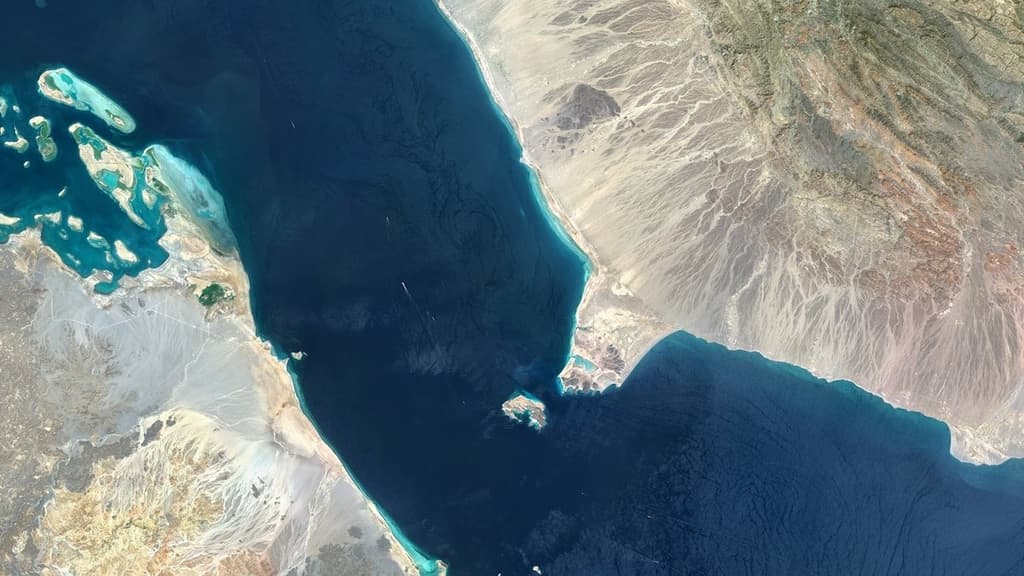
Recent Houthi-imposed restrictions on Saudi-linked shipping have suppressed Bab el-Mandeb transits, driving weekly volumes down roughly 24% to the 266–269 range in late July and early August after an initial plunge from 354. This has elevated rerouting around the Cape of Good Hope, lifting freight rates and compressing margins for carriers while shifting tanker and container flows toward longer voyages. With daily crossings recently fluctuating between 29 and 40 amid persistent security risks, trader-implied odds reflect uncertainty over whether the week of August 17 sustains this depressed baseline, rebounds modestly on any de-escalation signals, or falls further below 160 amid renewed threats. Key swing factors include fresh Houthi statements, Saudi export patterns via Yanbu, and any visible shifts in shadow-fleet or mainstream tanker activity.
สรุปจาก AI ทดลองที่อ้างอิงข้อมูลจาก Polymarket ไม่ใช่คำแนะนำในการเทรดและไม่มีผลต่อการตัดสินตลาดนี้ · อัปเดตแล้วHow many ships transit Bab el-Mandeb Strait week of August 17?
How many ships transit Bab el-Mandeb Strait week of August 17?
<160 32%
160-179 25%
180-199 24%
200+ 20%
<160
32%
160-179
25%
180-199
24%
200+
20%
<160 32%
160-179 25%
180-199 24%
200+ 20%
<160
32%
160-179
25%
180-199
24%
200+
20%
Transit calls include container, dry bulk, roll-on/roll-off, general cargo, and tanker ships. Ships not reported by IMF Portwatch will not be considered.
This market will resolve as soon as all relevant data has been published. If the relevant data is not published within 14 calendar days of the specified date, this market will resolve based on the most recent data published up to that point.
In case of obvious data integrity issues (i.e., erroneous data), the market may remain open until the end of the third calendar day (ET) after the date on which such data is first released to allow for corrections. Data integrity issues refer only to clerical or other similar errors in the underlying data, and do not include cases where IMF Portwatch differs from alternative sources.
Only revisions to previously published data points made before all relevant data has been published will be considered.
The resolution source for this market will be IMF PortWatch, specifically the “Arrivals of Ships” data published for the Bab el-Mandeb Strait at https://portwatch.imf.org/pages/6b1814d64903461b98144a6cc25eb79c.
ตลาดเปิดเมื่อ: Aug 14, 2026, 5:29 PM ET
Resolver
0x69c47De9D...Transit calls include container, dry bulk, roll-on/roll-off, general cargo, and tanker ships. Ships not reported by IMF Portwatch will not be considered.
This market will resolve as soon as all relevant data has been published. If the relevant data is not published within 14 calendar days of the specified date, this market will resolve based on the most recent data published up to that point.
In case of obvious data integrity issues (i.e., erroneous data), the market may remain open until the end of the third calendar day (ET) after the date on which such data is first released to allow for corrections. Data integrity issues refer only to clerical or other similar errors in the underlying data, and do not include cases where IMF Portwatch differs from alternative sources.
Only revisions to previously published data points made before all relevant data has been published will be considered.
The resolution source for this market will be IMF PortWatch, specifically the “Arrivals of Ships” data published for the Bab el-Mandeb Strait at https://portwatch.imf.org/pages/6b1814d64903461b98144a6cc25eb79c.
Resolver
0x69c47De9D...Recent Houthi-imposed restrictions on Saudi-linked shipping have suppressed Bab el-Mandeb transits, driving weekly volumes down roughly 24% to the 266–269 range in late July and early August after an initial plunge from 354. This has elevated rerouting around the Cape of Good Hope, lifting freight rates and compressing margins for carriers while shifting tanker and container flows toward longer voyages. With daily crossings recently fluctuating between 29 and 40 amid persistent security risks, trader-implied odds reflect uncertainty over whether the week of August 17 sustains this depressed baseline, rebounds modestly on any de-escalation signals, or falls further below 160 amid renewed threats. Key swing factors include fresh Houthi statements, Saudi export patterns via Yanbu, and any visible shifts in shadow-fleet or mainstream tanker activity.
สรุปจาก AI ทดลองที่อ้างอิงข้อมูลจาก Polymarket ไม่ใช่คำแนะนำในการเทรดและไม่มีผลต่อการตัดสินตลาดนี้ · อัปเดตแล้ว
ระวังลิงก์ภายนอก
ระวังลิงก์ภายนอก
คำถามที่พบบ่อย