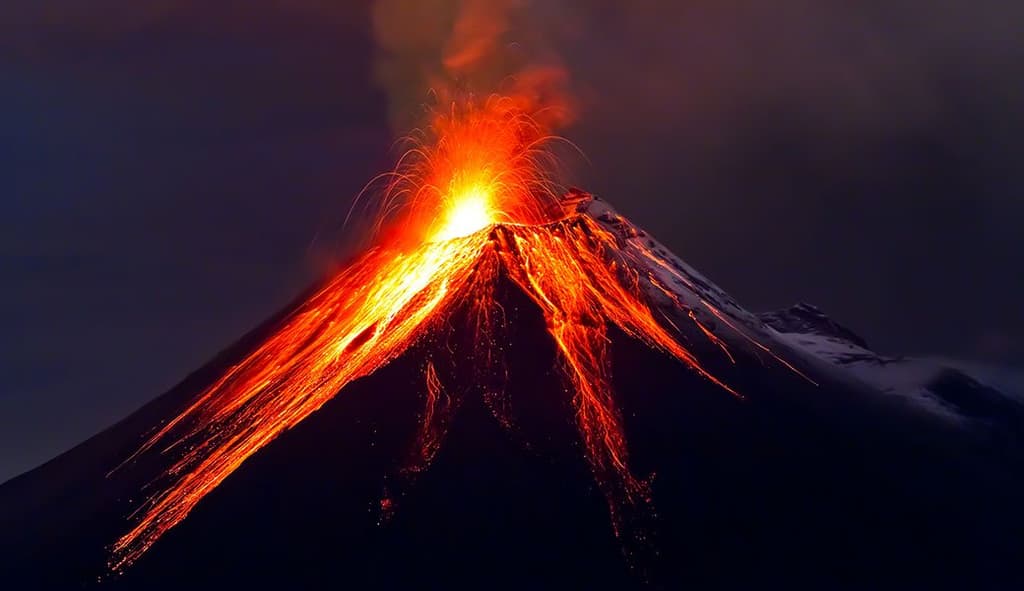
Global monitoring networks, including USGS and equivalent agencies, report no volcanoes exhibiting the sustained seismic swarms, rapid inflation, or gas emission surges that typically precede a VEI 6+ event. Such eruptions remain statistically rare, occurring roughly once per century on average, with the most recent examples decades ago. Current activity worldwide stays limited to frequent small-to-moderate events at sites like Semeru and Kīlauea, none approaching colossal explosivity thresholds. With only months remaining in 2026 and no major unrest detected, trader consensus reflects this absence of precursors. An unforeseen escalation at a poorly monitored system could still shift odds, though historical patterns indicate low likelihood.
สรุปจาก AI ทดลองที่อ้างอิงข้อมูลจาก Polymarket ไม่ใช่คำแนะนำในการเทรดและไม่มีผลต่อการตัดสินตลาดนี้ · อัปเดตแล้วMajor volcano eruption (VEI ≥6) in 2026?
Major volcano eruption (VEI ≥6) in 2026?
$128,374 ปริมาณ
$128,374 ปริมาณ
$128,374 ปริมาณ
$128,374 ปริมาณ
The primary resolution source will be the Smithsonian Institution Global Volcanism Program (GVP: https://volcano.si.edu/), specifically the ‘VEI 6’ figure for 2026 released on the page currently titled "Eruptions Avg 2000-2024 (N/T)" (https://volcano.si.edu/faq/index.cfm?question=eruptionsbyyear) as of March 31, 2027, 12 PM ET. Any prior updates will not be considered finalized.
If this dataset has not been updated to include all relevant events by March 31, 2027, or if the Smithsonian GVP becomes permanently unavailable, this market may resolve based on a consensus of credible scientific sources, including the U.S. Geological Survey (USGS), national or regional volcanic observatories, or credible reporting of a scientific consensus.
Note: Smithsonian Institution Global Volcanism Program databases, which include eruptions that reached the relevant threshold prior to this market’s timeframe (e.g., https://volcano.si.edu/faq/index.cfm?question=eruptionsbyyear&checkyear=2025), will not be considered.
ตลาดเปิดเมื่อ: Dec 29, 2025, 6:24 PM ET
Resolver
0x65070BE91...The primary resolution source will be the Smithsonian Institution Global Volcanism Program (GVP: https://volcano.si.edu/), specifically the ‘VEI 6’ figure for 2026 released on the page currently titled "Eruptions Avg 2000-2024 (N/T)" (https://volcano.si.edu/faq/index.cfm?question=eruptionsbyyear) as of March 31, 2027, 12 PM ET. Any prior updates will not be considered finalized.
If this dataset has not been updated to include all relevant events by March 31, 2027, or if the Smithsonian GVP becomes permanently unavailable, this market may resolve based on a consensus of credible scientific sources, including the U.S. Geological Survey (USGS), national or regional volcanic observatories, or credible reporting of a scientific consensus.
Note: Smithsonian Institution Global Volcanism Program databases, which include eruptions that reached the relevant threshold prior to this market’s timeframe (e.g., https://volcano.si.edu/faq/index.cfm?question=eruptionsbyyear&checkyear=2025), will not be considered.
Resolver
0x65070BE91...Global monitoring networks, including USGS and equivalent agencies, report no volcanoes exhibiting the sustained seismic swarms, rapid inflation, or gas emission surges that typically precede a VEI 6+ event. Such eruptions remain statistically rare, occurring roughly once per century on average, with the most recent examples decades ago. Current activity worldwide stays limited to frequent small-to-moderate events at sites like Semeru and Kīlauea, none approaching colossal explosivity thresholds. With only months remaining in 2026 and no major unrest detected, trader consensus reflects this absence of precursors. An unforeseen escalation at a poorly monitored system could still shift odds, though historical patterns indicate low likelihood.
สรุปจาก AI ทดลองที่อ้างอิงข้อมูลจาก Polymarket ไม่ใช่คำแนะนำในการเทรดและไม่มีผลต่อการตัดสินตลาดนี้ · อัปเดตแล้ว

ระวังลิงก์ภายนอก
ระวังลิงก์ภายนอก
คำถามที่พบบ่อย