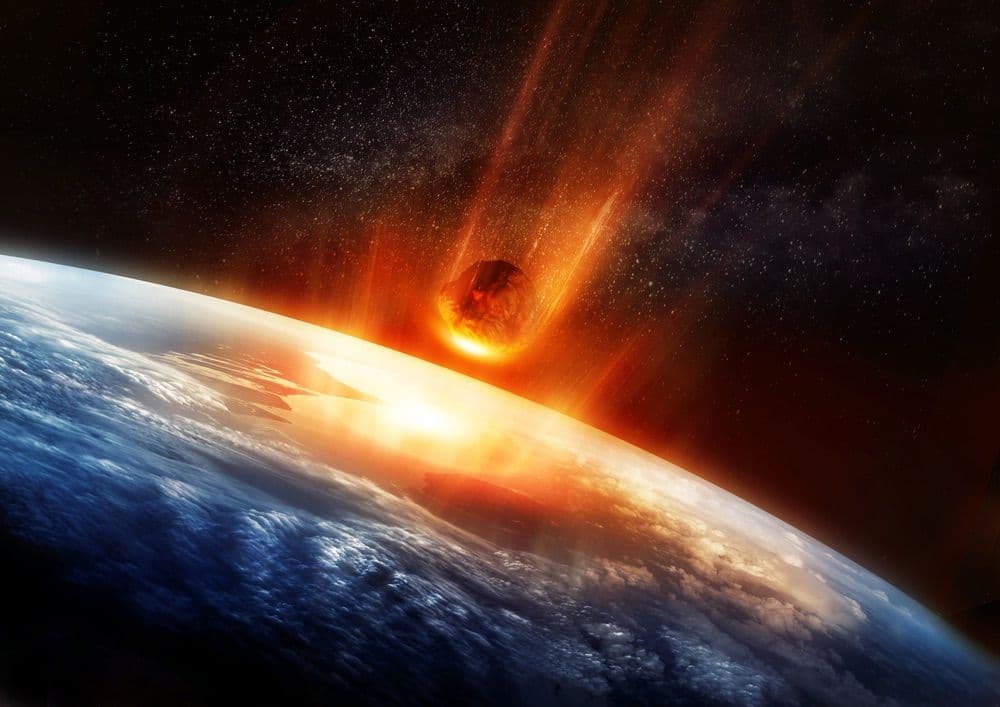
NASA’s Center for Near-Earth Object Studies and Sentry monitoring system show no known asteroids capable of a 10kt+ impact on collision trajectories for 2026. Continuous surveys detect and rule out threats from objects as small as tens of meters well in advance, with recent close passes like 2026 JH2 and 2026 FM3 confirmed safe at distances far beyond the Moon. Planetary defense networks have identified no new large near-Earth objects posing short-term risk, reinforcing trader consensus around the low baseline probability of undetected strikes. Upcoming catalog updates from ongoing surveys represent the main potential catalysts that could shift these market-implied odds.
สรุปจาก AI ทดลองที่อ้างอิงข้อมูลจาก Polymarket ไม่ใช่คำแนะนำในการเทรดและไม่มีผลต่อการตัดสินตลาดนี้ · อัปเดตแล้วMajor meteor strike (10kt+) in 2026?
Major meteor strike (10kt+) in 2026?
12% โอกาส
$178,784 ปริมาณ
$178,784 ปริมาณ
Dec 31, 2026
12% โอกาส
$178,784 ปริมาณ
$178,784 ปริมาณ
Dec 31, 2026
This market will resolve to "Yes" if a natural meteoroid (bolide) explodes in Earth's atmosphere with a total impact energy greater than or equal to 10 kilotons of TNT equivalent between January 1 and December 31, 2026, 11:59 PM ET. Otherwise, this market will resolve to “No”.
The object must be classified as a natural meteoroid; events involving artificial objects or reentry vehicles do not qualify.
The primary resolution source will be the NASA JPL Fireball and Bolide Data repository: https://cneos.jpl.nasa.gov/fireballs/. The relevant field for determining impact energy is the “Impact Energy (kt)” column. If this dataset has not been updated to include all relevant dates by February 28, 2027, or if the NASA JPL Fireball and Bolide Data repository becomes permanently unavailable, this market may resolve based on a consensus of credible sources including the European Space Agency (ESA), the International Asteroid Warning Network (IAWN), the U.S. Department of Defense, or credible reporting of a scientific consensus, such as a NASA press release.NASA’s Center for Near-Earth Object Studies and Sentry monitoring system show no known asteroids capable of a 10kt+ impact on collision trajectories for 2026. Continuous surveys detect and rule out threats from objects as small as tens of meters well in advance, with recent close passes like 2026 JH2 and 2026 FM3 confirmed safe at distances far beyond the Moon. Planetary defense networks have identified no new large near-Earth objects posing short-term risk, reinforcing trader consensus around the low baseline probability of undetected strikes. Upcoming catalog updates from ongoing surveys represent the main potential catalysts that could shift these market-implied odds.
This market will resolve to "Yes" if a natural meteoroid (bolide) explodes in Earth's atmosphere with a total impact energy greater than or equal to 10 kilotons of TNT equivalent between January 1 and December 31, 2026, 11:59 PM ET. Otherwise, this market will resolve to “No”.
The object must be classified as a natural meteoroid; events involving artificial objects or reentry vehicles do not qualify.
The primary resolution source will be the NASA JPL Fireball and Bolide Data repository: https://cneos.jpl.nasa.gov/fireballs/. The relevant field for determining impact energy is the “Impact Energy (kt)” column. If this dataset has not been updated to include all relevant dates by February 28, 2027, or if the NASA JPL Fireball and Bolide Data repository becomes permanently unavailable, this market may resolve based on a consensus of credible sources including the European Space Agency (ESA), the International Asteroid Warning Network (IAWN), the U.S. Department of Defense, or credible reporting of a scientific consensus, such as a NASA press release.
The object must be classified as a natural meteoroid; events involving artificial objects or reentry vehicles do not qualify.
The primary resolution source will be the NASA JPL Fireball and Bolide Data repository: https://cneos.jpl.nasa.gov/fireballs/. The relevant field for determining impact energy is the “Impact Energy (kt)” column. If this dataset has not been updated to include all relevant dates by February 28, 2027, or if the NASA JPL Fireball and Bolide Data repository becomes permanently unavailable, this market may resolve based on a consensus of credible sources including the European Space Agency (ESA), the International Asteroid Warning Network (IAWN), the U.S. Department of Defense, or credible reporting of a scientific consensus, such as a NASA press release.
ตลาดเปิดเมื่อ: Dec 31, 2025, 1:18 PM ET
ปริมาณการซื้อขาย
$178,784วันสิ้นสุด
Dec 31, 2026ตลาดเปิดเมื่อ
Dec 31, 2025, 1:18 PM ETResolver
0x65070BE91...This market will resolve to "Yes" if a natural meteoroid (bolide) explodes in Earth's atmosphere with a total impact energy greater than or equal to 10 kilotons of TNT equivalent between January 1 and December 31, 2026, 11:59 PM ET. Otherwise, this market will resolve to “No”.
The object must be classified as a natural meteoroid; events involving artificial objects or reentry vehicles do not qualify.
The primary resolution source will be the NASA JPL Fireball and Bolide Data repository: https://cneos.jpl.nasa.gov/fireballs/. The relevant field for determining impact energy is the “Impact Energy (kt)” column. If this dataset has not been updated to include all relevant dates by February 28, 2027, or if the NASA JPL Fireball and Bolide Data repository becomes permanently unavailable, this market may resolve based on a consensus of credible sources including the European Space Agency (ESA), the International Asteroid Warning Network (IAWN), the U.S. Department of Defense, or credible reporting of a scientific consensus, such as a NASA press release.NASA’s Center for Near-Earth Object Studies and Sentry monitoring system show no known asteroids capable of a 10kt+ impact on collision trajectories for 2026. Continuous surveys detect and rule out threats from objects as small as tens of meters well in advance, with recent close passes like 2026 JH2 and 2026 FM3 confirmed safe at distances far beyond the Moon. Planetary defense networks have identified no new large near-Earth objects posing short-term risk, reinforcing trader consensus around the low baseline probability of undetected strikes. Upcoming catalog updates from ongoing surveys represent the main potential catalysts that could shift these market-implied odds.
This market will resolve to "Yes" if a natural meteoroid (bolide) explodes in Earth's atmosphere with a total impact energy greater than or equal to 10 kilotons of TNT equivalent between January 1 and December 31, 2026, 11:59 PM ET. Otherwise, this market will resolve to “No”.
The object must be classified as a natural meteoroid; events involving artificial objects or reentry vehicles do not qualify.
The primary resolution source will be the NASA JPL Fireball and Bolide Data repository: https://cneos.jpl.nasa.gov/fireballs/. The relevant field for determining impact energy is the “Impact Energy (kt)” column. If this dataset has not been updated to include all relevant dates by February 28, 2027, or if the NASA JPL Fireball and Bolide Data repository becomes permanently unavailable, this market may resolve based on a consensus of credible sources including the European Space Agency (ESA), the International Asteroid Warning Network (IAWN), the U.S. Department of Defense, or credible reporting of a scientific consensus, such as a NASA press release.
The object must be classified as a natural meteoroid; events involving artificial objects or reentry vehicles do not qualify.
The primary resolution source will be the NASA JPL Fireball and Bolide Data repository: https://cneos.jpl.nasa.gov/fireballs/. The relevant field for determining impact energy is the “Impact Energy (kt)” column. If this dataset has not been updated to include all relevant dates by February 28, 2027, or if the NASA JPL Fireball and Bolide Data repository becomes permanently unavailable, this market may resolve based on a consensus of credible sources including the European Space Agency (ESA), the International Asteroid Warning Network (IAWN), the U.S. Department of Defense, or credible reporting of a scientific consensus, such as a NASA press release.
ปริมาณการซื้อขาย
$178,784วันสิ้นสุด
Dec 31, 2026ตลาดเปิดเมื่อ
Dec 31, 2025, 1:18 PM ETResolver
0x65070BE91...NASA’s Center for Near-Earth Object Studies and Sentry monitoring system show no known asteroids capable of a 10kt+ impact on collision trajectories for 2026. Continuous surveys detect and rule out threats from objects as small as tens of meters well in advance, with recent close passes like 2026 JH2 and 2026 FM3 confirmed safe at distances far beyond the Moon. Planetary defense networks have identified no new large near-Earth objects posing short-term risk, reinforcing trader consensus around the low baseline probability of undetected strikes. Upcoming catalog updates from ongoing surveys represent the main potential catalysts that could shift these market-implied odds.
สรุปจาก AI ทดลองที่อ้างอิงข้อมูลจาก Polymarket ไม่ใช่คำแนะนำในการเทรดและไม่มีผลต่อการตัดสินตลาดนี้ · อัปเดตแล้ว
ระวังลิงก์ภายนอก
ระวังลิงก์ภายนอก
คำถามที่พบบ่อย