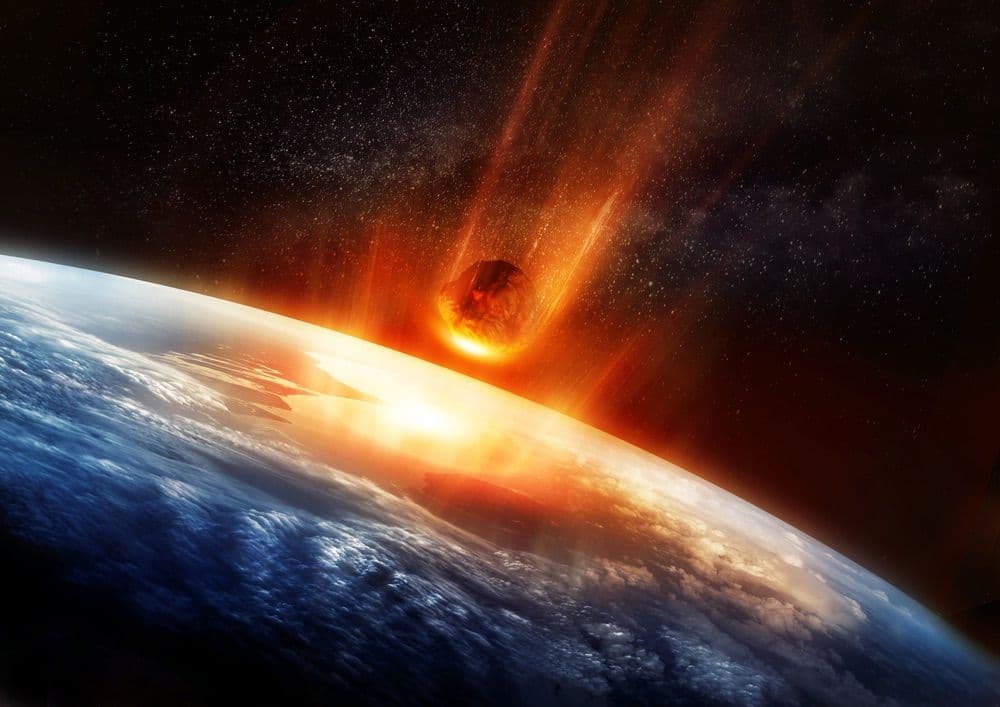
Extensive NASA and international near-Earth object monitoring through systems like JPL's Sentry and CNEOS orbital tracking shows no known asteroids or comets on collision trajectories capable of delivering 1 megaton TNT-equivalent energy in 2026. Continuous sky surveys with ground- and space-based telescopes, combined with precise trajectory modeling, have ruled out significant risks for the foreseeable future. Small atmospheric events, such as recent fireballs, release far less energy and pose no market-relevant threat. While an undetected object or last-minute orbital perturbation remains theoretically possible, current detection thresholds and historical data make such scenarios extremely unlikely, supporting the market's strong consensus on the "No" outcome.
สรุปจาก AI ทดลองที่อ้างอิงข้อมูลจาก Polymarket ไม่ใช่คำแนะนำในการเทรดและไม่มีผลต่อการตัดสินตลาดนี้ · อัปเดตแล้ว1 megaton meteor strike in 2026?
1 megaton meteor strike in 2026?
$116,329 ปริมาณ
$116,329 ปริมาณ
$116,329 ปริมาณ
$116,329 ปริมาณ
The object must be classified as a natural meteoroid; events involving artificial objects or reentry vehicles do not qualify.
The primary resolution source will be the NASA JPL Fireball and Bolide Data repository: https://cneos.jpl.nasa.gov/fireballs/. The relevant field for determining impact energy is the “Impact Energy (kt)” column. If this dataset has not been updated to include all relevant dates by February 28, 2027, or if the NASA JPL Fireball and Bolide Data repository becomes permanently unavailable, this market may resolve based on a consensus of credible sources including the European Space Agency (ESA), the International Asteroid Warning Network (IAWN), the U.S. Department of Defense, or credible reporting of a scientific consensus, such as a NASA press release.
ตลาดเปิดเมื่อ: Jan 2, 2026, 2:24 PM ET
Resolver
0x65070BE91...The object must be classified as a natural meteoroid; events involving artificial objects or reentry vehicles do not qualify.
The primary resolution source will be the NASA JPL Fireball and Bolide Data repository: https://cneos.jpl.nasa.gov/fireballs/. The relevant field for determining impact energy is the “Impact Energy (kt)” column. If this dataset has not been updated to include all relevant dates by February 28, 2027, or if the NASA JPL Fireball and Bolide Data repository becomes permanently unavailable, this market may resolve based on a consensus of credible sources including the European Space Agency (ESA), the International Asteroid Warning Network (IAWN), the U.S. Department of Defense, or credible reporting of a scientific consensus, such as a NASA press release.
Resolver
0x65070BE91...Extensive NASA and international near-Earth object monitoring through systems like JPL's Sentry and CNEOS orbital tracking shows no known asteroids or comets on collision trajectories capable of delivering 1 megaton TNT-equivalent energy in 2026. Continuous sky surveys with ground- and space-based telescopes, combined with precise trajectory modeling, have ruled out significant risks for the foreseeable future. Small atmospheric events, such as recent fireballs, release far less energy and pose no market-relevant threat. While an undetected object or last-minute orbital perturbation remains theoretically possible, current detection thresholds and historical data make such scenarios extremely unlikely, supporting the market's strong consensus on the "No" outcome.
สรุปจาก AI ทดลองที่อ้างอิงข้อมูลจาก Polymarket ไม่ใช่คำแนะนำในการเทรดและไม่มีผลต่อการตัดสินตลาดนี้ · อัปเดตแล้ว
ระวังลิงก์ภายนอก
ระวังลิงก์ภายนอก
คำถามที่พบบ่อย