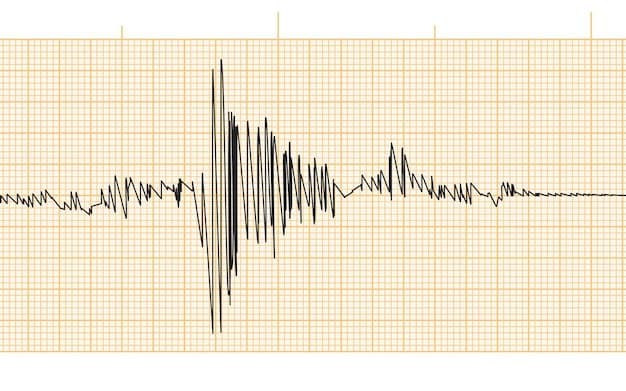
Recent global seismic activity, including the August 10 magnitude 7.4–7.5 event in Colombia's Chocó region along the subducting Nazca plate and multiple magnitude 6.0+ quakes in the South Sandwich Islands, Kermadec region, and elsewhere since early August, underscores ongoing tectonic strain in subduction zones and transform boundaries. USGS data confirm these events align with typical annual rates of roughly 15–20 magnitude 6.0+ earthquakes worldwide, concentrated along the Pacific Ring of Fire. Short-term forecasts remain limited due to the stochastic nature of fault rupture, though aftershock sequences and regional strain accumulation in areas like the Cascadia subduction zone or Indonesia provide context for trader assessments. Continuous USGS monitoring and any new moment tensor solutions through late August represent key data points that could influence resolution probabilities.
Експериментальне резюме, згенероване ШІ з посиланням на дані Polymarket. Це не торгова порада і не впливає на вирішення цього ринку. · ОновленоWhere will a 6.0+ earthquake occur by end of August?
Where will a 6.0+ earthquake occur by end of August?

Indonesia
100%

United States
24%

Chile
28%

Mexico
30%

Japan
47%

Philippines
53%
$5,037 Обс.
Indonesia
100%
United States
24%
Chile
28%
Mexico
30%
Japan
47%
Philippines
53%
A qualifying earthquake must be counted for a country's market only if USGS attributes its location to that country (or its offshore territory) in the event's location description, lists the earthquake with a preferred magnitude of 6.0 or higher, and lists it as occurring within the specified timeframe. Earthquakes without a preferred magnitude classification will not qualify.
If an earthquake with an origin time within a market's window has not yet appeared on the resolution source by the end of the third calendar day after the specified month, this market end date may be extended for up to one week after the specified month and will resolve based on the first preferred magnitude, country attribution and timestamp of the event in question. If the relevant data is not released by the end of the extension period, this market will resolve based on the data released up until that point.
Revisions to the underlying data, such as country attribution and preferred magnitude, will be considered until the end of the third calendar day after the specified month or until the end of an applicable extension period. Revisions made after the end of the third calendar day after the specified month or after the end of an applicable extension period will not be considered.
The resolution source for this event is the United States Geological Survey (USGS) Earthquake Hazards Program earthquake catalog (https://earthquake.usgs.gov/earthquakes/search/), and only data released by USGS will be considered, regardless of other sources. If the resolution source becomes temporarily unavailable, the market will remain open until it resumes; if it remains unavailable through the end of the third calendar day after the specified month, this market will resolve to "No."
Ринок відкрито: Aug 11, 2026, 6:03 PM ET
Джерело вирішення
https://earthquake.usgs.gov/earthquakes/search/Resolver
0x65070BE91...A qualifying earthquake must be counted for a country's market only if USGS attributes its location to that country (or its offshore territory) in the event's location description, lists the earthquake with a preferred magnitude of 6.0 or higher, and lists it as occurring within the specified timeframe. Earthquakes without a preferred magnitude classification will not qualify.
If an earthquake with an origin time within a market's window has not yet appeared on the resolution source by the end of the third calendar day after the specified month, this market end date may be extended for up to one week after the specified month and will resolve based on the first preferred magnitude, country attribution and timestamp of the event in question. If the relevant data is not released by the end of the extension period, this market will resolve based on the data released up until that point.
Revisions to the underlying data, such as country attribution and preferred magnitude, will be considered until the end of the third calendar day after the specified month or until the end of an applicable extension period. Revisions made after the end of the third calendar day after the specified month or after the end of an applicable extension period will not be considered.
The resolution source for this event is the United States Geological Survey (USGS) Earthquake Hazards Program earthquake catalog (https://earthquake.usgs.gov/earthquakes/search/), and only data released by USGS will be considered, regardless of other sources. If the resolution source becomes temporarily unavailable, the market will remain open until it resumes; if it remains unavailable through the end of the third calendar day after the specified month, this market will resolve to "No."
Джерело вирішення
https://earthquake.usgs.gov/earthquakes/search/Resolver
0x65070BE91...Recent global seismic activity, including the August 10 magnitude 7.4–7.5 event in Colombia's Chocó region along the subducting Nazca plate and multiple magnitude 6.0+ quakes in the South Sandwich Islands, Kermadec region, and elsewhere since early August, underscores ongoing tectonic strain in subduction zones and transform boundaries. USGS data confirm these events align with typical annual rates of roughly 15–20 magnitude 6.0+ earthquakes worldwide, concentrated along the Pacific Ring of Fire. Short-term forecasts remain limited due to the stochastic nature of fault rupture, though aftershock sequences and regional strain accumulation in areas like the Cascadia subduction zone or Indonesia provide context for trader assessments. Continuous USGS monitoring and any new moment tensor solutions through late August represent key data points that could influence resolution probabilities.
Експериментальне резюме, згенероване ШІ з посиланням на дані Polymarket. Це не торгова порада і не впливає на вирішення цього ринку. · Оновлено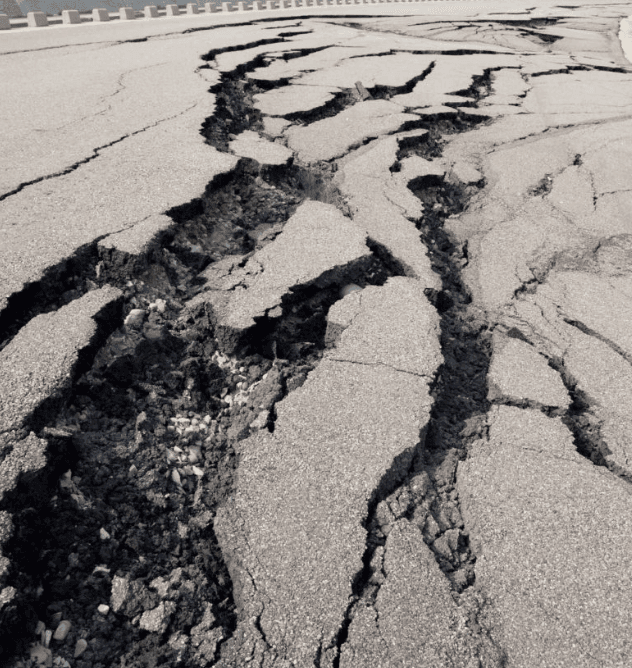
Обережно з зовнішніми посиланнями.
Обережно з зовнішніми посиланнями.
Часті запитання