
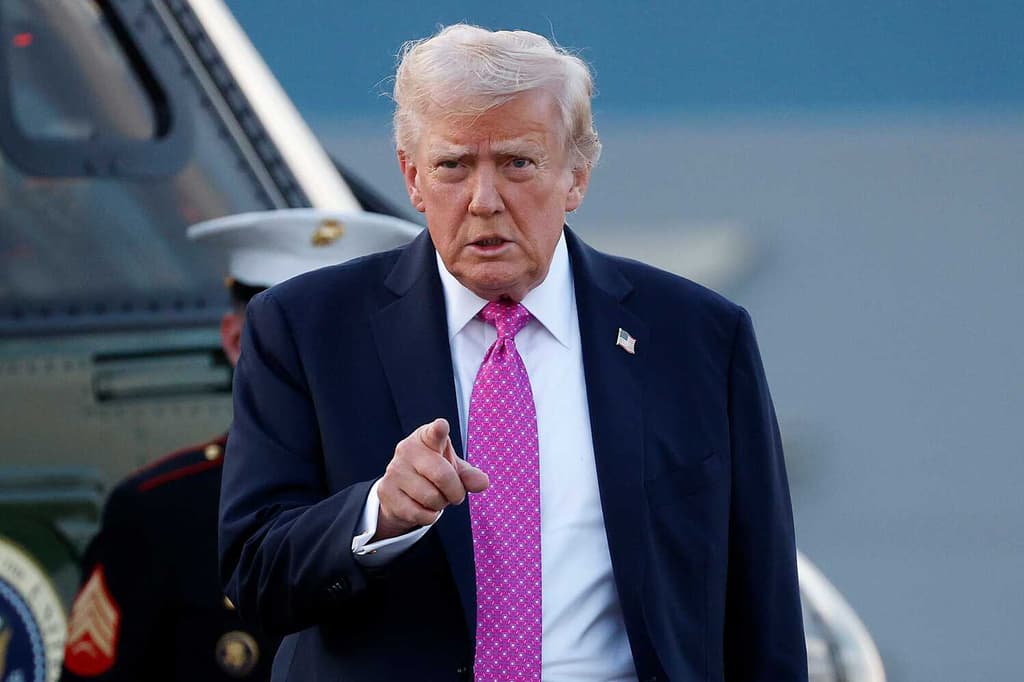
Để giao dịch tại Mỹ, hãy truy cập polymarket.us

icon for Will Trump publicly insult someone on...?

Will Trump publicly insult someone on...?

icon for Will Trump publicly insult someone on...?

Will Trump publicly insult someone on...?

Oct 1

Oct 1

$44,079 KL.

Sep 3, 2026
Polymarket

$44,079 KL.

Polymarket

September 3

$2,801 KL.

69%

September 16

$3,490 KL.

100%

September 17

$1,392 KL.

88%

September 18

$72 KL.

89%

September 19

$319 KL.

88%

September 20

$386 KL.

89%

September 21

$280 KL.

90%

September 22

$253 KL.

93%

September 23

$786 KL.

88%

September 24

$1,322 KL.

84%

September 25

$1,363 KL.

84%

September 26

$542 KL.

84%

September 27

$2,604 KL.

87%

September 28

$241 KL.

88%

September 29

$368 KL.

88%

September 30

$384 KL.

88%

This market will resolve to "Yes" if Donald Trump makes a public statement in which he insults any non-fictional individual on the specified date (ET). Otherwise, this market will resolve to "No". A qualifying public statement is any written, verbal, or recorded statement which is either made in a public setting, published by the speaker, or on the record to media, and the direct language of which is made publicly available on the specified date (ET). Pre-recorded public statements will count for the date (ET) that they are made publicly available. Statements made in private that are subsequently leaked will not qualify, even if credibly reported. Narrations and paraphrasings do not qualify. Images and videos posted on verified social media accounts will only qualify if they contain insulting language clearly directed at the individual, whether within the content itself or in an accompanying caption. Language within the content of a video will only qualify if Donald Trump is clearly portrayed as saying it. Insulting language within the content of a video said by anyone other than Donald Trump or a portrayal thereof will not qualify. A quote post will qualify if added language independently qualifies as an insult, or endorses insulting language directed at the individual within the quoted post; a repost of another account's post will not qualify. A public statement qualifies as an insult if it mocks, degrades, or disparages the individual either personally or professionally. This includes calling the individual a clearly insulting trait (e.g., weak, stupid, disloyal, a failure), using an insulting nickname (e.g., Crooked Hillary), using other clearly derogatory language, or using the negative form of a positive trait in a clearly derogatory manner (e.g., “He isn’t smart”, “He has no judgment”). Disparaging the individual in their professional capacity will qualify (e.g., "He is a disaster candidate," "He is terrible at his job"); however, negative comments directed at the individual's specific actions, policies, or decisions will not qualify (e.g., "He has bad policies," "He is wrong about healthcare"). A statement made in direct reference to the individual will qualify even if they are not named, so long as it is reasonably clear from context that they are the subject. The resolution sources will be public statements made by Donald Trump and a consensus of credible reporting.Trump's pattern of directing pointed public criticism at journalists, political figures, and media outlets during press interactions and public appearances continues to shape trader assessments for date-specific insult markets. In September 2026, multiple exchanges on the tarmac and at events featured the president labeling reporters "the worst," dismissing follow-up questions as "stupid," and questioning their motives amid discussions of midterm incentives, debt levels, and voting turnout. These incidents align with earlier 2026 episodes at summits, dinners, and briefings where similar language targeted opponents and correspondents. Upcoming press access around policy rollouts, congressional votes, and campaign stops provides regular opportunities for such statements, while the resolution criteria focus strictly on verifiable public remarks meeting the defined threshold for personal or professional attacks.

This market will resolve to "Yes" if Donald Trump makes a public statement in which he insults any non-fictional individual on the specified date (ET). Otherwise, this market will resolve to "No".

A qualifying public statement is any written, verbal, or recorded statement which is either made in a public setting, published by the speaker, or on the record to media, and the direct language of which is made publicly available on the specified date (ET). Pre-recorded public statements will count for the date (ET) that they are made publicly available. Statements made in private that are subsequently leaked will not qualify, even if credibly reported. Narrations and paraphrasings do not qualify.

Images and videos posted on verified social media accounts will only qualify if they contain insulting language clearly directed at the individual, whether within the content itself or in an accompanying caption. Language within the content of a video will only qualify if Donald Trump is clearly portrayed as saying it. Insulting language within the content of a video said by anyone other than Donald Trump or a portrayal thereof will not qualify.

A quote post will qualify if added language independently qualifies as an insult, or endorses insulting language directed at the individual within the quoted post; a repost of another account's post will not qualify.

A public statement qualifies as an insult if it mocks, degrades, or disparages the individual either personally or professionally. This includes calling the individual a clearly insulting trait (e.g., weak, stupid, disloyal, a failure), using an insulting nickname (e.g., Crooked Hillary), using other clearly derogatory language, or using the negative form of a positive trait in a clearly derogatory manner (e.g., “He isn’t smart”, “He has no judgment”). Disparaging the individual in their professional capacity will qualify (e.g., "He is a disaster candidate," "He is terrible at his job"); however, negative comments directed at the individual's specific actions, policies, or decisions will not qualify (e.g., "He has bad policies," "He is wrong about healthcare").

A statement made in direct reference to the individual will qualify even if they are not named, so long as it is reasonably clear from context that they are the subject.

The resolution sources will be public statements made by Donald Trump and a consensus of credible reporting.
This market will resolve to "Yes" if Donald Trump makes a public statement in which he insults any non-fictional individual on the specified date (ET). Otherwise, this market will resolve to "No". A qualifying public statement is any written, verbal, or recorded statement which is either made in a public setting, published by the speaker, or on the record to media, and the direct language of which is made publicly available on the specified date (ET). Pre-recorded public statements will count for the date (ET) that they are made publicly available. Statements made in private that are subsequently leaked will not qualify, even if credibly reported. Narrations and paraphrasings do not qualify. Images and videos posted on verified social media accounts will only qualify if they contain insulting language clearly directed at the individual, whether within the content itself or in an accompanying caption. Language within the content of a video will only qualify if Donald Trump is clearly portrayed as saying it. Insulting language within the content of a video said by anyone other than Donald Trump or a portrayal thereof will not qualify. A quote post will qualify if added language independently qualifies as an insult, or endorses insulting language directed at the individual within the quoted post; a repost of another account's post will not qualify. A public statement qualifies as an insult if it mocks, degrades, or disparages the individual either personally or professionally. This includes calling the individual a clearly insulting trait (e.g., weak, stupid, disloyal, a failure), using an insulting nickname (e.g., Crooked Hillary), using other clearly derogatory language, or using the negative form of a positive trait in a clearly derogatory manner (e.g., “He isn’t smart”, “He has no judgment”). Disparaging the individual in their professional capacity will qualify (e.g., "He is a disaster candidate," "He is terrible at his job"); however, negative comments directed at the individual's specific actions, policies, or decisions will not qualify (e.g., "He has bad policies," "He is wrong about healthcare"). A statement made in direct reference to the individual will qualify even if they are not named, so long as it is reasonably clear from context that they are the subject. The resolution sources will be public statements made by Donald Trump and a consensus of credible reporting.
Khối lượng
$44,079
Ngày kết thúc
Oct 1, 2026
Thị trường mở
Sep 2, 2026, 5:16 PM ET

Người giải quyết

0x65070BE91...
This market will resolve to "Yes" if Donald Trump makes a public statement in which he insults any non-fictional individual on the specified date (ET). Otherwise, this market will resolve to "No". A qualifying public statement is any written, verbal, or recorded statement which is either made in a public setting, published by the speaker, or on the record to media, and the direct language of which is made publicly available on the specified date (ET). Pre-recorded public statements will count for the date (ET) that they are made publicly available. Statements made in private that are subsequently leaked will not qualify, even if credibly reported. Narrations and paraphrasings do not qualify. Images and videos posted on verified social media accounts will only qualify if they contain insulting language clearly directed at the individual, whether within the content itself or in an accompanying caption. Language within the content of a video will only qualify if Donald Trump is clearly portrayed as saying it. Insulting language within the content of a video said by anyone other than Donald Trump or a portrayal thereof will not qualify. A quote post will qualify if added language independently qualifies as an insult, or endorses insulting language directed at the individual within the quoted post; a repost of another account's post will not qualify. A public statement qualifies as an insult if it mocks, degrades, or disparages the individual either personally or professionally. This includes calling the individual a clearly insulting trait (e.g., weak, stupid, disloyal, a failure), using an insulting nickname (e.g., Crooked Hillary), using other clearly derogatory language, or using the negative form of a positive trait in a clearly derogatory manner (e.g., “He isn’t smart”, “He has no judgment”). Disparaging the individual in their professional capacity will qualify (e.g., "He is a disaster candidate," "He is terrible at his job"); however, negative comments directed at the individual's specific actions, policies, or decisions will not qualify (e.g., "He has bad policies," "He is wrong about healthcare"). A statement made in direct reference to the individual will qualify even if they are not named, so long as it is reasonably clear from context that they are the subject. The resolution sources will be public statements made by Donald Trump and a consensus of credible reporting.Trump's pattern of directing pointed public criticism at journalists, political figures, and media outlets during press interactions and public appearances continues to shape trader assessments for date-specific insult markets. In September 2026, multiple exchanges on the tarmac and at events featured the president labeling reporters "the worst," dismissing follow-up questions as "stupid," and questioning their motives amid discussions of midterm incentives, debt levels, and voting turnout. These incidents align with earlier 2026 episodes at summits, dinners, and briefings where similar language targeted opponents and correspondents. Upcoming press access around policy rollouts, congressional votes, and campaign stops provides regular opportunities for such statements, while the resolution criteria focus strictly on verifiable public remarks meeting the defined threshold for personal or professional attacks.

This market will resolve to "Yes" if Donald Trump makes a public statement in which he insults any non-fictional individual on the specified date (ET). Otherwise, this market will resolve to "No".

A qualifying public statement is any written, verbal, or recorded statement which is either made in a public setting, published by the speaker, or on the record to media, and the direct language of which is made publicly available on the specified date (ET). Pre-recorded public statements will count for the date (ET) that they are made publicly available. Statements made in private that are subsequently leaked will not qualify, even if credibly reported. Narrations and paraphrasings do not qualify.

Images and videos posted on verified social media accounts will only qualify if they contain insulting language clearly directed at the individual, whether within the content itself or in an accompanying caption. Language within the content of a video will only qualify if Donald Trump is clearly portrayed as saying it. Insulting language within the content of a video said by anyone other than Donald Trump or a portrayal thereof will not qualify.

A quote post will qualify if added language independently qualifies as an insult, or endorses insulting language directed at the individual within the quoted post; a repost of another account's post will not qualify.

A public statement qualifies as an insult if it mocks, degrades, or disparages the individual either personally or professionally. This includes calling the individual a clearly insulting trait (e.g., weak, stupid, disloyal, a failure), using an insulting nickname (e.g., Crooked Hillary), using other clearly derogatory language, or using the negative form of a positive trait in a clearly derogatory manner (e.g., “He isn’t smart”, “He has no judgment”). Disparaging the individual in their professional capacity will qualify (e.g., "He is a disaster candidate," "He is terrible at his job"); however, negative comments directed at the individual's specific actions, policies, or decisions will not qualify (e.g., "He has bad policies," "He is wrong about healthcare").

A statement made in direct reference to the individual will qualify even if they are not named, so long as it is reasonably clear from context that they are the subject.

The resolution sources will be public statements made by Donald Trump and a consensus of credible reporting.
This market will resolve to "Yes" if Donald Trump makes a public statement in which he insults any non-fictional individual on the specified date (ET). Otherwise, this market will resolve to "No". A qualifying public statement is any written, verbal, or recorded statement which is either made in a public setting, published by the speaker, or on the record to media, and the direct language of which is made publicly available on the specified date (ET). Pre-recorded public statements will count for the date (ET) that they are made publicly available. Statements made in private that are subsequently leaked will not qualify, even if credibly reported. Narrations and paraphrasings do not qualify. Images and videos posted on verified social media accounts will only qualify if they contain insulting language clearly directed at the individual, whether within the content itself or in an accompanying caption. Language within the content of a video will only qualify if Donald Trump is clearly portrayed as saying it. Insulting language within the content of a video said by anyone other than Donald Trump or a portrayal thereof will not qualify. A quote post will qualify if added language independently qualifies as an insult, or endorses insulting language directed at the individual within the quoted post; a repost of another account's post will not qualify. A public statement qualifies as an insult if it mocks, degrades, or disparages the individual either personally or professionally. This includes calling the individual a clearly insulting trait (e.g., weak, stupid, disloyal, a failure), using an insulting nickname (e.g., Crooked Hillary), using other clearly derogatory language, or using the negative form of a positive trait in a clearly derogatory manner (e.g., “He isn’t smart”, “He has no judgment”). Disparaging the individual in their professional capacity will qualify (e.g., "He is a disaster candidate," "He is terrible at his job"); however, negative comments directed at the individual's specific actions, policies, or decisions will not qualify (e.g., "He has bad policies," "He is wrong about healthcare"). A statement made in direct reference to the individual will qualify even if they are not named, so long as it is reasonably clear from context that they are the subject. The resolution sources will be public statements made by Donald Trump and a consensus of credible reporting.
Khối lượng
$44,079
Ngày kết thúc
Oct 1, 2026
Thị trường mở
Sep 2, 2026, 5:16 PM ET

Người giải quyết

0x65070BE91...

Cẩn thận với liên kết bên ngoài.

Câu hỏi thường gặp

"Will Trump publicly insult someone on...?" là thị trường dự đoán trên Polymarket với 28 kết quả có thể nơi các nhà giao dịch mua và bán cổ phần dựa trên điều họ tin sẽ xảy ra. Kết quả dẫn đầu hiện tại là "September 16" ở mức 100%, tiếp theo là "September 4" ở mức 100%. Giá phản ánh xác suất cộng đồng theo thời gian thực. Ví dụ, cổ phần ở giá 100¢ ngụ ý thị trường tập thể cho rằng có 100% khả năng cho kết quả đó. Tỷ lệ này thay đổi liên tục khi trader phản ứng với diễn biến và thông tin mới. Cổ phần đúng kết quả có thể đổi lấy $1 mỗi cổ phần khi thị trường được giải quyết.

Tính đến hôm nay, "Will Trump publicly insult someone on...?" đã tạo $44.1K tổng khối lượng giao dịch kể từ khi thị trường mở vào Sep 2, 2026. Mức hoạt động giao dịch này phản ánh sự tham gia mạnh mẽ từ cộng đồng Polymarket và giúp đảm bảo tỷ lệ hiện tại được thông tin bởi nhóm người tham gia thị trường sâu rộng. Bạn có thể theo dõi biến động giá trực tiếp và giao dịch trên bất kỳ kết quả nào ngay trên trang này.

Để giao dịch trên "Will Trump publicly insult someone on...?," duyệt 28 kết quả có sẵn trên trang này. Mỗi kết quả hiển thị giá hiện tại đại diện cho xác suất ngụ ý của thị trường. Để mở vị thế, chọn kết quả bạn tin là có khả năng nhất, chọn "Có" để giao dịch ủng hộ hoặc "Không" để giao dịch chống, nhập số tiền và nhấn "Giao dịch." Nếu kết quả bạn chọn đúng khi thị trường giải quyết, cổ phần "Có" của bạn trả $1 mỗi cổ phần. Nếu sai, chúng trả $0. Bạn cũng có thể bán cổ phần bất cứ lúc nào trước khi giải quyết nếu muốn chốt lời hoặc cắt lỗ.

Ứng viên dẫn đầu hiện tại cho "Will Trump publicly insult someone on...?" là "September 16" ở mức 100%, nghĩa là thị trường cho 100% khả năng cho kết quả đó. Kết quả gần nhất tiếp theo là "September 4" ở mức 100%. Tỷ lệ cập nhật theo thời gian thực khi trader mua và bán cổ phần, phản ánh cái nhìn tập thể mới nhất về điều có khả năng xảy ra nhất. Kiểm tra thường xuyên hoặc đánh dấu trang này để theo dõi tỷ lệ thay đổi khi thông tin mới xuất hiện.

Quy tắc giải quyết cho "Will Trump publicly insult someone on...?" định nghĩa chính xác điều gì cần xảy ra để mỗi kết quả được tuyên bố thắng — bao gồm nguồn dữ liệu chính thức được sử dụng để xác định kết quả. Bạn có thể xem tiêu chí giải quyết đầy đủ trong phần "Quy tắc" trên trang này phía trên bình luận. Chúng tôi khuyên đọc kỹ quy tắc trước khi giao dịch, vì chúng chỉ rõ điều kiện, trường hợp ngoại lệ và nguồn chính xác quản lý cách thị trường được thanh toán.