
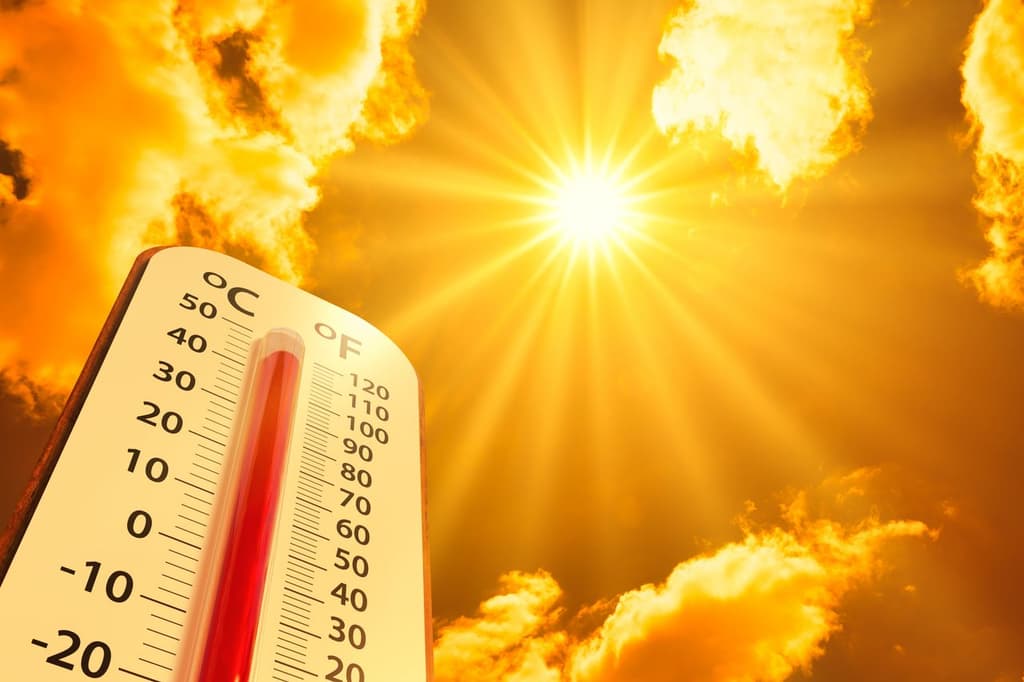
A strengthening El Niño event, with Niño-3.4 sea surface temperature anomalies already exceeding +2°C and models projecting a historic peak above +3°C by late 2026, forms the main driver behind the closely matched market-implied odds clustering around 1.30–1.44°C anomalies for September. Record August global temperatures of 1.65°C above pre-industrial levels, per ERA5 data, and ongoing warmth near 0.88°C above the 1991–2020 baseline reflect the combined influence of this ENSO phase and the long-term anthropogenic trend. Substantial uncertainty persists due to divergent forecast model runs, natural variability in monthly averages, and the precise lag between Pacific warming and global surface response, keeping probabilities distributed across several outcome bins until final observational data resolve the month.
基于Polymarket数据的AI实验性摘要。这不是交易建议,也不影响该市场的结算方式。 · 更新于2026年9月温度升高(ºC)
2026年9月温度升高(ºC)
<1.30ºC 39%
1.40–1.44ºC 38%
1.35–1.39ºC 36%
1.30–1.34ºC 36%
<1.30ºC
39%
1.30–1.34ºC
36%
1.35–1.39ºC
36%
1.40–1.44ºC
38%
1.45–1.49ºC
34%
>1.49ºC
28%
<1.30ºC 39%
1.40–1.44ºC 38%
1.35–1.39ºC 36%
1.30–1.34ºC 36%
<1.30ºC
39%
1.30–1.34ºC
36%
1.35–1.39ºC
36%
1.40–1.44ºC
38%
1.45–1.49ºC
34%
>1.49ºC
28%
An anomaly within a named bracket for September 2026 is necessary and sufficient to resolve this market immediately once the data becomes available, regardless of whether the figure for September 2026 is later revised.
The brackets are mutually exclusive and collectively exhaustive: each range is inclusive of both of its stated endpoints, and the reported anomaly (to the nearest 0.01ºC) falls within exactly one bracket.
The primary resolution source for this market will be the figure found in the table titled "GLOBAL Land-Ocean Temperature Index in 0.01 degrees Celsius" under the column "Sep" in the row "2026" (https://data.giss.nasa.gov/gistemp/tabledata_v4/GLB.Ts+dSST.txt).
If NASA's "Global Temperature Index" is rendered permanently unavailable, other information from NASA may be used.
If no information for September 2026 is provided by NASA by November 1, 2026, 11:59 PM ET, this market will resolve to the lowest range bracket.
市场开放时间: Aug 31, 2026, 9:36 AM ET
An anomaly within a named bracket for September 2026 is necessary and sufficient to resolve this market immediately once the data becomes available, regardless of whether the figure for September 2026 is later revised.
The brackets are mutually exclusive and collectively exhaustive: each range is inclusive of both of its stated endpoints, and the reported anomaly (to the nearest 0.01ºC) falls within exactly one bracket.
The primary resolution source for this market will be the figure found in the table titled "GLOBAL Land-Ocean Temperature Index in 0.01 degrees Celsius" under the column "Sep" in the row "2026" (https://data.giss.nasa.gov/gistemp/tabledata_v4/GLB.Ts+dSST.txt).
If NASA's "Global Temperature Index" is rendered permanently unavailable, other information from NASA may be used.
If no information for September 2026 is provided by NASA by November 1, 2026, 11:59 PM ET, this market will resolve to the lowest range bracket.
A strengthening El Niño event, with Niño-3.4 sea surface temperature anomalies already exceeding +2°C and models projecting a historic peak above +3°C by late 2026, forms the main driver behind the closely matched market-implied odds clustering around 1.30–1.44°C anomalies for September. Record August global temperatures of 1.65°C above pre-industrial levels, per ERA5 data, and ongoing warmth near 0.88°C above the 1991–2020 baseline reflect the combined influence of this ENSO phase and the long-term anthropogenic trend. Substantial uncertainty persists due to divergent forecast model runs, natural variability in monthly averages, and the precise lag between Pacific warming and global surface response, keeping probabilities distributed across several outcome bins until final observational data resolve the month.
基于Polymarket数据的AI实验性摘要。这不是交易建议,也不影响该市场的结算方式。 · 更新于
警惕外部链接哦。
警惕外部链接哦。
常见问题