
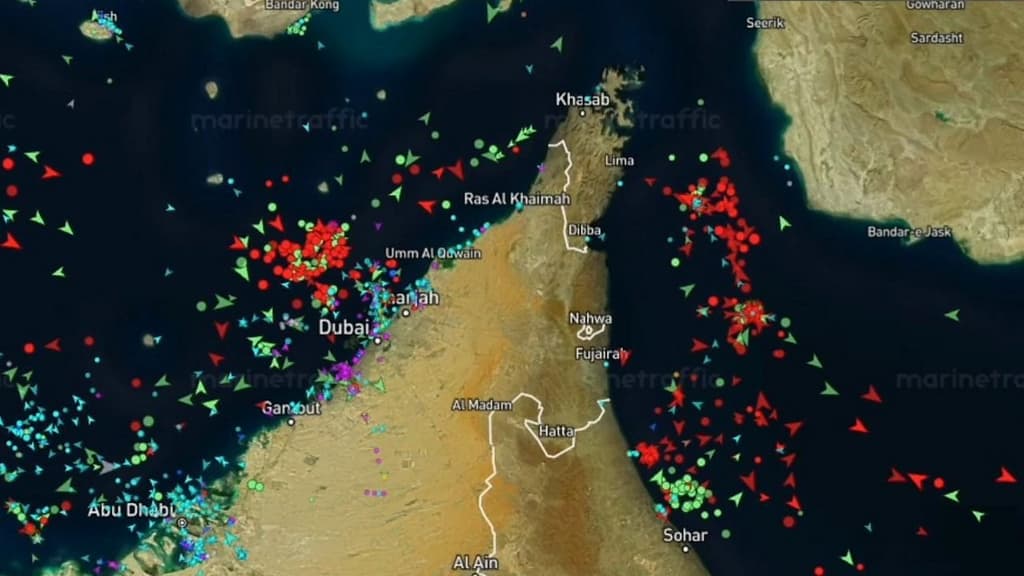
Ongoing tensions in the 2026 Strait of Hormuz crisis, where Iran has restricted tanker traffic through the critical chokepoint carrying roughly one-fifth of global oil, remain the dominant driver of trader positioning on naval transits by August 31. Recent attacks on commercial vessels, including a UAE-linked tanker, alongside Iran's parliamentary review of bans on U.S. and Israeli ships and proposed tolls, have sustained elevated risk premiums in Brent and WTI crude futures while lifting tanker charter rates and war-risk insurance costs. Diplomatic progress, including near-finalized Iran-Oman routing agreements and U.S. statements on potential reopening deals, introduces uncertainty around escalation versus de-escalation, with any confirmed warship movements by the U.S. Navy or allies likely to signal secured passage and compress energy volatility measures. Key near-term catalysts include final approvals from Iranian leadership and any FOMC or OPEC+ commentary on supply disruptions.
基于Polymarket数据的AI实验性摘要。这不是交易建议,也不影响该市场的结算方式。 · 更新于$217,145 交易量

美国
9%

英国
4%

法国
3%

荷兰
2%

意大利
2%

德国
2%

澳大利亚
2%

希腊
1%
$217,145 交易量
美国
9%
英国
4%
法国
3%
荷兰
2%
意大利
2%
德国
2%
澳大利亚
2%
希腊
1%
A "warship transit" is defined as a military vessel passing through the Strait of Hormuz. Military cargo or support vessels will be considered “warships”; however, commercial or civilian vessels will not qualify.
For the purposes of this market, only transits through the Strait of Hormuz will be considered, defined as passage through the narrowest portion of the waterway between Iran and Oman. Operations solely in the Persian Gulf, Gulf of Oman, or Arabian Sea without passage through this narrowest section will not qualify.
Official confirmation by a national government or its military that its vessels transited through the Strait of Hormuz during the specified timeframe will resolve this market immediately. An overwhelming consensus of credible reporting confirming that such a transit occurred during the specified timeframe will also suffice.
Qualifying confirmations must be made within this markets above specified timeframe and include official announcements that a country has deployed naval vessels to transit or escort shipping through the Strait of Hormuz.
Confirmations referring only to naval presence in the broader region, including the Persian Gulf, Gulf of Oman, or Arabian Sea, without confirmed transit through the Strait itself, as well as aerial operations, cyber operations, or actions by proxies or third parties, will not alone qualify.
The primary resolution source for this market will be official information by the respective national governments or their militaries; however, an overwhelming consensus of credible reporting will also suffice.
市场开放时间: Jul 31, 2026, 10:14 AM ET
Resolver
0x65070BE91...A "warship transit" is defined as a military vessel passing through the Strait of Hormuz. Military cargo or support vessels will be considered “warships”; however, commercial or civilian vessels will not qualify.
For the purposes of this market, only transits through the Strait of Hormuz will be considered, defined as passage through the narrowest portion of the waterway between Iran and Oman. Operations solely in the Persian Gulf, Gulf of Oman, or Arabian Sea without passage through this narrowest section will not qualify.
Official confirmation by a national government or its military that its vessels transited through the Strait of Hormuz during the specified timeframe will resolve this market immediately. An overwhelming consensus of credible reporting confirming that such a transit occurred during the specified timeframe will also suffice.
Qualifying confirmations must be made within this markets above specified timeframe and include official announcements that a country has deployed naval vessels to transit or escort shipping through the Strait of Hormuz.
Confirmations referring only to naval presence in the broader region, including the Persian Gulf, Gulf of Oman, or Arabian Sea, without confirmed transit through the Strait itself, as well as aerial operations, cyber operations, or actions by proxies or third parties, will not alone qualify.
The primary resolution source for this market will be official information by the respective national governments or their militaries; however, an overwhelming consensus of credible reporting will also suffice.
Resolver
0x65070BE91...Ongoing tensions in the 2026 Strait of Hormuz crisis, where Iran has restricted tanker traffic through the critical chokepoint carrying roughly one-fifth of global oil, remain the dominant driver of trader positioning on naval transits by August 31. Recent attacks on commercial vessels, including a UAE-linked tanker, alongside Iran's parliamentary review of bans on U.S. and Israeli ships and proposed tolls, have sustained elevated risk premiums in Brent and WTI crude futures while lifting tanker charter rates and war-risk insurance costs. Diplomatic progress, including near-finalized Iran-Oman routing agreements and U.S. statements on potential reopening deals, introduces uncertainty around escalation versus de-escalation, with any confirmed warship movements by the U.S. Navy or allies likely to signal secured passage and compress energy volatility measures. Key near-term catalysts include final approvals from Iranian leadership and any FOMC or OPEC+ commentary on supply disruptions.
基于Polymarket数据的AI实验性摘要。这不是交易建议,也不影响该市场的结算方式。 · 更新于
警惕外部链接哦。
警惕外部链接哦。
常见问题