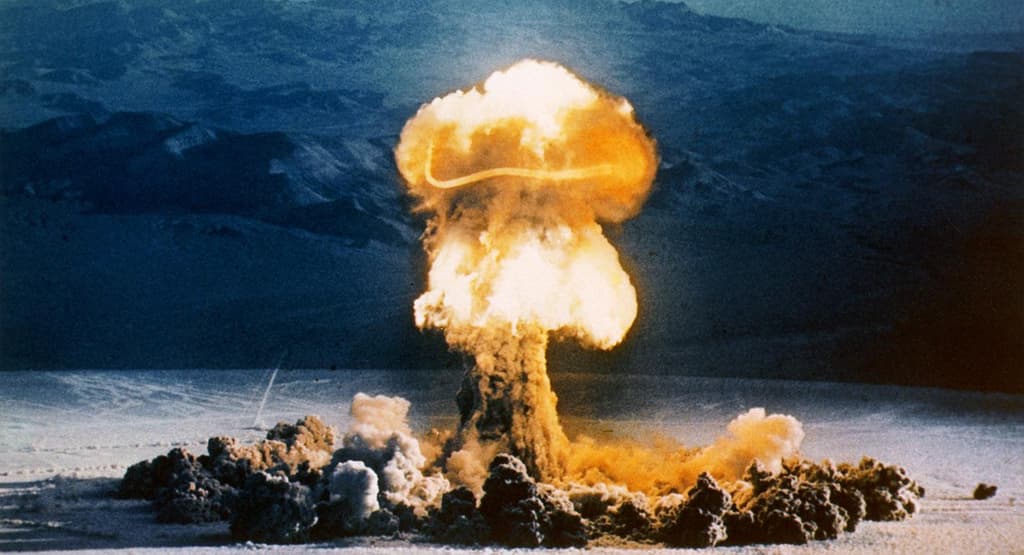
This market will resolve to "Yes" if Russia conducts a nuclear test by the listed date (ET). Otherwise, this market will resolve to "No".
A nuclear test is defined as the intentional non-combat detonation of a device by Russia that produces a nuclear chain reaction (fission or fusion), regardless of yield.
Accidents, radiological dispersal devices (bombs that spread radioactive material using conventional explosives such as "dirty bombs"), or actions by third parties will not count toward this market's resolution.
Tests not explicitly claimed by Russia may still qualify if a clear consensus of credible reporting attributes the nuclear detonation to Russia. For example, an unclaimed nuclear test analogous to the 1979 "Vela Incident" would count if credible reporting attributes it to Russia.
The resolution source for this market will be a broad consensus of credible reporting.Russia's trader consensus on Polymarket prices just an 8% chance of a nuclear detonation test by December 31, 2026, anchored by the de facto moratorium unbroken since 1990 amid high escalation risks from the Ukraine war and potential sanctions. On May 12, President Putin hailed a successful RS-28 Sarmat intercontinental ballistic missile test—nuclear-capable but not a detonation—and announced deployment by year-end, signaling strategic nuclear modernization post-New START treaty expiry in February. Early May exercises at Kura range involved nuclear-armed missile launches, while Defense Minister Belousov proposed readying Novaya Zemlya infrastructure; CTBTO warnings underscore global scrutiny. Further ICBM trials loom, but verification challenges and diplomatic backlash keep probabilities subdued.
This market will resolve to "Yes" if Russia conducts a nuclear test by the listed date (ET). Otherwise, this market will resolve to "No".
A nuclear test is defined as the intentional non-combat detonation of a device by Russia that produces a nuclear chain reaction (fission or fusion), regardless of yield.
Accidents, radiological dispersal devices (bombs that spread radioactive material using conventional explosives such as "dirty bombs"), or actions by third parties will not count toward this market's resolution.
Tests not explicitly claimed by Russia may still qualify if a clear consensus of credible reporting attributes the nuclear detonation to Russia. For example, an unclaimed nuclear test analogous to the 1979 "Vela Incident" would count if credible reporting attributes it to Russia.
The resolution source for this market will be a broad consensus of credible reporting.
This market will resolve to "Yes" if Russia conducts a nuclear test by the listed date (ET). Otherwise, this market will resolve to "No".
A nuclear test is defined as the intentional non-combat detonation of a device by Russia that produces a nuclear chain reaction (fission or fusion), regardless of yield.
Accidents, radiological dispersal devices (bombs that spread radioactive material using conventional explosives such as "dirty bombs"), or actions by third parties will not count toward this market's resolution.
Tests not explicitly claimed by Russia may still qualify if a clear consensus of credible reporting attributes the nuclear detonation to Russia. For example, an unclaimed nuclear test analogous to the 1979 "Vela Incident" would count if credible reporting attributes it to Russia.
The resolution source for this market will be a broad consensus of credible reporting.
Russia's trader consensus on Polymarket prices just an 8% chance of a nuclear detonation test by December 31, 2026, anchored by the de facto moratorium unbroken since 1990 amid high escalation risks from the Ukraine war and potential sanctions. On May 12, President Putin hailed a successful RS-28 Sarmat intercontinental ballistic missile test—nuclear-capable but not a detonation—and announced deployment by year-end, signaling strategic nuclear modernization post-New START treaty expiry in February. Early May exercises at Kura range involved nuclear-armed missile launches, while Defense Minister Belousov proposed readying Novaya Zemlya infrastructure; CTBTO warnings underscore global scrutiny. Further ICBM trials loom, but verification challenges and diplomatic backlash keep probabilities subdued.
Resumen experimental generado por IA con datos de Polymarket. Esto no es asesoramiento de trading y no influye en cómo se resuelve este mercado. · Actualizado
May 8 2026
Analysts note that the expiration of New START removes legal barrier to testing but political costs remain high
Commentary emphasizing that while the treaty’s end technically allows testing, the diplomatic fallout and lack of strategic need keep the probability low, cementing the market’s low price.
May 7 2026
Russia uses nuclear-capable Oreshnik missile in massive strike on Ukraine
September 30, 2026 dips to 5%1%
Russia launched a massive missile and drone strike on Ukraine, including the use of the nuclear-capable Oreshnik intermediate-range ballistic missile. While this demonstrated Russia’s willingness to deploy nuclear-capable weapons, no nuclear test was reported, and the strike was conventional in nature, influencing market perceptions downward for a nuclear test occurring soon.
May 6 2026
Russia and Ukraine envoys meet in Abu Dhabi for US-brokered peace talks
Diplomatic talks between Russia and Ukraine, brokered by the U.S., aimed at ending the nearly four-year war, signaled ongoing efforts to avoid escalation including nuclear testing. The talks coincided with the expiration of the last nuclear arms treaty, reinforcing market expectations against a nuclear test by Russia in the near term.
May 2 2026
U.S. Energy Secretary says any Trump‑ordered tests would be non‑nuclear
Clarification that any U.S. tests would not involve nuclear explosions reduced the perceived trigger for a Russian nuclear test, contributing to the final drop to 4%‑5%.
Apr 29 2026
Russia’s nuclear-capable Oreshnik missiles enter active service in Belarus
September 30, 2026 dips to 6%1%
Russia announced that its nuclear-capable Oreshnik missile system had entered active service in Belarus, demonstrating enhanced nuclear delivery capabilities. This development raised concerns about nuclear escalation but did not indicate an actual nuclear test, contributing to market uncertainty and price adjustments.
Apr 26 2026
Russia reiterates readiness to keep New START limits for another year
Putin’s reaffirmation that Russia would honor the treaty’s caps for an additional year if the U.S. does so removed a key catalyst for a test, pushing prices toward single‑digit levels.
Apr 22 2026
Russia’s deputy security council head Medvedev warns of “proportional” response to U.S. missile defenses
Medvedev’s warning that Russia would act proportionately if the U.S. pursues new missile defenses was interpreted as a diplomatic threat rather than an imminent test, further lowering market odds.
Apr 18 2026
Ukraine drone strike hits Russian oil facility in Tuapse
The attack raised concerns about Russia’s domestic stability and its need to conserve strategic assets, reducing the perceived incentive for a risky nuclear test.
Apr 13 2026
U.S. imposes naval blockade on Iranian ports amid fragile ceasefire with Iran
December 31, 2026 dips to 8%4%
The U.S. military blockade of Iranian ports near the Strait of Hormuz raised regional tensions and cast doubt on the fragile ceasefire, increasing global security concerns but not directly implicating Russia in nuclear testing. This heightened geopolitical risk may have influenced market perceptions of nuclear escalation risks generally.
Apr 12 2026
U.S. President Trump signals intent to resume nuclear testing
Trump’s public remarks about restarting U.S. nuclear tests heightened the risk of reciprocal Russian testing, initially spiking the market before the subsequent diplomatic reassurance pulled prices down further.
Apr 10 2026
Russian diplomat says Moscow will observe New START limits as long as the U.S. does
Dmitry Medvedev’s statement that Russia will stick to the treaty’s caps if the U.S. follows suit reassured markets that Moscow is not seeking to expand its arsenal through testing.
Apr 7 2026
Russia commits to adhering to New START nuclear arms limits despite treaty expiration
September 30, 2026 plunges to 10%41%
On April 7, 2026, Russian officials stated that Russia would continue to observe the limits of the expired New START treaty as long as the United States did the same. This commitment reduced market fears of imminent Russian nuclear testing, contributing to a sharp decline in the market price for a test by September 30, 2026.
Apr 5 2026
Russia says its nuclear‑capable Oreshnik missiles have entered service in Belarus
Moscow announced the operational deployment of the Oreshnik hypersonic system, a move seen as a deterrent rather than a prelude to testing, which helped push prices lower.
Apr 3 2026
Russia conducts missile strikes including nuclear-capable missiles but no nuclear test
June 30, 2026 plunges to 3%47%
Russia launched a massive missile strike on Ukraine using nuclear-capable missiles, heightening fears of escalation. Despite the use of nuclear-capable weapons, no nuclear test detonation occurred, leading to further market price declines for the June 30, 2026 outcome.
Apr 3 2026
U.S. and Russia’s nuclear arms pact expires, raising fears of a new arms race
The New START treaty expired on Feb. 5, and analysts warned that the lack of limits could trigger a competitive buildup, prompting traders to reassess the likelihood of a Russian test.
Apr 2 2026
Russia launches massive missile and drone strike on Ukraine including nuclear-capable missile
June 30, 2026 plunges to 2%48%
On April 2, 2026, Russia conducted a large-scale missile and drone attack on Ukraine, using a nuclear-capable intermediate-range ballistic missile. While this demonstrated Russia's nuclear-capable strike capability, it was not a nuclear test, contributing to market price drops as fears of an actual nuclear test diminished.
Apr 2 2026
Russia deploys nuclear-capable Oreshnik missiles but no nuclear test reported
December 31, 2026 plunges to 13%37%
Russia announced the active service deployment of nuclear-capable Oreshnik missiles in Belarus, increasing nuclear tensions. However, no nuclear test was conducted or reported, contributing to the market's reassessment and price drop for the December 31, 2026 outcome.
Apr 2 2026
No credible reports of Russia conducting nuclear test amid heightened tensions
December 31, 2026 plunges to 9%42%
Despite military escalations and deployment of nuclear-capable weapons, no credible reports or confirmations emerged of Russia conducting a nuclear test during the analysis window. This absence of evidence led to a significant market reassessment and price decline for the likelihood of a nuclear test by Russia by the listed dates.
Apr 1 2026
No credible reports of Russian nuclear test emerge amid heightened tensions
September 30, 2026 plunges to 10%41%
Despite increased military activity and deployment of nuclear-capable missiles by Russia, no credible news or official confirmation of a nuclear test by Russia was reported during the analysis window. This absence of evidence led to a sharp decline in market prices for the likelihood of a Russian nuclear test by September 30, 2026.
Apr 1 2026
Russia deploys nuclear-capable Oreshnik missiles in Belarus amid Ukraine conflict
September 30, 2026 drops to 46%5%
On April 1, 2026, Russia announced that its nuclear-capable Oreshnik missile system had entered active service in Belarus, signaling a strategic military escalation. This deployment raised concerns about potential nuclear use but did not constitute a nuclear test, leading to initial market uncertainty reflected in prices around this date.
This market will resolve to "Yes" if Russia conducts a nuclear test by the listed date (ET). Otherwise, this market will resolve to "No".
A nuclear test is defined as the intentional non-combat detonation of a device by Russia that produces a nuclear chain reaction (fission or fusion), regardless of yield.
Accidents, radiological dispersal devices (bombs that spread radioactive material using conventional explosives such as "dirty bombs"), or actions by third parties will not count toward this market's resolution.
Tests not explicitly claimed by Russia may still qualify if a clear consensus of credible reporting attributes the nuclear detonation to Russia. For example, an unclaimed nuclear test analogous to the 1979 "Vela Incident" would count if credible reporting attributes it to Russia.
The resolution source for this market will be a broad consensus of credible reporting.Russia's trader consensus on Polymarket prices just an 8% chance of a nuclear detonation test by December 31, 2026, anchored by the de facto moratorium unbroken since 1990 amid high escalation risks from the Ukraine war and potential sanctions. On May 12, President Putin hailed a successful RS-28 Sarmat intercontinental ballistic missile test—nuclear-capable but not a detonation—and announced deployment by year-end, signaling strategic nuclear modernization post-New START treaty expiry in February. Early May exercises at Kura range involved nuclear-armed missile launches, while Defense Minister Belousov proposed readying Novaya Zemlya infrastructure; CTBTO warnings underscore global scrutiny. Further ICBM trials loom, but verification challenges and diplomatic backlash keep probabilities subdued.
This market will resolve to "Yes" if Russia conducts a nuclear test by the listed date (ET). Otherwise, this market will resolve to "No".
A nuclear test is defined as the intentional non-combat detonation of a device by Russia that produces a nuclear chain reaction (fission or fusion), regardless of yield.
Accidents, radiological dispersal devices (bombs that spread radioactive material using conventional explosives such as "dirty bombs"), or actions by third parties will not count toward this market's resolution.
Tests not explicitly claimed by Russia may still qualify if a clear consensus of credible reporting attributes the nuclear detonation to Russia. For example, an unclaimed nuclear test analogous to the 1979 "Vela Incident" would count if credible reporting attributes it to Russia.
The resolution source for this market will be a broad consensus of credible reporting.
This market will resolve to "Yes" if Russia conducts a nuclear test by the listed date (ET). Otherwise, this market will resolve to "No".
A nuclear test is defined as the intentional non-combat detonation of a device by Russia that produces a nuclear chain reaction (fission or fusion), regardless of yield.
Accidents, radiological dispersal devices (bombs that spread radioactive material using conventional explosives such as "dirty bombs"), or actions by third parties will not count toward this market's resolution.
Tests not explicitly claimed by Russia may still qualify if a clear consensus of credible reporting attributes the nuclear detonation to Russia. For example, an unclaimed nuclear test analogous to the 1979 "Vela Incident" would count if credible reporting attributes it to Russia.
The resolution source for this market will be a broad consensus of credible reporting.
Russia's trader consensus on Polymarket prices just an 8% chance of a nuclear detonation test by December 31, 2026, anchored by the de facto moratorium unbroken since 1990 amid high escalation risks from the Ukraine war and potential sanctions. On May 12, President Putin hailed a successful RS-28 Sarmat intercontinental ballistic missile test—nuclear-capable but not a detonation—and announced deployment by year-end, signaling strategic nuclear modernization post-New START treaty expiry in February. Early May exercises at Kura range involved nuclear-armed missile launches, while Defense Minister Belousov proposed readying Novaya Zemlya infrastructure; CTBTO warnings underscore global scrutiny. Further ICBM trials loom, but verification challenges and diplomatic backlash keep probabilities subdued.
Resumen experimental generado por IA con datos de Polymarket. Esto no es asesoramiento de trading y no influye en cómo se resuelve este mercado. · Actualizado
May 8 2026
Analysts note that the expiration of New START removes legal barrier to testing but political costs remain high
Commentary emphasizing that while the treaty’s end technically allows testing, the diplomatic fallout and lack of strategic need keep the probability low, cementing the market’s low price.
May 7 2026
Russia uses nuclear-capable Oreshnik missile in massive strike on Ukraine
September 30, 2026 dips to 5%1%
Russia launched a massive missile and drone strike on Ukraine, including the use of the nuclear-capable Oreshnik intermediate-range ballistic missile. While this demonstrated Russia’s willingness to deploy nuclear-capable weapons, no nuclear test was reported, and the strike was conventional in nature, influencing market perceptions downward for a nuclear test occurring soon.
May 6 2026
Russia and Ukraine envoys meet in Abu Dhabi for US-brokered peace talks
Diplomatic talks between Russia and Ukraine, brokered by the U.S., aimed at ending the nearly four-year war, signaled ongoing efforts to avoid escalation including nuclear testing. The talks coincided with the expiration of the last nuclear arms treaty, reinforcing market expectations against a nuclear test by Russia in the near term.
May 2 2026
U.S. Energy Secretary says any Trump‑ordered tests would be non‑nuclear
Clarification that any U.S. tests would not involve nuclear explosions reduced the perceived trigger for a Russian nuclear test, contributing to the final drop to 4%‑5%.
Apr 29 2026
Russia’s nuclear-capable Oreshnik missiles enter active service in Belarus
September 30, 2026 dips to 6%1%
Russia announced that its nuclear-capable Oreshnik missile system had entered active service in Belarus, demonstrating enhanced nuclear delivery capabilities. This development raised concerns about nuclear escalation but did not indicate an actual nuclear test, contributing to market uncertainty and price adjustments.
Apr 26 2026
Russia reiterates readiness to keep New START limits for another year
Putin’s reaffirmation that Russia would honor the treaty’s caps for an additional year if the U.S. does so removed a key catalyst for a test, pushing prices toward single‑digit levels.
Apr 22 2026
Russia’s deputy security council head Medvedev warns of “proportional” response to U.S. missile defenses
Medvedev’s warning that Russia would act proportionately if the U.S. pursues new missile defenses was interpreted as a diplomatic threat rather than an imminent test, further lowering market odds.
Apr 18 2026
Ukraine drone strike hits Russian oil facility in Tuapse
The attack raised concerns about Russia’s domestic stability and its need to conserve strategic assets, reducing the perceived incentive for a risky nuclear test.
Apr 13 2026
U.S. imposes naval blockade on Iranian ports amid fragile ceasefire with Iran
December 31, 2026 dips to 8%4%
The U.S. military blockade of Iranian ports near the Strait of Hormuz raised regional tensions and cast doubt on the fragile ceasefire, increasing global security concerns but not directly implicating Russia in nuclear testing. This heightened geopolitical risk may have influenced market perceptions of nuclear escalation risks generally.
Apr 12 2026
U.S. President Trump signals intent to resume nuclear testing
Trump’s public remarks about restarting U.S. nuclear tests heightened the risk of reciprocal Russian testing, initially spiking the market before the subsequent diplomatic reassurance pulled prices down further.
Apr 10 2026
Russian diplomat says Moscow will observe New START limits as long as the U.S. does
Dmitry Medvedev’s statement that Russia will stick to the treaty’s caps if the U.S. follows suit reassured markets that Moscow is not seeking to expand its arsenal through testing.
Apr 7 2026
Russia commits to adhering to New START nuclear arms limits despite treaty expiration
September 30, 2026 plunges to 10%41%
On April 7, 2026, Russian officials stated that Russia would continue to observe the limits of the expired New START treaty as long as the United States did the same. This commitment reduced market fears of imminent Russian nuclear testing, contributing to a sharp decline in the market price for a test by September 30, 2026.
Apr 5 2026
Russia says its nuclear‑capable Oreshnik missiles have entered service in Belarus
Moscow announced the operational deployment of the Oreshnik hypersonic system, a move seen as a deterrent rather than a prelude to testing, which helped push prices lower.
Apr 3 2026
Russia conducts missile strikes including nuclear-capable missiles but no nuclear test
June 30, 2026 plunges to 3%47%
Russia launched a massive missile strike on Ukraine using nuclear-capable missiles, heightening fears of escalation. Despite the use of nuclear-capable weapons, no nuclear test detonation occurred, leading to further market price declines for the June 30, 2026 outcome.
Apr 3 2026
U.S. and Russia’s nuclear arms pact expires, raising fears of a new arms race
The New START treaty expired on Feb. 5, and analysts warned that the lack of limits could trigger a competitive buildup, prompting traders to reassess the likelihood of a Russian test.
Apr 2 2026
Russia launches massive missile and drone strike on Ukraine including nuclear-capable missile
June 30, 2026 plunges to 2%48%
On April 2, 2026, Russia conducted a large-scale missile and drone attack on Ukraine, using a nuclear-capable intermediate-range ballistic missile. While this demonstrated Russia's nuclear-capable strike capability, it was not a nuclear test, contributing to market price drops as fears of an actual nuclear test diminished.
Apr 2 2026
Russia deploys nuclear-capable Oreshnik missiles but no nuclear test reported
December 31, 2026 plunges to 13%37%
Russia announced the active service deployment of nuclear-capable Oreshnik missiles in Belarus, increasing nuclear tensions. However, no nuclear test was conducted or reported, contributing to the market's reassessment and price drop for the December 31, 2026 outcome.
Apr 2 2026
No credible reports of Russia conducting nuclear test amid heightened tensions
December 31, 2026 plunges to 9%42%
Despite military escalations and deployment of nuclear-capable weapons, no credible reports or confirmations emerged of Russia conducting a nuclear test during the analysis window. This absence of evidence led to a significant market reassessment and price decline for the likelihood of a nuclear test by Russia by the listed dates.
Apr 1 2026
No credible reports of Russian nuclear test emerge amid heightened tensions
September 30, 2026 plunges to 10%41%
Despite increased military activity and deployment of nuclear-capable missiles by Russia, no credible news or official confirmation of a nuclear test by Russia was reported during the analysis window. This absence of evidence led to a sharp decline in market prices for the likelihood of a Russian nuclear test by September 30, 2026.
Apr 1 2026
Russia deploys nuclear-capable Oreshnik missiles in Belarus amid Ukraine conflict
September 30, 2026 drops to 46%5%
On April 1, 2026, Russia announced that its nuclear-capable Oreshnik missile system had entered active service in Belarus, signaling a strategic military escalation. This deployment raised concerns about potential nuclear use but did not constitute a nuclear test, leading to initial market uncertainty reflected in prices around this date.
Cuidado con los enlaces externos.
Preguntas frecuentes
"¿Prueba nuclear de Rusia por...?" es un mercado de predicción en Polymarket con 6 resultados posibles donde los operadores compran y venden acciones según lo que creen que sucederá. El resultado líder actual es "31 de diciembre de 2026" con 5%, seguido de "30 de septiembre de 2026" con 4%. Los precios reflejan probabilidades en tiempo real de la comunidad. Por ejemplo, una acción cotizada a 5¢ implica que el mercado colectivamente asigna una probabilidad de 5% a ese resultado. Estas probabilidades cambian continuamente a medida que los operadores reaccionan a nuevos desarrollos. Las acciones del resultado correcto son canjeables por $1 cada una tras la resolución del mercado.
A día de hoy, "¿Prueba nuclear de Rusia por...?" ha generado $1.4 million en volumen total de trading desde que el mercado se lanzó el Nov 5, 2025. Este nivel de actividad refleja un fuerte compromiso de la comunidad de Polymarket y ayuda a garantizar que las probabilidades actuales estén respaldadas por un amplio grupo de participantes del mercado. Puedes seguir los movimientos de precios en vivo y operar en cualquier resultado directamente en esta página.
Para operar en "¿Prueba nuclear de Rusia por...?", explora los 6 resultados disponibles en esta página. Cada resultado muestra un precio actual que representa la probabilidad implícita del mercado. Para tomar una posición, selecciona el resultado que consideres más probable, elige "Sí" para operar a favor o "No" para operar en contra, introduce tu cantidad y haz clic en "Operar". Si tu resultado elegido es correcto cuando el mercado se resuelve, tus acciones de "Sí" pagan $1 cada una. Si es incorrecto, pagan $0. También puedes vender tus acciones en cualquier momento antes de la resolución.
Este es un mercado muy abierto. El líder actual para "¿Prueba nuclear de Rusia por...?" es "31 de diciembre de 2026" con solo 5%, con "30 de septiembre de 2026" muy cerca con 4%. Sin ningún resultado con una mayoría clara, los operadores lo ven como altamente incierto, lo que puede presentar oportunidades de trading únicas. Estas probabilidades se actualizan en tiempo real, así que guarda esta página en marcadores.
Las reglas de resolución para "¿Prueba nuclear de Rusia por...?" definen exactamente qué debe ocurrir para que cada resultado sea declarado ganador, incluyendo las fuentes de datos oficiales utilizadas para determinar el resultado. Puedes revisar los criterios de resolución completos en la sección "Reglas" en esta página sobre los comentarios. Recomendamos leer las reglas cuidadosamente antes de operar, ya que especifican las condiciones exactas, casos especiales y fuentes.
Sí. No necesitas operar para mantenerte informado. Esta página sirve como rastreador en vivo para "¿Prueba nuclear de Rusia por...?". Las probabilidades de los resultados se actualizan en tiempo real a medida que entran nuevas operaciones. Puedes guardar esta página en marcadores y consultar la sección de comentarios para ver lo que dicen otros operadores. También puedes usar los filtros de rango temporal en el gráfico para ver cómo han cambiado las probabilidades a lo largo del tiempo.
Las probabilidades de Polymarket son establecidas por operadores reales que ponen dinero real detrás de sus creencias, lo que tiende a generar predicciones precisas. Con $1.4 million operados en “¿Prueba nuclear de Rusia por...?”, estos precios agregan el conocimiento colectivo y la convicción de miles de participantes — a menudo superando a encuestas, pronósticos de expertos y estudios tradicionales. Los mercados de predicción como Polymarket tienen un sólido historial de precisión, especialmente cuando los eventos se acercan a su fecha de resolución. Por ejemplo, Polymarket tiene una puntuación de precisión a un mes de 94%. Para las últimas estadísticas sobre la precisión de predicción de Polymarket, visita la página de precisión en Polymarket.
Para realizar tu primera operación en "¿Prueba nuclear de Rusia por...?", regístrate en una cuenta gratuita de Polymarket y deposita fondos usando criptomonedas, tarjeta de crédito o débito, o transferencia bancaria. Una vez que tu cuenta tenga fondos, vuelve a esta página, selecciona el resultado en el que quieras operar, introduce tu cantidad y haz clic en "Operar". Si eres nuevo en los mercados de predicción, haz clic en el enlace "Cómo funciona" en la parte superior de cualquier página de Polymarket para una guía paso a paso.
En Polymarket, el precio de cada resultado representa la probabilidad implícita del mercado. Un precio de 5¢ para "31 de diciembre de 2026" en el mercado "¿Prueba nuclear de Rusia por...?" significa que los operadores colectivamente creen que hay aproximadamente una probabilidad de 5% de que "31 de diciembre de 2026" sea el resultado correcto. Si compras acciones de "Sí" a 5¢ y el resultado es correcto, recibes $1,00 por acción, una ganancia de 95¢ por acción. Si es incorrecto, esas acciones valen $0.
La fecha de finalización programada del mercado "¿Prueba nuclear de Rusia por...?" ha pasado, pero el mercado aún no ha sido resuelto oficialmente. La fecha de finalización indica cuándo se espera que el evento subyacente ocurra o sea conocible. El mercado permanece abierto para operar hasta que el resultado sea formalmente resuelto. Consulta el estado de resolución y la sección "Reglas" en esta página para actualizaciones.
El mercado "¿Prueba nuclear de Rusia por...?" tiene una discusión creciente de 7 comentarios donde los operadores comparten sus análisis, debaten resultados y discuten los últimos desarrollos. Desplázate hacia abajo a la sección de comentarios para leer lo que piensan otros participantes. También puedes filtrar por "Principales poseedores" o consultar la pestaña "Actividad" para un feed en tiempo real de operaciones.
Polymarket es el mercado de predicción más grande del mundo, donde puedes mantenerte informado y beneficiarte de tu conocimiento sobre eventos del mundo real. Los operadores compran y venden acciones sobre resultados de temas que van desde política y elecciones hasta criptomonedas, finanzas, deportes, tecnología y cultura, incluyendo mercados como "¿Prueba nuclear de Rusia por...?". Los precios reflejan probabilidades en tiempo real respaldadas por convicción financiera, ofreciendo a menudo señales más rápidas y precisas que las encuestas, los expertos o los estudios tradicionales.
Cuidado con los enlaces externos.
Preguntas frecuentes