Recent geopolitical tensions in the Middle East have sustained elevated energy prices and supply-chain pressures, keeping U.S. inflation above the Federal Reserve’s 2% target and supporting trader pricing for a possible 25-basis-point hike at the September FOMC meeting. The July 29 decision to hold the federal funds rate at 3.50–3.75% passed on a 9-3 vote, underscoring internal divisions. A softer-than-expected July employment report showing job losses and steady unemployment has since tempered hike odds by highlighting risks to the labor-market side of the dual mandate. Upcoming July CPI data and subsequent releases will provide key signals on whether inflation momentum persists or eases enough to favor unchanged policy through the September meeting.
Experimental AI-generated summary referencing Polymarket data. This is not trading advice and plays no role in how this market resolves. · UpdatedTreasury report highlights hawkish Fed outlook amid inflation and geopolitical tensions
25 bps increase jumps to 37%11%
The Treasury Borrowing Advisory Committee reported a more hawkish Fed outlook with increased inflation projections and potential rate hikes, influenced by geopolitical tensions in the Middle East and elevated energy prices, contributing to market uncertainty ahead of September.
Federal Reserve holds interest rate at 3.75% amid DOJ criminal investigation into Chair Powell
No change surges to 63%20%
The Federal Reserve paused after three consecutive rate cuts, maintaining the benchmark interest rate at 3.75%. Chair Jerome Powell faced a Department of Justice criminal investigation over alleged false statements to Congress, adding political complexity but not altering the Fed's cautious monetary policy stance.
Rising Market Odds for September Rate Hike Amid Inflation and Geopolitical Concerns
25 bps increase rises to 56%3%
As of early August, market data indicated increasing probability of a 25 bps rate hike at the September FOMC meeting, driven by persistent inflation pressures and geopolitical tensions, particularly the Middle East conflict. This shift reflects the Fed's hawkish stance and the market's adjustment to a 'higher for longer' interest rate environment.
Federal Reserve holds interest rates steady but three officials dissent favoring a hike
25 bps increase rises to 45%4%
On July 29, 2026, the Federal Reserve again held the federal funds rate steady at 3.50%-3.75%, but three FOMC members dissented, preferring a 25 bps increase due to persistent inflation and geopolitical risks. This division highlighted growing hawkish sentiment within the Fed and reinforced market expectations for a rate hike at the September meeting.
Federal Reserve maintains rates at 3.50%-3.75% with no forward guidance
25 bps increase surges to 56%18%
The July 28-29 FOMC meeting resulted in a unanimous decision to keep rates steady at 3.50%-3.75% and maintain the interest rate on reserve balances at 3.65%. The Fed continued its policy of maintaining ample reserves and refrained from providing forward guidance, reinforcing the market's view that a modest rate hike is likely in the near future, supporting the rise in probability for a 25 bps increase in September.
Federal Reserve keeps rates unchanged amid inflation concerns and internal dissent
No change surges to 54%15%
At the July FOMC meeting, the Fed again held rates steady at 3.50%–3.75%, despite three dissenting votes favoring a 25 bps hike. Inflation remained elevated due to energy price shocks from the U.S.-Iran conflict, maintaining market uncertainty but leaning toward no change or a modest increase.
Fed Chair Kevin Warsh Emphasizes Commitment to Inflation Target Despite Rate Pause
25 bps increase rises to 19%3%
Chair Kevin Warsh reiterated the Fed's commitment to returning inflation to the 2% target, dismissing any notion of a 'soft' inflation target. He indicated that while rates were held steady, future hikes remain possible if inflation persists, influencing market expectations toward a likely 25 bps increase in September.
Federal Reserve maintains interest rates and announces five task forces
At the July FOMC meeting, the Federal Reserve kept interest rates unchanged and announced the creation of five task forces to review monetary policy decision-making and communication, signaling a cautious approach amid persistent inflation and economic uncertainty.
Federal Reserve holds interest rates steady at 3.50%-3.75% in closely contested July meeting
No change jumps to 63%7%
On July 29, 2026, the Federal Reserve voted 9-3 to keep the federal funds rate unchanged at 3.50%-3.75%, despite dissent from three officials favoring a 25 basis point hike. Chair Kevin Warsh emphasized maintaining restrictive policy until inflation moves decisively toward the 2% target, reflecting ongoing inflation concerns and geopolitical uncertainties.
Fed Chair Kevin Warsh Highlights Intense Debate and Commitment to Inflation Control
25 bps increase surges to 53%16%
Following the July 29 meeting, Fed Chair Kevin Warsh described the internal debate as a 'good family fight' and reiterated the Fed's commitment to price stability, emphasizing there is no 'soft inflation target.' This communication reinforced market expectations of potential rate hikes if inflation remains elevated, influencing the rise in the 25 bps increase probability.
Federal Reserve holds rates steady at 3.50%-3.75% amid dissent and inflation concerns
25 bps increase surges to 56%16%
The Fed voted 9-3 to keep rates unchanged at 3.50%-3.75% for the fifth consecutive meeting. The dissenters favored a 25 bps hike, reflecting ongoing inflationary pressures, partly due to geopolitical tensions in the Middle East. Chair Kevin Warsh emphasized a cautious approach, continuing press conferences to communicate policy. Markets reacted with increased volatility, pricing in higher odds of a rate hike later in 2026.
Fed Chair Warsh emphasizes commitment to 2% inflation target amid divided Fed
25 bps increase rises to 60%4%
During the July 29 press conference, Chair Kevin Warsh reiterated the Fed's commitment to price stability and acknowledged the divided views within the committee. His remarks reinforced market expectations for a possible rate hike in September if inflation remains elevated.
Fed Chair Kevin Warsh signals commitment to price stability amid inflation concerns
25 bps increase jumps to 60%6%
At the July FOMC press conference, Chair Warsh emphasized the Fed's focus on restoring price stability and indicated that the committee remains data-dependent, keeping the possibility of future rate hikes open given persistent inflation.
Fed Chair Warsh signals ongoing 'family fight' over rate policy amid inflation and geopolitical risks
25 bps increase surges to 56%16%
Chair Kevin Warsh described internal Fed debates as a 'family fight' reflecting differing views on inflation risks and rate policy. The Fed scrapped forward guidance, increasing uncertainty about future moves. Elevated inflation driven by energy prices and Middle East tensions contributed to market expectations of a possible rate hike in September.
Market Reacts Sharply to Fed's Decision to Hold Rates Steady
25 bps increase jumps to 50%12%
Following the Fed's decision, Treasury yields spiked and stock markets fell sharply, reflecting investor uncertainty and increased expectations for future rate hikes. This market reaction contributed to the rising probability of a 25 bps increase in the September meeting.
Federal Reserve holds rates steady amid inflation concerns; three dissenters favor hike
No change surges to 66%25%
At the July 29, 2026 meeting, the Fed again held rates at 3.50%-3.75%, but three officials dissented, preferring a 25 bps increase. Chair Kevin Warsh described internal debates as a 'family fight,' reflecting uncertainty and hawkish sentiment. This reinforced market expectations for a possible rate hike in September, causing a rise in the 'No change' and '25 bps increase' probabilities and a decline in rate cut expectations.
Fed meeting preview highlights internal debate and market expectations for September rate move
Ahead of the July 28-29 FOMC meeting, market participants anticipated a cautious Fed stance with a 62% probability of no change and 38% chance of a rate hike. The Fed faced a "family fight" over policy direction amid mixed inflation and labor market data, setting the stage for September decisions.
Fed leadership signals possible rate hike amid inflation and labor market concerns
25 bps increase jumps to 52%14%
Ahead of the September meeting, Fed Chair Kevin Warsh described internal debates as a "family fight" over future rate moves, with investors increasingly anticipating a 25 bps hike due to persistent inflation and a resilient labor market. This contributed to rising market prices for the 25 bps increase outcome.
Rising market expectations for September Fed rate hike amid inflation and geopolitical tensions
25 bps increase surges to 45%21%
By late July, market data indicated a growing probability of a 25 bps rate increase in the September FOMC meeting, driven by persistent inflation pressures and geopolitical risks such as the US-Iran conflict. Analysts highlighted the Fed's internal debates and the possibility of tightening monetary policy if inflation remains elevated.
Market anticipates 25 bps rate hike in September amid hawkish Fed signals
25 bps increase jumps to 48%10%
Investor expectations shifted toward a 55% probability of a 25 bps increase at the September FOMC meeting, driven by hawkish comments from Fed officials and persistent inflation concerns, reflected in rising prices for the 25 bps increase outcome in prediction markets.
Market odds rise for 25 bps Fed rate hike in September amid inflation and geopolitical concerns
25 bps increase jumps to 59%9%
By late July 2026, market expectations for a 25 basis points rate increase in September rose to about 55%, driven by persistent inflation and tensions in the Middle East. This shift in sentiment contributed to the rising probability of the 25 bps increase outcome in the prediction market.
Investors anticipate Fed rate hike in September amid inflation and geopolitical tensions
25 bps increase jumps to 54%13%
By late July 2026, investors increasingly expected a 25 bps rate hike at the September FOMC meeting, driven by persistent inflation, energy price volatility from Middle East tensions, and a resilient labor market. Market data showed a 55% chance of a 25 bps increase and 26% chance of a 50+ bps hike, reflecting growing hawkish sentiment.
Rising geopolitical tensions and inflation concerns influence Fed rate hike expectations
25 bps increase jumps to 45%9%
Escalating tensions between the U.S. and Iran, along with persistent inflationary pressures, increased market expectations for a 25 basis point rate hike at the September Fed meeting. Analysts noted that the labor market remained resilient, and inflation risks were elevated, prompting investors to price in a higher likelihood of rate increases.
Fed Vice Chair Jefferson Discusses Navigating Economic Shocks Amid Inflation and Geopolitical Risks
No change dips to 43%2%
Vice Chair Philip N. Jefferson highlighted the challenges the Fed faces balancing inflation control with economic growth amid ongoing geopolitical tensions and energy price volatility. His remarks underscored the Fed's cautious approach and the conditional nature of future rate decisions, influencing market expectations for September.
Federal Reserve Governor Cook Highlights Economic Resilience and Inflation Challenges
Governor Cook's speech emphasized stronger-than-expected GDP growth forecasts for 2026 and persistent inflation above target, driven by core goods prices and productivity growth. This reinforced market expectations that the Fed would maintain a cautious stance on rates, with potential hikes if inflation remains elevated.
Governor Lisa D. Cook highlights strong GDP growth and labor productivity
25 bps increase jumps to 49%7%
In a speech, Governor Cook reported that GDP growth in 2025 was 2.0% and forecasted 2.2% for 2026, exceeding prior expectations. She emphasized booming labor productivity, reinforcing the Fed's view of a resilient economy, supporting the likelihood of a rate hike.
Federal Reserve Governor Lisa Cook signals inflation risks outweigh employment concerns
25 bps increase jumps to 53%8%
In a speech on July 15, Governor Lisa Cook highlighted that inflation remains well above the Fed's 2% target and supports maintaining restrictive monetary policy until stronger evidence of sustained disinflation emerges. This hawkish tone contributed to increased market pricing for a 25 bps rate hike.
June CPI Inflation Falls to 3.5%, Below Forecast
No change dips to 39%2%
The Consumer Price Index for June 2026 showed a decline in inflation to 3.5%, below expectations, but core shelter inflation remained elevated. This data was closely watched ahead of the July FOMC meeting and influenced market expectations for the Fed's rate decision.
Fed Chair Kevin Warsh testifies before House Financial Services Committee
25 bps increase jumps to 49%13%
Kevin Warsh testified emphasizing the Fed's commitment to price stability and signaling that interest rate hikes may be necessary if inflation does not cool. This reinforced market expectations for a 25 bps increase in the near future, contributing to rising probabilities for a rate hike in September.
Federal Reserve Chair Kevin Warsh Signals Hawkish Stance in July Speeches
25 bps increase surges to 38%22%
In speeches during July 2026, Chair Warsh emphasized the Fed's focus on price stability and the challenges posed by inflation and geopolitical risks, contributing to market expectations of a possible rate hike in September.
June CPI report shows inflation falls to 3.5%, but core shelter inflation remains elevated
No change dips to 59%2%
The July 14 release of June CPI data showed a decline in headline inflation to 3.5%, below forecasts, but core shelter inflation stayed high, indicating ongoing inflationary pressures that support the Fed's cautious stance on rate changes.
June 2026 CPI inflation falls to 3.5%, below expectations
The June 2026 Consumer Price Index showed inflation cooling to 3.5%, driven by a sharp drop in energy prices, providing the Fed some breathing room but leaving uncertainty due to geopolitical risks and core inflation remaining sticky.
House Financial Services Committee Hears Fed Chair Warsh Testimony on Monetary Policy
25 bps increase jumps to 51%13%
Federal Reserve Chair Kevin Warsh testified before the House Committee on Financial Services, emphasizing the Fed's commitment to price stability and signaling a cautious but hawkish stance. This reinforced market expectations for a possible rate hike in September, contributing to the rise in the 25 bps increase contract price.
June CPI Data Shows Inflation Remains Elevated at 3.4% Annual Rate
25 bps increase surges to 38%22%
The Consumer Price Index for June 2026 indicated inflation at 3.4% annually, slightly down from May but still above the Fed's 2% target, reinforcing expectations for continued vigilance on inflation and potential rate hikes.
Fed Officials Deliver Speeches Highlighting Inflation Persistence and Economic Outlook
25 bps increase rises to 39%2%
Several Federal Reserve officials, including Vice Chair Michelle Bowman and Governor Michael Barr, gave speeches emphasizing the challenges of persistent inflation and the Fed's commitment to price stability. These communications reinforced market expectations for a cautious approach, supporting the probability of a rate hike later in 2026.
Governor Cook warns inflation remains above expectations for 2026
25 bps increase surges to 53%28%
Governor Lisa Cook highlighted that headline and core inflation for 2026 are running about 1 percentage point higher than expected, driven by core goods prices rising at a 5% annual pace, reinforcing the Fed's hawkish stance and market anticipation of a rate hike.
Federal Reserve Officials Deliver Hawkish Speeches Highlighting Inflation Risks
25 bps increase jumps to 51%13%
Federal Reserve Board Governor Christopher J. Waller and Vice Chair Michelle W. Bowman gave speeches emphasizing persistent inflation risks and the need for cautious monetary policy. These remarks contributed to market expectations of a potential rate hike later in 2026, increasing the probability of a 25 bps increase in September.
Federal Reserve Inflation Gauge Surges Above 4% in June 2026
25 bps increase surges to 59%21%
The Fed's preferred inflation measure, the PCE price index, rose to 4.1% in June, the highest since April 2023, signaling persistent inflationary pressures. This development increased market expectations for a rate hike later in 2026 to combat inflation.
Federal Reserve Board Votes Unanimously to Maintain Interest Rate Paid on Reserve Balances
No change surges to 81%28%
The Federal Reserve Board of Governors unanimously maintained the interest rate paid on reserve balances at 3.65 percent effective June 18, 2026, supporting the FOMC's decision to hold the federal funds rate steady. This reinforced the Fed's cautious stance amid ongoing inflation and economic conditions.
Federal Reserve holds interest rates steady at 3.50%-3.75% amid persistent inflation
At its June 16-17 meeting, the Federal Reserve unanimously voted to maintain the federal funds rate at 3.50%-3.75%, citing solid economic expansion and elevated inflation. The updated dot plot showed a hawkish shift, with policymakers expecting rates to end 2026 higher than current levels, signaling fewer expected cuts and potential hikes.
Federal Open Market Committee unanimously maintains federal funds rate at 3.50%-3.75%
No change drops to 69%5%
The FOMC voted 12-0 to keep the target range unchanged, removing language suggesting an easing bias and emphasizing the need to deliver price stability amid elevated inflation and economic uncertainty.
Federal Reserve holds federal funds rate steady at 3.50%-3.75% in June meeting
The FOMC unanimously decided to maintain the target range for the federal funds rate at 3.50% to 3.75%, citing solid economic activity and stable labor market conditions despite elevated inflation and geopolitical uncertainty. This decision reinforced market expectations for no immediate rate changes.
Federal Reserve holds rates steady at 3.50%-3.75% with hawkish outlook
25 bps increase surges to 74%21%
The Fed unanimously voted 12-0 to maintain the federal funds rate target range at 3.50%-3.75%. However, the updated dot plot showed a hawkish shift, with the median policymaker expecting rates to end 2026 higher than before, reversing earlier expectations of cuts. This signaled persistent inflation risks and influenced markets to price in potential hikes later in the year.
Federal Reserve holds interest rates steady at 3.50%-3.75% in June 2026 meeting
25 bps increase rises to 21%4%
The FOMC unanimously voted to maintain the federal funds rate at 3.50%-3.75%, citing solid economic activity and elevated inflation, with Chair Kevin Warsh's first meeting signaling a hawkish shift and expectations for possible rate hikes later in 2026.
Federal Reserve holds rates steady but signals hawkish outlook in June meeting
No change dips to 74%1%
The Fed maintained the federal funds rate at 3.50%-3.75% on June 17, 2026, in a unanimous vote, but the updated dot plot showed a hawkish shift with expectations for rates to end the year higher. This decision reinforced market pricing for no immediate cuts and increased the probability of a rate hike later in 2026, supporting the 'No change' and '25 bps increase' options.
U.S. Consumer Price Index for May 2026 shows inflation at 4.2%, highest in 3 years
25 bps increase surges to 39%23%
The May 2026 CPI report revealed a 4.2% year-over-year inflation rate, driven largely by energy price increases amid Middle East tensions, signaling persistent inflationary pressures that challenged expectations of rate cuts and supported a hawkish Fed outlook.
U.S. inflation rises to 4.2% in May, highest in three years
25 bps increase rises to 16%4%
Consumer prices surged 4.2% year-over-year in May, driven largely by energy price increases due to the Iran conflict, complicating the Fed's inflation outlook and increasing expectations for rate hikes. This inflation spike reinforced the Fed's cautious stance and hawkish projections in June.
Economists largely expect Fed to hold rates steady for rest of 2026 amid persistent inflation
No change drops to 70%6%
A Reuters poll on June 9 showed a strong majority of economists forecasting no change in the federal funds rate for the remainder of 2026, reflecting concerns over persistent inflation and war-driven price pressures. This consensus supported the market's no change outcome probability.
Economists predict Fed will hold rates for rest of 2026 amid persistent inflation
A Reuters poll showed a strong majority of economists expect the Federal Reserve to keep interest rates steady through 2026 due to ongoing inflation pressures driven by war-related supply shocks and resilient economic indicators, reducing expectations for rate cuts this year.
May 2026 jobs report shows strong employment growth with 172,000 jobs added
25 bps increase rises to 16%4%
The May 2026 jobs report revealed a stronger-than-expected labor market with 172,000 jobs added, reinforcing the Fed's hawkish stance due to resilient employment and supporting expectations of future rate hikes.
May 2026 Nonfarm Payrolls report shows strong job growth of 172,000
25 bps increase jumps to 21%5%
The May 2026 jobs report exceeded expectations with 172,000 new jobs added, reinforcing the Fed's hawkish stance by demonstrating labor market resilience despite inflationary pressures, increasing the likelihood of rate hikes later in the year.
Fed officials signal possible rate hikes if inflation rises due to Middle East conflict
25 bps increase rises to 17%1%
Federal Reserve officials indicated readiness to raise interest rates if inflation accelerates, particularly due to supply shocks from the Middle East war, signaling a hawkish stance that influenced market expectations away from cuts and toward potential hikes later in 2026.
Fed officials signal possible future rate hikes amid inflation risks
25 bps increase surges to 46%20%
Federal Reserve officials indicated readiness to raise interest rates if inflation persists, citing risks from the Middle East conflict and elevated inflation. This hawkish tone increased market expectations for a rate hike later in 2026, supporting the rise in probability for a 25 bps increase.
Fed officials signal possible rate hike if inflation remains high amid Middle East tensions
On May 29, 2026, Federal Reserve officials indicated that they might need to raise interest rates if inflation stays elevated, particularly due to the ongoing U.S.-Iran conflict impacting energy prices. This hawkish tone increased market expectations for a potential rate hike later in the year, reducing the likelihood of cuts and supporting the 'No change' and '25 bps increase' outcomes.
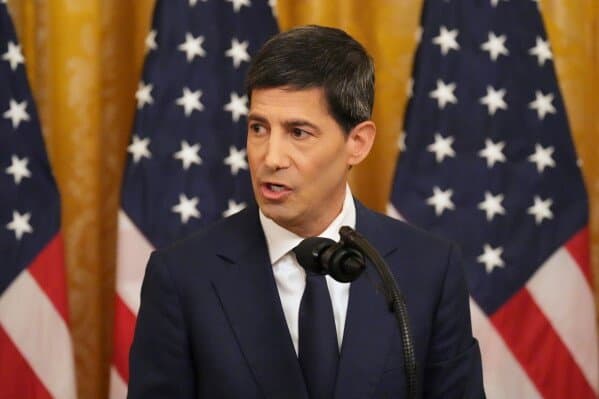
Kevin Warsh sworn in as new Federal Reserve Chair at White House
Kevin Warsh was officially sworn in as the 17th Chair of the Federal Reserve, marking a leadership transition from Jerome Powell. His appointment introduced market uncertainty about future rate policy, as Warsh emphasized independence and reform but faced political pressures.
New Fed Chair Kevin Warsh signals data-driven approach, no immediate rate cuts
25 bps increase drops to 17%9%
Following his appointment in May 2026, Fed Chair Kevin Warsh emphasized a data-dependent monetary policy approach, avoiding forward guidance and indicating that rate cuts are unlikely soon given persistent inflation. This stance contributed to a decline in market expectations for rate decreases and a gradual increase in the probability of a 25 bps rate hike by September.
Kevin Warsh sworn in as new US Fed chair
25 bps increase rises to 14%3%
Kevin Warsh officially took office as Federal Reserve Chair on May 22, 2026, beginning his leadership amid inflation pressures and political scrutiny, setting the stage for his first FOMC meeting and potential policy shifts.
Kevin Warsh confirmed as new Federal Reserve Chairman
25 bps increase drops to 17%9%
The Senate confirmed Kevin Warsh as the new Fed Chair on May 13, and his leadership was expected to mark a shift in monetary policy. This appointment influenced market expectations, as Warsh was seen as more hawkish compared to his predecessor, contributing to early price movements favoring a rate increase.
Fed Minutes Reveal Split Views on Inflation and Rate Cuts Amid Middle East Conflict
Minutes from the May 2026 FOMC meeting showed a divided committee with some participants advocating for rate cuts if inflation pressures eased and the Middle East conflict resolved, while others expressed concern about embedded inflation risks due to elevated energy prices and tariffs. This uncertainty contributed to market volatility and shifting rate hike probabilities.
Market anticipates Fed rate cut path in 2026 amid economic uncertainty
No change rises to 55%2%
Early in the analysis window, markets priced in a significant probability of rate cuts in 2026, reflecting uncertainty about inflation and economic growth. However, this sentiment shifted as inflation remained elevated and the Fed under new leadership signaled a more hawkish stance, reducing expectations for cuts and increasing the likelihood of hikes later in the year.
US inflation rises to 4.2% in May, highest in three years amid energy price shock
25 bps increase drops to 12%14%
US Consumer Price Index inflation accelerated to 4.2% year-over-year in May 2026, driven mainly by energy price shocks linked to Middle East conflicts. This surge diminished hopes for rate cuts and increased market expectations for a potential rate hike later in the year.
Stronger-than-expected inflation report shifts market outlook away from rate cuts
25 bps increase jumps to 38%12%
A May inflation report showed a 4.2% annual CPI increase, the highest in three years, raising concerns about persistent inflation and reducing expectations for near-term Fed rate cuts. This led markets to price in a higher chance of a rate hike later in 2026.
Federal Reserve maintains steady rates amid mixed economic signals
At the start of the analysis window, the Fed held rates steady as economic data showed mixed signals on inflation and growth. Market prices reflected uncertainty, with the 'No change' and '25 bps increase' options both holding significant probabilities.
Kevin Warsh confirmed as Federal Reserve Chair by Senate
25 bps increase plunges to 11%15%
Kevin Warsh was confirmed by the Senate on May 13, 2026, as the new Federal Reserve Chair, signaling a potential shift in monetary policy direction amid ongoing inflation challenges. His confirmation introduced uncertainty and expectations of a hawkish stance, influencing market pricing for future rate hikes.
Beware of external links.
Beware of external links.
Frequently Asked Questions