
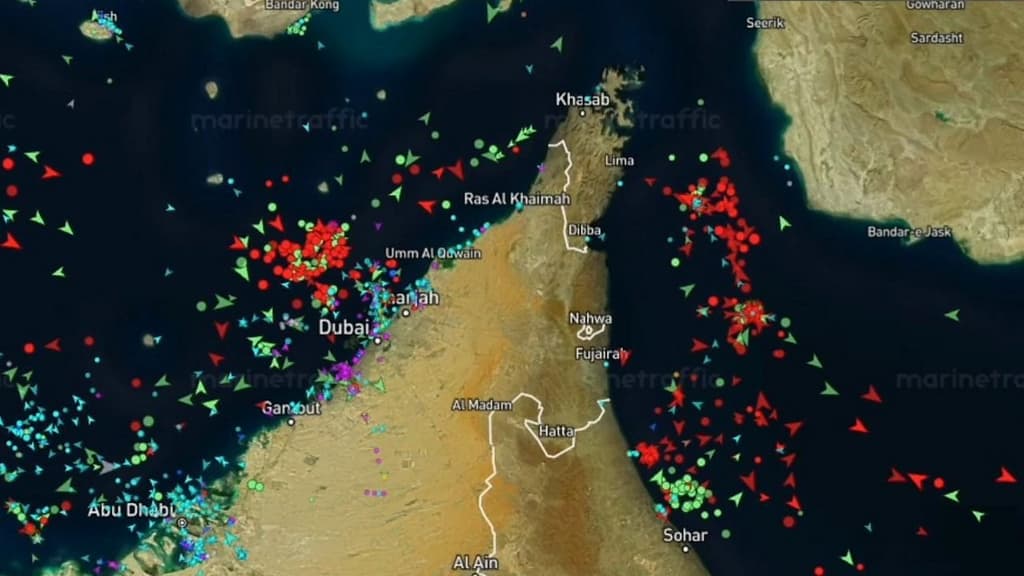
Escalating US-Iran naval tensions and the reimposed blockade on Iranian ports have tightened global oil supply risks through the Strait of Hormuz, a chokepoint handling roughly 20% of seaborne crude trade. This has lifted implied volatility in Brent and WTI futures while pushing up VLCC tanker charter rates and war-risk insurance premiums. European allies including the UK, France, Germany, Italy, and the Netherlands have signaled readiness to contribute warships for escort operations once a stable ceasefire holds, with Japan also referenced in joint statements. Traders are monitoring diplomatic talks and any near-term easing that could reduce the need for new transits by the August 31 deadline, alongside upcoming energy inventory data and OPEC+ supply signals that may further shape risk premia.
Résumé expérimental généré par IA à partir des données Polymarket. Ceci n'est pas un conseil de trading et ne joue aucun rôle dans la résolution de ce marché. · Mis à jourQuels pays enverront des navires de guerre dans le détroit d'Ormuz d'ici le 31 août ?
Quels pays enverront des navires de guerre dans le détroit d'Ormuz d'ici le 31 août ?
$233,357 Vol.

États-Unis
5%

France
2%

Royaume-Uni
2%

Pays-Bas
1%

Australie
1%

Italie
1%

Grèce
1%

Allemagne
1%
$233,357 Vol.
États-Unis
5%
France
2%
Royaume-Uni
2%
Pays-Bas
1%
Australie
1%
Italie
1%
Grèce
1%
Allemagne
1%
A "warship transit" is defined as a military vessel passing through the Strait of Hormuz. Military cargo or support vessels will be considered “warships”; however, commercial or civilian vessels will not qualify.
For the purposes of this market, only transits through the Strait of Hormuz will be considered, defined as passage through the narrowest portion of the waterway between Iran and Oman. Operations solely in the Persian Gulf, Gulf of Oman, or Arabian Sea without passage through this narrowest section will not qualify.
Official confirmation by a national government or its military that its vessels transited through the Strait of Hormuz during the specified timeframe will resolve this market immediately. An overwhelming consensus of credible reporting confirming that such a transit occurred during the specified timeframe will also suffice.
Qualifying confirmations must be made within this markets above specified timeframe and include official announcements that a country has deployed naval vessels to transit or escort shipping through the Strait of Hormuz.
Confirmations referring only to naval presence in the broader region, including the Persian Gulf, Gulf of Oman, or Arabian Sea, without confirmed transit through the Strait itself, as well as aerial operations, cyber operations, or actions by proxies or third parties, will not alone qualify.
The primary resolution source for this market will be official information by the respective national governments or their militaries; however, an overwhelming consensus of credible reporting will also suffice.
Marché ouvert : Jul 31, 2026, 10:14 AM ET
Resolver
0x65070BE91...A "warship transit" is defined as a military vessel passing through the Strait of Hormuz. Military cargo or support vessels will be considered “warships”; however, commercial or civilian vessels will not qualify.
For the purposes of this market, only transits through the Strait of Hormuz will be considered, defined as passage through the narrowest portion of the waterway between Iran and Oman. Operations solely in the Persian Gulf, Gulf of Oman, or Arabian Sea without passage through this narrowest section will not qualify.
Official confirmation by a national government or its military that its vessels transited through the Strait of Hormuz during the specified timeframe will resolve this market immediately. An overwhelming consensus of credible reporting confirming that such a transit occurred during the specified timeframe will also suffice.
Qualifying confirmations must be made within this markets above specified timeframe and include official announcements that a country has deployed naval vessels to transit or escort shipping through the Strait of Hormuz.
Confirmations referring only to naval presence in the broader region, including the Persian Gulf, Gulf of Oman, or Arabian Sea, without confirmed transit through the Strait itself, as well as aerial operations, cyber operations, or actions by proxies or third parties, will not alone qualify.
The primary resolution source for this market will be official information by the respective national governments or their militaries; however, an overwhelming consensus of credible reporting will also suffice.
Resolver
0x65070BE91...Escalating US-Iran naval tensions and the reimposed blockade on Iranian ports have tightened global oil supply risks through the Strait of Hormuz, a chokepoint handling roughly 20% of seaborne crude trade. This has lifted implied volatility in Brent and WTI futures while pushing up VLCC tanker charter rates and war-risk insurance premiums. European allies including the UK, France, Germany, Italy, and the Netherlands have signaled readiness to contribute warships for escort operations once a stable ceasefire holds, with Japan also referenced in joint statements. Traders are monitoring diplomatic talks and any near-term easing that could reduce the need for new transits by the August 31 deadline, alongside upcoming energy inventory data and OPEC+ supply signals that may further shape risk premia.
Résumé expérimental généré par IA à partir des données Polymarket. Ceci n'est pas un conseil de trading et ne joue aucun rôle dans la résolution de ce marché. · Mis à jour
Méfiez-vous des liens externes.
Méfiez-vous des liens externes.
Questions fréquentes