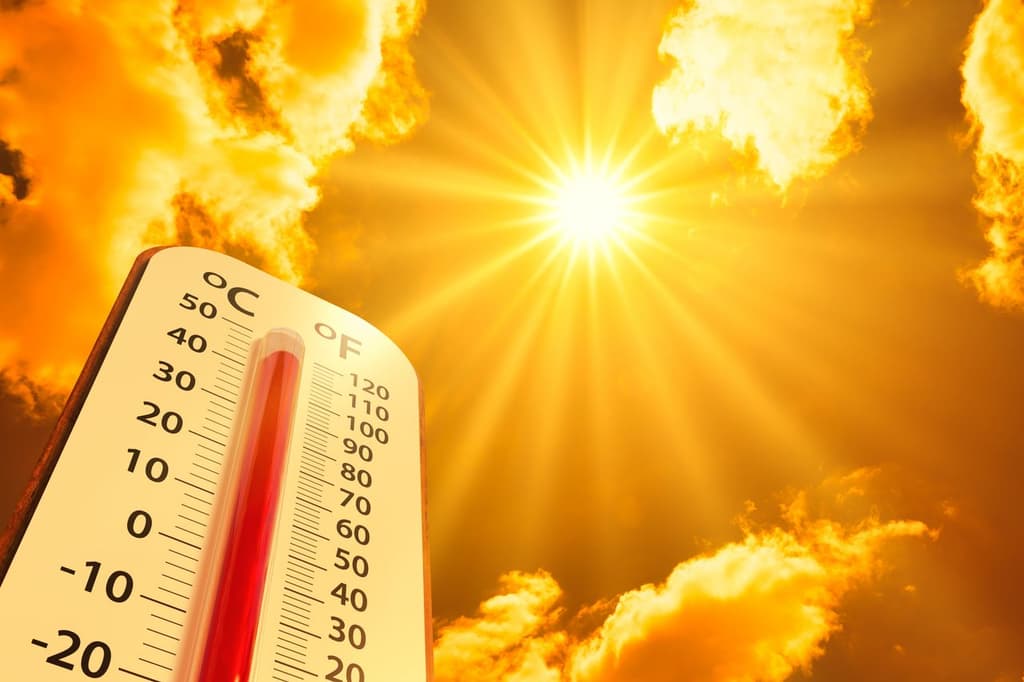
Recent global temperature data and climate dynamics strongly support trader consensus around a >1.29°C anomaly for August 2026 relative to the 1850–1900 baseline. Ongoing anthropogenic warming, amplified by a developing strong El Niño event, has sustained elevated sea surface and land temperatures through mid-2026, with June and July already ranking among the warmest on record at roughly 1.09–1.55°C above pre-industrial levels. Model consensus from agencies including the WMO and Met Office projects the 2026 annual mean in the 1.3–1.9°C range, with summer months typically reflecting peak seasonal warmth even as El Niño influences lag into later quarters. Partial August observations, including daily surface air temperature records near 17°C absolute, further anchor expectations well above 1.29°C. This positioning could face realistic downward pressure only from an unusually rapid transition toward La Niña conditions, a major volcanic eruption injecting stratospheric aerosols, or significant revisions in final observational datasets—scenarios that remain low-probability given current monitoring by NOAA and Copernicus.
Ringkasan eksperimental yang dihasilkan AI dengan referensi data Polymarket. Ini bukan saran trading dan tidak berperan dalam bagaimana pasar ini diselesaikan. · DiperbaruiAugust 2026 Temperature Increase (ºC)
August 2026 Temperature Increase (ºC)
>1.29ºC 96.2%
1.25–1.29ºC 3.6%
1.20–1.24ºC <1%
<1.10ºC <1%
$13,858 Vol.
$13,858 Vol.
<1.10ºC
<1%
1.10–1.14ºC
<1%
1.15–1.19ºC
<1%
1.20–1.24ºC
1%
1.25–1.29ºC
4%
>1.29ºC
96%
>1.29ºC 96.2%
1.25–1.29ºC 3.6%
1.20–1.24ºC <1%
<1.10ºC <1%
$13,858 Vol.
$13,858 Vol.
<1.10ºC
<1%
1.10–1.14ºC
<1%
1.15–1.19ºC
<1%
1.20–1.24ºC
1%
1.25–1.29ºC
4%
>1.29ºC
96%
An anomaly within a named bracket for August 2026 is necessary and sufficient to resolve this market immediately once the data becomes available, regardless of whether the figure for August 2026 is later revised.
The primary resolution source for this market will be the figure found in the table titled "GLOBAL Land-Ocean Temperature Index in 0.01 degrees Celsius" under the column "Aug" in the row "2026" (https://data.giss.nasa.gov/gistemp/tabledata_v4/GLB.Ts+dSST.txt).
If NASA’s “Global Temperature Index” is rendered permanently unavailable, other information from NASA may be used.
If no information for August 2026 is provided by NASA by October 1, 2026, 11:59 PM ET, this market will resolve to the lowest range bracket.
Pasar Dibuka: Jul 28, 2026, 1:48 PM ET
Resolver
0x69c47De9D...An anomaly within a named bracket for August 2026 is necessary and sufficient to resolve this market immediately once the data becomes available, regardless of whether the figure for August 2026 is later revised.
The primary resolution source for this market will be the figure found in the table titled "GLOBAL Land-Ocean Temperature Index in 0.01 degrees Celsius" under the column "Aug" in the row "2026" (https://data.giss.nasa.gov/gistemp/tabledata_v4/GLB.Ts+dSST.txt).
If NASA’s “Global Temperature Index” is rendered permanently unavailable, other information from NASA may be used.
If no information for August 2026 is provided by NASA by October 1, 2026, 11:59 PM ET, this market will resolve to the lowest range bracket.
Resolver
0x69c47De9D...Recent global temperature data and climate dynamics strongly support trader consensus around a >1.29°C anomaly for August 2026 relative to the 1850–1900 baseline. Ongoing anthropogenic warming, amplified by a developing strong El Niño event, has sustained elevated sea surface and land temperatures through mid-2026, with June and July already ranking among the warmest on record at roughly 1.09–1.55°C above pre-industrial levels. Model consensus from agencies including the WMO and Met Office projects the 2026 annual mean in the 1.3–1.9°C range, with summer months typically reflecting peak seasonal warmth even as El Niño influences lag into later quarters. Partial August observations, including daily surface air temperature records near 17°C absolute, further anchor expectations well above 1.29°C. This positioning could face realistic downward pressure only from an unusually rapid transition toward La Niña conditions, a major volcanic eruption injecting stratospheric aerosols, or significant revisions in final observational datasets—scenarios that remain low-probability given current monitoring by NOAA and Copernicus.
Ringkasan eksperimental yang dihasilkan AI dengan referensi data Polymarket. Ini bukan saran trading dan tidak berperan dalam bagaimana pasar ini diselesaikan. · Diperbarui

Hati-hati dengan link eksternal.
Hati-hati dengan link eksternal.
Pertanyaan yang Sering Diajukan