
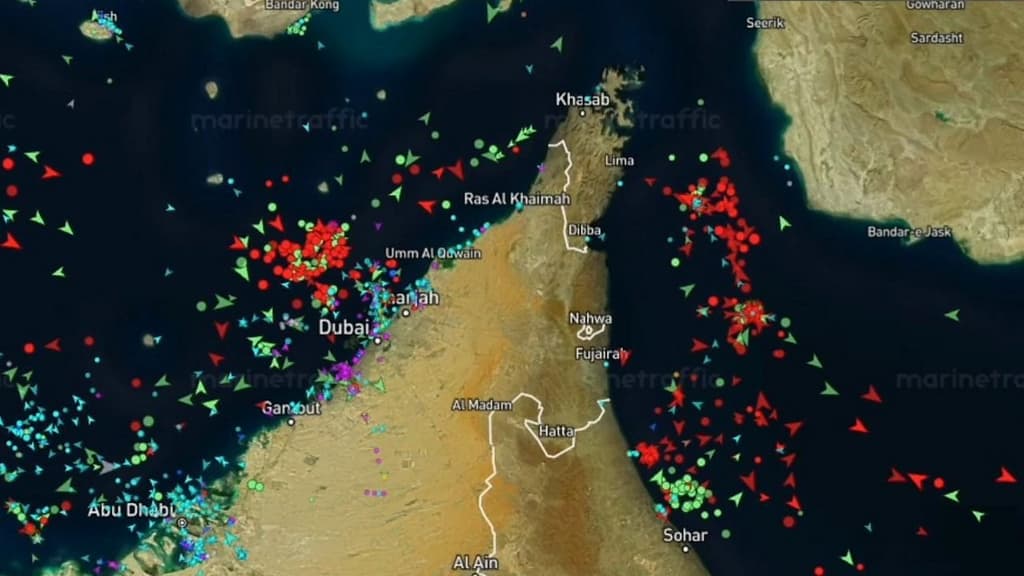
Escalating tensions in the Strait of Hormuz, a chokepoint for roughly one-fifth of global oil exports, are elevating energy supply risk premiums and supporting Brent crude prices above recent lows. Recent Iranian attacks on UAE-flagged vessels and sharply reduced tanker traffic—down to single digits daily from pre-conflict averages near 140—have amplified volatility in oil futures and shipping insurance rates. U.S. naval assertions of control and calls for allied minesweepers from Britain, France, and others reflect efforts to restore safe passage, potentially easing market-implied disruption costs. With the August 31 resolution window imminent and ceasefire talks ongoing, trader sentiment hinges on whether additional naval transits materialize to stabilize flows before further price spikes.
Ringkasan eksperimental yang dihasilkan AI dengan referensi data Polymarket. Ini bukan saran trading dan tidak berperan dalam bagaimana pasar ini diselesaikan. · DiperbaruiWhich countries will send warships through the Strait of Hormuz by August 31?
Which countries will send warships through the Strait of Hormuz by August 31?
$233,274 Vol.

US
5%

France
2%

UK
2%

Netherlands
1%

Germany
1%

Italy
1%

Australia
1%

Greece
1%
$233,274 Vol.
US
5%
France
2%
UK
2%
Netherlands
1%
Germany
1%
Italy
1%
Australia
1%
Greece
1%
A "warship transit" is defined as a military vessel passing through the Strait of Hormuz. Military cargo or support vessels will be considered “warships”; however, commercial or civilian vessels will not qualify.
For the purposes of this market, only transits through the Strait of Hormuz will be considered, defined as passage through the narrowest portion of the waterway between Iran and Oman. Operations solely in the Persian Gulf, Gulf of Oman, or Arabian Sea without passage through this narrowest section will not qualify.
Official confirmation by a national government or its military that its vessels transited through the Strait of Hormuz during the specified timeframe will resolve this market immediately. An overwhelming consensus of credible reporting confirming that such a transit occurred during the specified timeframe will also suffice.
Qualifying confirmations must be made within this markets above specified timeframe and include official announcements that a country has deployed naval vessels to transit or escort shipping through the Strait of Hormuz.
Confirmations referring only to naval presence in the broader region, including the Persian Gulf, Gulf of Oman, or Arabian Sea, without confirmed transit through the Strait itself, as well as aerial operations, cyber operations, or actions by proxies or third parties, will not alone qualify.
The primary resolution source for this market will be official information by the respective national governments or their militaries; however, an overwhelming consensus of credible reporting will also suffice.
Pasar Dibuka: Jul 31, 2026, 10:14 AM ET
Resolver
0x65070BE91...A "warship transit" is defined as a military vessel passing through the Strait of Hormuz. Military cargo or support vessels will be considered “warships”; however, commercial or civilian vessels will not qualify.
For the purposes of this market, only transits through the Strait of Hormuz will be considered, defined as passage through the narrowest portion of the waterway between Iran and Oman. Operations solely in the Persian Gulf, Gulf of Oman, or Arabian Sea without passage through this narrowest section will not qualify.
Official confirmation by a national government or its military that its vessels transited through the Strait of Hormuz during the specified timeframe will resolve this market immediately. An overwhelming consensus of credible reporting confirming that such a transit occurred during the specified timeframe will also suffice.
Qualifying confirmations must be made within this markets above specified timeframe and include official announcements that a country has deployed naval vessels to transit or escort shipping through the Strait of Hormuz.
Confirmations referring only to naval presence in the broader region, including the Persian Gulf, Gulf of Oman, or Arabian Sea, without confirmed transit through the Strait itself, as well as aerial operations, cyber operations, or actions by proxies or third parties, will not alone qualify.
The primary resolution source for this market will be official information by the respective national governments or their militaries; however, an overwhelming consensus of credible reporting will also suffice.
Resolver
0x65070BE91...Escalating tensions in the Strait of Hormuz, a chokepoint for roughly one-fifth of global oil exports, are elevating energy supply risk premiums and supporting Brent crude prices above recent lows. Recent Iranian attacks on UAE-flagged vessels and sharply reduced tanker traffic—down to single digits daily from pre-conflict averages near 140—have amplified volatility in oil futures and shipping insurance rates. U.S. naval assertions of control and calls for allied minesweepers from Britain, France, and others reflect efforts to restore safe passage, potentially easing market-implied disruption costs. With the August 31 resolution window imminent and ceasefire talks ongoing, trader sentiment hinges on whether additional naval transits materialize to stabilize flows before further price spikes.
Ringkasan eksperimental yang dihasilkan AI dengan referensi data Polymarket. Ini bukan saran trading dan tidak berperan dalam bagaimana pasar ini diselesaikan. · Diperbarui
Hati-hati dengan link eksternal.
Hati-hati dengan link eksternal.
Pertanyaan yang Sering Diajukan