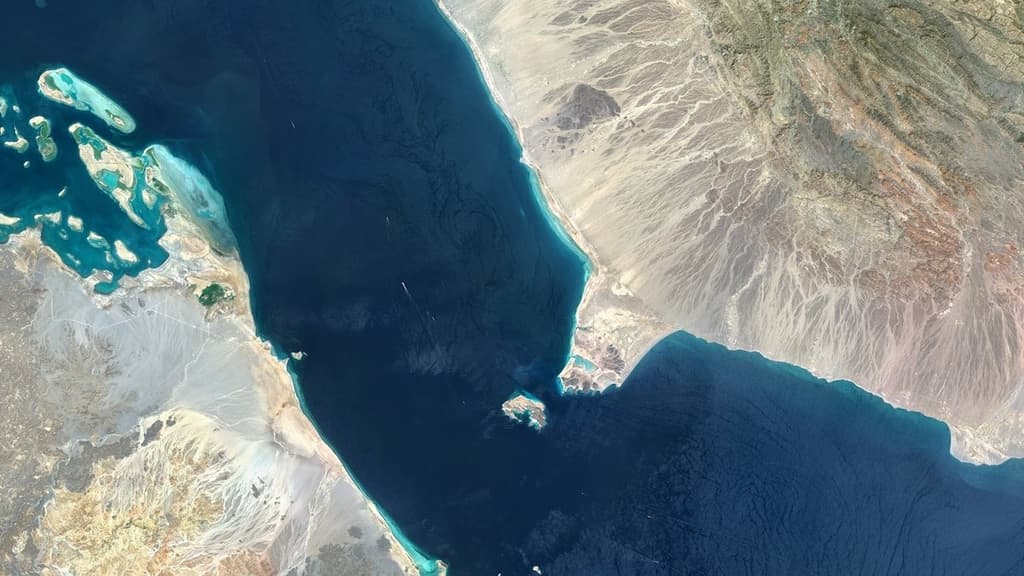
Recent Houthi maritime blockade threats against Saudi-linked shipping, announced in July 2026 amid renewed Red Sea tensions, have driven sustained rerouting and suppressed volumes through the Bab el-Mandeb Strait. Weekly transits stabilized near 260–270 in late July and early August after an initial 24% drop from prior peaks above 350, reflecting trader consensus around 200–219 for the week of August 10 amid ongoing security risks and avoidance by commodity carriers. This market-implied range aligns with tanker and vessel tracking data showing daily averages of roughly 30–40 amid elevated insurance costs and alternative Cape of Good Hope routing. Potential shifts could arise from de-escalation in Houthi or Iran-related hostilities, clearer regulatory guidance on safe passage, or unexpected surges in non-sanctioned traffic that push totals outside the band.
Riepilogo sperimentale generato dall'AI con riferimento ai dati di Polymarket. Questo non è un consiglio di trading e non ha alcun ruolo nella risoluzione di questo mercato. · AggiornatoQuante navi transitano nello Stretto di Bab el-Mandeb nella settimana del 10 agosto?
Quante navi transitano nello Stretto di Bab el-Mandeb nella settimana del 10 agosto?
200-219 98.8%
<180 9%
220+ 9%
180-199 <1%
$13,344 Vol.
$13,344 Vol.
<180
9%
180-199
1%
200-219
94%
220+
9%
200-219 98.8%
<180 9%
220+ 9%
180-199 <1%
$13,344 Vol.
$13,344 Vol.
<180
9%
180-199
1%
200-219
94%
220+
9%
Transit calls include container, dry bulk, roll-on/roll-off, general cargo, and tanker ships. Ships not reported by IMF Portwatch will not be considered.
This market will resolve as soon as all relevant data has been published. If the relevant data is not published within 14 calendar days of the specified date, this market will resolve based on the most recent data published up to that point.
In case of obvious data integrity issues (i.e., erroneous data), the market may remain open until the end of the third calendar day (ET) after the date on which such data is first released to allow for corrections. Data integrity issues refer only to clerical or other similar errors in the underlying data, and do not include cases where IMF Portwatch differs from alternative sources.
Only revisions to previously published data points made before all relevant data has been published will be considered.
The resolution source for this market will be IMF PortWatch, specifically the “Arrivals of Ships” data published for the Bab el-Mandeb Strait at https://portwatch.imf.org/pages/6b1814d64903461b98144a6cc25eb79c.
Mercato aperto: Aug 8, 2026, 12:07 PM ET
Resolver
0x69c47De9D...Transit calls include container, dry bulk, roll-on/roll-off, general cargo, and tanker ships. Ships not reported by IMF Portwatch will not be considered.
This market will resolve as soon as all relevant data has been published. If the relevant data is not published within 14 calendar days of the specified date, this market will resolve based on the most recent data published up to that point.
In case of obvious data integrity issues (i.e., erroneous data), the market may remain open until the end of the third calendar day (ET) after the date on which such data is first released to allow for corrections. Data integrity issues refer only to clerical or other similar errors in the underlying data, and do not include cases where IMF Portwatch differs from alternative sources.
Only revisions to previously published data points made before all relevant data has been published will be considered.
The resolution source for this market will be IMF PortWatch, specifically the “Arrivals of Ships” data published for the Bab el-Mandeb Strait at https://portwatch.imf.org/pages/6b1814d64903461b98144a6cc25eb79c.
Resolver
0x69c47De9D...Recent Houthi maritime blockade threats against Saudi-linked shipping, announced in July 2026 amid renewed Red Sea tensions, have driven sustained rerouting and suppressed volumes through the Bab el-Mandeb Strait. Weekly transits stabilized near 260–270 in late July and early August after an initial 24% drop from prior peaks above 350, reflecting trader consensus around 200–219 for the week of August 10 amid ongoing security risks and avoidance by commodity carriers. This market-implied range aligns with tanker and vessel tracking data showing daily averages of roughly 30–40 amid elevated insurance costs and alternative Cape of Good Hope routing. Potential shifts could arise from de-escalation in Houthi or Iran-related hostilities, clearer regulatory guidance on safe passage, or unexpected surges in non-sanctioned traffic that push totals outside the band.
Riepilogo sperimentale generato dall'AI con riferimento ai dati di Polymarket. Questo non è un consiglio di trading e non ha alcun ruolo nella risoluzione di questo mercato. · Aggiornato
Fai attenzione ai link esterni.
Fai attenzione ai link esterni.
Domande frequenti