
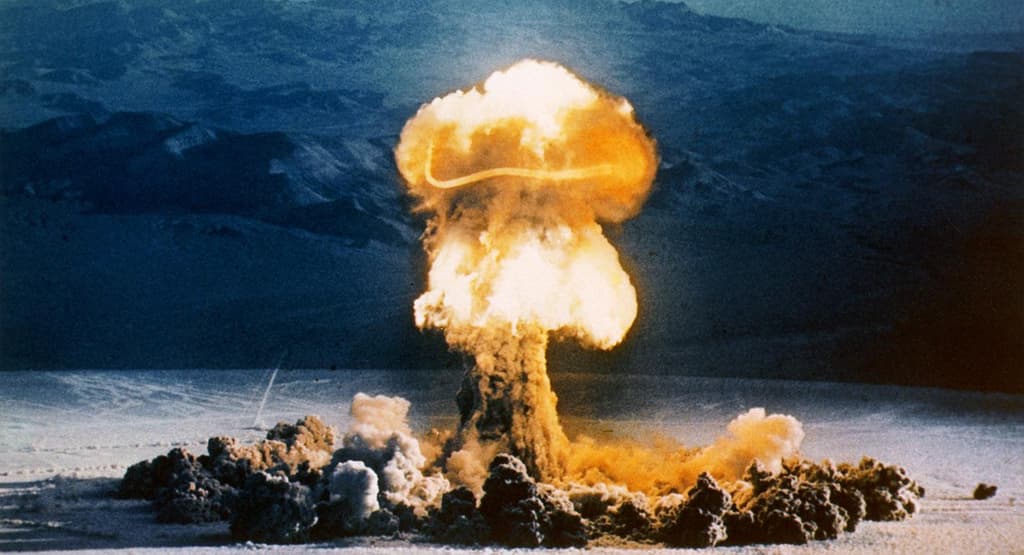
This market will resolve to "Yes" if Russia conducts a nuclear test by the listed date (ET). Otherwise, this market will resolve to "No".
A nuclear test is defined as the intentional non-combat detonation of a device by Russia that produces a nuclear chain reaction (fission or fusion), regardless of yield.
Accidents, radiological dispersal devices (bombs that spread radioactive material using conventional explosives such as "dirty bombs"), or actions by third parties will not count toward this market's resolution.
Tests not explicitly claimed by Russia may still qualify if a clear consensus of credible reporting attributes the nuclear detonation to Russia. For example, an unclaimed nuclear test analogous to the 1979 "Vela Incident" would count if credible reporting attributes it to Russia.
The resolution source for this market will be a broad consensus of credible reporting.Russia's recent test launch of the nuclear-capable RS-28 Sarmat intercontinental ballistic missile on May 12, 2026—hailed by President Vladimir Putin as the world's most powerful, with deployment planned by year-end—has heightened trader focus on Moscow's nuclear modernization amid the expired New START treaty in February 2026. However, no verified preparations for an actual nuclear explosion test, last conducted in 1990 at Novaya Zemlya, have emerged in the past 30 days, despite Russia's 2023 withdrawal of CTBT ratification removing legal barriers. Escalation rhetoric tied to the Ukraine conflict and Victory Day parade persists, but seismic monitoring shows no activity; upcoming missile drills or doctrine updates could shift sentiment in this low-probability deterrence signaling environment.
This market will resolve to "Yes" if Russia conducts a nuclear test by the listed date (ET). Otherwise, this market will resolve to "No".
A nuclear test is defined as the intentional non-combat detonation of a device by Russia that produces a nuclear chain reaction (fission or fusion), regardless of yield.
Accidents, radiological dispersal devices (bombs that spread radioactive material using conventional explosives such as "dirty bombs"), or actions by third parties will not count toward this market's resolution.
Tests not explicitly claimed by Russia may still qualify if a clear consensus of credible reporting attributes the nuclear detonation to Russia. For example, an unclaimed nuclear test analogous to the 1979 "Vela Incident" would count if credible reporting attributes it to Russia.
The resolution source for this market will be a broad consensus of credible reporting.
This market will resolve to "Yes" if Russia conducts a nuclear test by the listed date (ET). Otherwise, this market will resolve to "No".
A nuclear test is defined as the intentional non-combat detonation of a device by Russia that produces a nuclear chain reaction (fission or fusion), regardless of yield.
Accidents, radiological dispersal devices (bombs that spread radioactive material using conventional explosives such as "dirty bombs"), or actions by third parties will not count toward this market's resolution.
Tests not explicitly claimed by Russia may still qualify if a clear consensus of credible reporting attributes the nuclear detonation to Russia. For example, an unclaimed nuclear test analogous to the 1979 "Vela Incident" would count if credible reporting attributes it to Russia.
The resolution source for this market will be a broad consensus of credible reporting.
Russia's recent test launch of the nuclear-capable RS-28 Sarmat intercontinental ballistic missile on May 12, 2026—hailed by President Vladimir Putin as the world's most powerful, with deployment planned by year-end—has heightened trader focus on Moscow's nuclear modernization amid the expired New START treaty in February 2026. However, no verified preparations for an actual nuclear explosion test, last conducted in 1990 at Novaya Zemlya, have emerged in the past 30 days, despite Russia's 2023 withdrawal of CTBT ratification removing legal barriers. Escalation rhetoric tied to the Ukraine conflict and Victory Day parade persists, but seismic monitoring shows no activity; upcoming missile drills or doctrine updates could shift sentiment in this low-probability deterrence signaling environment.
Riepilogo sperimentale generato dall'AI con riferimento ai dati di Polymarket. Questo non è un consiglio di trading e non ha alcun ruolo nella risoluzione di questo mercato. · Aggiornato
May 12 2026
Russia successfully test-fires the new Sarmat intercontinental ballistic missile, with President Putin announcing deployment planned by the end of 2026
While the test demonstrated modernization of Russia’s nuclear forces, it was a missile launch without a nuclear detonation, maintaining low market odds for a nuclear test.
May 12 2026
Russian President Vladimir Putin announces successful test launch of the new Sarmat strategic nuclear missile and confirms deployment planned by year-end, emphasizing
September 30, 2026 dips to 5%1%
Russian President Vladimir Putin announces successful test launch of the new Sarmat strategic nuclear missile and confirms deployment planned by year-end, emphasizing modernization without conducting a nuclear test
May 6 2026
Russia conducts missile tests at the Kura range in Kamchatka, including launches of nuclear-capable missiles ahead of Victory Day celebrations
December 31, 2026 dips to 8%4%
These tests involved missile launches capable of carrying nuclear warheads but did not include any nuclear detonations, signaling escalation but not a nuclear test.
May 6 2026
Russian Ministry of Defence announces ballistic missile tests at the Kura range, signaling military strength but not involving nuclear detonations, maintaining low market
September 30, 2026 dips to 4%2%
Russian Ministry of Defence announces ballistic missile tests at the Kura range, signaling military strength but not involving nuclear detonations, maintaining low market expectations for a nuclear test
May 6 2026
Russia conducts nuclear-capable missile tests ahead of Victory Day Parade but does not conduct any nuclear detonations, demonstrating military capability without crossing the
Russia conducts nuclear-capable missile tests ahead of Victory Day Parade but does not conduct any nuclear detonations, demonstrating military capability without crossing the nuclear test threshold, which likely kept the market probability low
May 4 2026
Polymarket analysis notes that, despite Yars drills and bomber patrols, there is “absent CTBTO seismic data” and “Kremlin restraint statements,” further depressing the
December 31, 2026 drops to 4%5%
Polymarket analysis notes that, despite Yars drills and bomber patrols, there is “absent CTBTO seismic data” and “Kremlin restraint statements,” further depressing the test‑probability outlook
May 1 2026
Congressional Research Service report reiterates that Russia’s “modernization” is hampered by failed tests and that the New START treaty has just expired – The report underscored
September 30, 2026 dips to 6%2%
Congressional Research Service report reiterates that Russia’s “modernization” is hampered by failed tests and that the New START treaty has just expired – The report underscored that, despite the treaty’s lapse, Russia publicly pledged to continue abiding by its limits, reinforcing trader sentiment that a test was unlikely before Sept 30.
Apr 30 2026
IAEA Director‑General Rafael Grossi warns that any nuclear test by Russia (or the U.S.) would spark a cascade of worldwide testing – The UN‑backed warning amplified concerns about
September 30, 2026 dips to 8%1%
IAEA Director‑General Rafael Grossi warns that any nuclear test by Russia (or the U.S.) would spark a cascade of worldwide testing – The UN‑backed warning amplified concerns about escalation, leading markets to further discount the probability of a Russian test in the near term.
Apr 29 2026
The head of the organization overseeing the nuclear test ban treaty reiterates warnings that a nuclear test by Russia or the U.S.
would lead to other nations following suit, reinforcing the global norm against testing and reducing market expectations for a Russian test
Apr 21 2026
Rafael Grossi, head of the organization overseeing the nuclear test ban treaty, warns that any nuclear test by the U.S., Russia, or others would trigger a global cascade of tests,
Rafael Grossi, head of the organization overseeing the nuclear test ban treaty, warns that any nuclear test by the U.S., Russia, or others would trigger a global cascade of tests, emphasizing the high stakes and deterring Russia from testing
Apr 21 2026
Head of the International Atomic Energy Agency warns that renewed nuclear testing by the U.S.
September 30, 2026 dips to 6%3%
or Russia would trigger global proliferation, highlighting Russia’s 2023 revocation of its nuclear test ban treaty ratification and raising international alarm about potential tests
Apr 18 2026
Russian Foreign Ministry publicly rejects any possibility of using nuclear weapons in Ukraine – The statement was interpreted as a broader signal of restraint on nuclear
September 30, 2026 dips to 6%3%
Russian Foreign Ministry publicly rejects any possibility of using nuclear weapons in Ukraine – The statement was interpreted as a broader signal of restraint on nuclear activities, contributing to the continued decline in the “Yes”
Mar 31 2026
U.S. intelligence community’s 2026 Annual Threat Assessment reports multiple failed tests of new Russian nuclear weapons systems and ongoing modernization efforts without confirmed nuclear detonations
December 31, 2026 plunges to 12%38%
This official assessment highlighted Russia’s struggles with new nuclear system tests, reducing market confidence in an imminent nuclear test.
Mar 31 2026
U.S. intelligence community’s 2026 Annual Threat Assessment reports multiple failed tests of new Russian nuclear weapons systems and ongoing modernization efforts without
September 30, 2026 plunges to 10%41%
U.S. intelligence community’s 2026 Annual Threat Assessment reports multiple failed tests of new Russian nuclear weapons systems and ongoing modernization efforts without confirmed nuclear detonations, reducing market confidence in an imminent Russian nuclear test
Mar 30 2026
Russian Deputy Foreign Minister Sergey Ryabkov announces Moscow will continue notifying the U.S.
June 30, 2026 plunges to 2%48%
of missile launches despite suspending the last nuclear arms control treaty, signaling ongoing restraint in nuclear activities despite treaty tensions
Mar 15 2026
U.S. intelligence briefing flags “multiple failed tests” of new Russian nuclear systems – A March testimony cited in the 2026 Annual Threat Assessment warned that Russia’s recent
September 30, 2026 plunges to 9%42%
U.S. intelligence briefing flags “multiple failed tests” of new Russian nuclear systems – A March testimony cited in the 2026 Annual Threat Assessment warned that Russia’s recent attempts at modernizing its arsenal had repeatedly failed, prompting traders to slash the perceived likelihood of a test before the end‑September deadline.
This market will resolve to "Yes" if Russia conducts a nuclear test by the listed date (ET). Otherwise, this market will resolve to "No".
A nuclear test is defined as the intentional non-combat detonation of a device by Russia that produces a nuclear chain reaction (fission or fusion), regardless of yield.
Accidents, radiological dispersal devices (bombs that spread radioactive material using conventional explosives such as "dirty bombs"), or actions by third parties will not count toward this market's resolution.
Tests not explicitly claimed by Russia may still qualify if a clear consensus of credible reporting attributes the nuclear detonation to Russia. For example, an unclaimed nuclear test analogous to the 1979 "Vela Incident" would count if credible reporting attributes it to Russia.
The resolution source for this market will be a broad consensus of credible reporting.Russia's recent test launch of the nuclear-capable RS-28 Sarmat intercontinental ballistic missile on May 12, 2026—hailed by President Vladimir Putin as the world's most powerful, with deployment planned by year-end—has heightened trader focus on Moscow's nuclear modernization amid the expired New START treaty in February 2026. However, no verified preparations for an actual nuclear explosion test, last conducted in 1990 at Novaya Zemlya, have emerged in the past 30 days, despite Russia's 2023 withdrawal of CTBT ratification removing legal barriers. Escalation rhetoric tied to the Ukraine conflict and Victory Day parade persists, but seismic monitoring shows no activity; upcoming missile drills or doctrine updates could shift sentiment in this low-probability deterrence signaling environment.
This market will resolve to "Yes" if Russia conducts a nuclear test by the listed date (ET). Otherwise, this market will resolve to "No".
A nuclear test is defined as the intentional non-combat detonation of a device by Russia that produces a nuclear chain reaction (fission or fusion), regardless of yield.
Accidents, radiological dispersal devices (bombs that spread radioactive material using conventional explosives such as "dirty bombs"), or actions by third parties will not count toward this market's resolution.
Tests not explicitly claimed by Russia may still qualify if a clear consensus of credible reporting attributes the nuclear detonation to Russia. For example, an unclaimed nuclear test analogous to the 1979 "Vela Incident" would count if credible reporting attributes it to Russia.
The resolution source for this market will be a broad consensus of credible reporting.
This market will resolve to "Yes" if Russia conducts a nuclear test by the listed date (ET). Otherwise, this market will resolve to "No".
A nuclear test is defined as the intentional non-combat detonation of a device by Russia that produces a nuclear chain reaction (fission or fusion), regardless of yield.
Accidents, radiological dispersal devices (bombs that spread radioactive material using conventional explosives such as "dirty bombs"), or actions by third parties will not count toward this market's resolution.
Tests not explicitly claimed by Russia may still qualify if a clear consensus of credible reporting attributes the nuclear detonation to Russia. For example, an unclaimed nuclear test analogous to the 1979 "Vela Incident" would count if credible reporting attributes it to Russia.
The resolution source for this market will be a broad consensus of credible reporting.
Russia's recent test launch of the nuclear-capable RS-28 Sarmat intercontinental ballistic missile on May 12, 2026—hailed by President Vladimir Putin as the world's most powerful, with deployment planned by year-end—has heightened trader focus on Moscow's nuclear modernization amid the expired New START treaty in February 2026. However, no verified preparations for an actual nuclear explosion test, last conducted in 1990 at Novaya Zemlya, have emerged in the past 30 days, despite Russia's 2023 withdrawal of CTBT ratification removing legal barriers. Escalation rhetoric tied to the Ukraine conflict and Victory Day parade persists, but seismic monitoring shows no activity; upcoming missile drills or doctrine updates could shift sentiment in this low-probability deterrence signaling environment.
Riepilogo sperimentale generato dall'AI con riferimento ai dati di Polymarket. Questo non è un consiglio di trading e non ha alcun ruolo nella risoluzione di questo mercato. · Aggiornato
May 12 2026
Russia successfully test-fires the new Sarmat intercontinental ballistic missile, with President Putin announcing deployment planned by the end of 2026
While the test demonstrated modernization of Russia’s nuclear forces, it was a missile launch without a nuclear detonation, maintaining low market odds for a nuclear test.
May 12 2026
Russian President Vladimir Putin announces successful test launch of the new Sarmat strategic nuclear missile and confirms deployment planned by year-end, emphasizing
September 30, 2026 dips to 5%1%
Russian President Vladimir Putin announces successful test launch of the new Sarmat strategic nuclear missile and confirms deployment planned by year-end, emphasizing modernization without conducting a nuclear test
May 6 2026
Russia conducts missile tests at the Kura range in Kamchatka, including launches of nuclear-capable missiles ahead of Victory Day celebrations
December 31, 2026 dips to 8%4%
These tests involved missile launches capable of carrying nuclear warheads but did not include any nuclear detonations, signaling escalation but not a nuclear test.
May 6 2026
Russian Ministry of Defence announces ballistic missile tests at the Kura range, signaling military strength but not involving nuclear detonations, maintaining low market
September 30, 2026 dips to 4%2%
Russian Ministry of Defence announces ballistic missile tests at the Kura range, signaling military strength but not involving nuclear detonations, maintaining low market expectations for a nuclear test
May 6 2026
Russia conducts nuclear-capable missile tests ahead of Victory Day Parade but does not conduct any nuclear detonations, demonstrating military capability without crossing the
Russia conducts nuclear-capable missile tests ahead of Victory Day Parade but does not conduct any nuclear detonations, demonstrating military capability without crossing the nuclear test threshold, which likely kept the market probability low
May 4 2026
Polymarket analysis notes that, despite Yars drills and bomber patrols, there is “absent CTBTO seismic data” and “Kremlin restraint statements,” further depressing the
December 31, 2026 drops to 4%5%
Polymarket analysis notes that, despite Yars drills and bomber patrols, there is “absent CTBTO seismic data” and “Kremlin restraint statements,” further depressing the test‑probability outlook
May 1 2026
Congressional Research Service report reiterates that Russia’s “modernization” is hampered by failed tests and that the New START treaty has just expired – The report underscored
September 30, 2026 dips to 6%2%
Congressional Research Service report reiterates that Russia’s “modernization” is hampered by failed tests and that the New START treaty has just expired – The report underscored that, despite the treaty’s lapse, Russia publicly pledged to continue abiding by its limits, reinforcing trader sentiment that a test was unlikely before Sept 30.
Apr 30 2026
IAEA Director‑General Rafael Grossi warns that any nuclear test by Russia (or the U.S.) would spark a cascade of worldwide testing – The UN‑backed warning amplified concerns about
September 30, 2026 dips to 8%1%
IAEA Director‑General Rafael Grossi warns that any nuclear test by Russia (or the U.S.) would spark a cascade of worldwide testing – The UN‑backed warning amplified concerns about escalation, leading markets to further discount the probability of a Russian test in the near term.
Apr 29 2026
The head of the organization overseeing the nuclear test ban treaty reiterates warnings that a nuclear test by Russia or the U.S.
would lead to other nations following suit, reinforcing the global norm against testing and reducing market expectations for a Russian test
Apr 21 2026
Rafael Grossi, head of the organization overseeing the nuclear test ban treaty, warns that any nuclear test by the U.S., Russia, or others would trigger a global cascade of tests,
Rafael Grossi, head of the organization overseeing the nuclear test ban treaty, warns that any nuclear test by the U.S., Russia, or others would trigger a global cascade of tests, emphasizing the high stakes and deterring Russia from testing
Apr 21 2026
Head of the International Atomic Energy Agency warns that renewed nuclear testing by the U.S.
September 30, 2026 dips to 6%3%
or Russia would trigger global proliferation, highlighting Russia’s 2023 revocation of its nuclear test ban treaty ratification and raising international alarm about potential tests
Apr 18 2026
Russian Foreign Ministry publicly rejects any possibility of using nuclear weapons in Ukraine – The statement was interpreted as a broader signal of restraint on nuclear
September 30, 2026 dips to 6%3%
Russian Foreign Ministry publicly rejects any possibility of using nuclear weapons in Ukraine – The statement was interpreted as a broader signal of restraint on nuclear activities, contributing to the continued decline in the “Yes”
Mar 31 2026
U.S. intelligence community’s 2026 Annual Threat Assessment reports multiple failed tests of new Russian nuclear weapons systems and ongoing modernization efforts without confirmed nuclear detonations
December 31, 2026 plunges to 12%38%
This official assessment highlighted Russia’s struggles with new nuclear system tests, reducing market confidence in an imminent nuclear test.
Mar 31 2026
U.S. intelligence community’s 2026 Annual Threat Assessment reports multiple failed tests of new Russian nuclear weapons systems and ongoing modernization efforts without
September 30, 2026 plunges to 10%41%
U.S. intelligence community’s 2026 Annual Threat Assessment reports multiple failed tests of new Russian nuclear weapons systems and ongoing modernization efforts without confirmed nuclear detonations, reducing market confidence in an imminent Russian nuclear test
Mar 30 2026
Russian Deputy Foreign Minister Sergey Ryabkov announces Moscow will continue notifying the U.S.
June 30, 2026 plunges to 2%48%
of missile launches despite suspending the last nuclear arms control treaty, signaling ongoing restraint in nuclear activities despite treaty tensions
Mar 15 2026
U.S. intelligence briefing flags “multiple failed tests” of new Russian nuclear systems – A March testimony cited in the 2026 Annual Threat Assessment warned that Russia’s recent
September 30, 2026 plunges to 9%42%
U.S. intelligence briefing flags “multiple failed tests” of new Russian nuclear systems – A March testimony cited in the 2026 Annual Threat Assessment warned that Russia’s recent attempts at modernizing its arsenal had repeatedly failed, prompting traders to slash the perceived likelihood of a test before the end‑September deadline.
Fai attenzione ai link esterni.
Domande frequenti
"Test nucleare russo di...?" è un mercato predittivo su Polymarket con 6 possibili esiti dove i trader comprano e vendono azioni in base a ciò che credono accadrà. L'esito attualmente in testa è "31 dicembre 2026" a 8%, seguito da "30 settembre 2026" a 5%. I prezzi riflettono probabilità aggregate in tempo reale. Ad esempio, un'azione quotata a 8¢ implica che il mercato assegna collettivamente una probabilità di 8% a quell'esito. Queste quote cambiano continuamente man mano che i trader reagiscono a nuovi sviluppi e informazioni. Le azioni nell'esito corretto possono essere riscattate per $1 ciascuna alla risoluzione del mercato.
Ad oggi, "Test nucleare russo di...?" ha generato $1.4 million in volume totale di trading dal lancio del mercato il Nov 5, 2025. Questo livello di attività di trading riflette un forte coinvolgimento della comunità Polymarket e contribuisce a garantire che le quote attuali siano informate da un ampio pool di partecipanti al mercato. Puoi seguire i movimenti di prezzo in tempo reale e fare trading su qualsiasi esito direttamente su questa pagina.
Per fare trading su "Test nucleare russo di...?", esplora i 6 esiti disponibili elencati in questa pagina. Ogni esito mostra un prezzo corrente che rappresenta la probabilità implicita del mercato. Per prendere una posizione, seleziona l'esito che ritieni più probabile, scegli "Sì" per fare trading a suo favore o "No" per fare trading contro di esso, inserisci il tuo importo e clicca "Trading". Se il tuo esito scelto è corretto alla risoluzione del mercato, le tue azioni "Sì" pagano $1 ciascuna. Se è errato, pagano $0. Puoi anche vendere le tue azioni in qualsiasi momento prima della risoluzione se vuoi consolidare un profitto o limitare una perdita.
Questo è un mercato molto aperto. L'attuale leader per "Test nucleare russo di...?" è "31 dicembre 2026" a solo 8%, con "30 settembre 2026" vicino a 5%. Con nessun esito che detiene una forte maggioranza, i trader vedono questo come altamente incerto, il che può presentare opportunità di trading uniche. Queste quote si aggiornano in tempo reale, quindi aggiungi questa pagina ai preferiti per vedere come si evolvono le probabilità.
Le regole di risoluzione per "Test nucleare russo di...?" definiscono esattamente cosa deve accadere affinché ogni esito venga dichiarato vincitore — comprese le fonti di dati ufficiali utilizzate per determinare il risultato. Puoi consultare i criteri completi di risoluzione nella sezione "Regole" di questa pagina sopra i commenti. Ti consigliamo di leggere attentamente le regole prima di fare trading, poiché specificano le condizioni precise, i casi limite e le fonti che regolano come viene risolto questo mercato.
Sì. Non è necessario fare trading per restare informati. Questa pagina funziona come un tracker live per "Test nucleare russo di...?". Le probabilità degli esiti si aggiornano in tempo reale man mano che arrivano nuove operazioni. Puoi aggiungere questa pagina ai preferiti e controllare la sezione commenti per vedere cosa dicono gli altri trader. Puoi anche usare i filtri temporali sul grafico per vedere come sono cambiate le quote nel tempo. È una finestra gratuita e in tempo reale su ciò che il mercato si aspetta accada.
Le quote di Polymarket sono stabilite da veri trader che investono denaro reale nelle loro convinzioni, il che tende a produrre previsioni accurate. Con $1.4 million scambiati su "Test nucleare russo di...?", questi prezzi aggregano la conoscenza collettiva e la convinzione di migliaia di partecipanti — spesso superando sondaggi, previsioni di esperti e indagini tradizionali. I mercati predittivi come Polymarket hanno un forte track record di accuratezza, specialmente man mano che gli eventi si avvicinano alla data di risoluzione. Ad esempio, Polymarket ha un punteggio di accuratezza a un mese di 94%. Per le ultime statistiche sull'accuratezza delle previsioni di Polymarket, visita la pagina accuratezza su Polymarket.
Per piazzare la tua prima operazione su "Test nucleare russo di...?", registrati per un account Polymarket gratuito e finanzialo con crypto, carta di credito o debito, o bonifico bancario. Una volta finanziato il tuo account, torna su questa pagina, seleziona l'esito su cui vuoi fare trading, inserisci il tuo importo e clicca "Trading". Se sei nuovo ai mercati predittivi, clicca il link "Come funziona" in cima a qualsiasi pagina Polymarket per una guida passo-passo su come funziona il trading.
Su Polymarket, il prezzo di ogni esito rappresenta la probabilità implicita del mercato. Un prezzo di 8¢ per "31 dicembre 2026" nel mercato "Test nucleare russo di...?" significa che i trader credono collettivamente che ci sia circa una probabilità di 8% che "31 dicembre 2026" sia il risultato corretto. Se compri azioni "Sì" a 8¢ e l'esito è corretto, ricevi $1,00 per azione — un profitto di 92¢ per azione. Se errato, quelle azioni valgono $0.
La data di fine programmata del mercato "Test nucleare russo di...?" è trascorsa, ma il mercato non è stato ancora ufficialmente risolto. La data di fine indica quando ci si aspetta che l'evento sottostante si verifichi o diventi conoscibile. Non è il momento in cui il trading si ferma. Il mercato rimane aperto al trading fino a quando l'esito non viene formalmente risolto attraverso il processo di risoluzione. Puoi ancora comprare, vendere o chiudere la tua posizione mentre il mercato è in attesa di risoluzione. Controlla il tracker dello stato di risoluzione e la sezione "Regole" su questa pagina per aggiornamenti sulla tempistica di risoluzione.
Il mercato "Test nucleare russo di...?" ha una discussione in crescita di 7 commenti dove i trader condividono le loro analisi, discutono gli esiti e commentano gli sviluppi dell'ultima ora. Scorri in basso alla sezione commenti per leggere cosa pensano gli altri partecipanti. Puoi anche filtrare per "Maggiori detentori" per vedere su cosa sono posizionati i più grandi trader del mercato, o controllare la scheda "Attività" per un feed in tempo reale delle operazioni.
Polymarket è il più grande mercato predittivo al mondo, dove puoi restare informato e trarre profitto dalla tua conoscenza di eventi reali. I trader comprano e vendono azioni sugli esiti per argomenti che spaziano dalla politica e le elezioni alle crypto, finanza, sport, tecnologia e cultura, inclusi mercati come "Test nucleare russo di...?". I prezzi riflettono probabilità aggregate in tempo reale supportate da convinzione finanziaria, fornendo spesso segnali più rapidi e accurati di sondaggi, opinionisti o indagini tradizionali.
Fai attenzione ai link esterni.
Domande frequenti