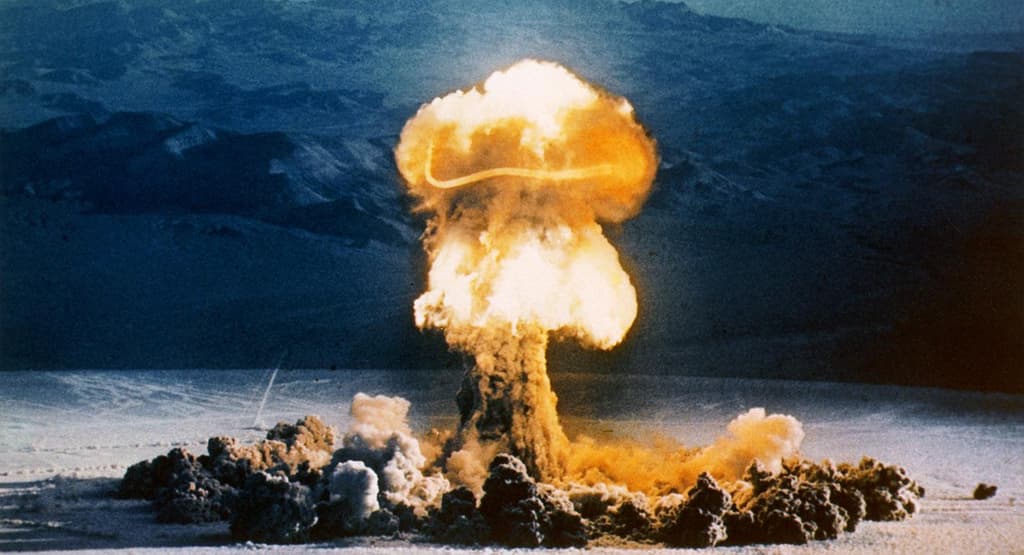
This market will resolve to "Yes" if Russia conducts a nuclear test by the listed date (ET). Otherwise, this market will resolve to "No".
A nuclear test is defined as the intentional non-combat detonation of a device by Russia that produces a nuclear chain reaction (fission or fusion), regardless of yield.
Accidents, radiological dispersal devices (bombs that spread radioactive material using conventional explosives such as "dirty bombs"), or actions by third parties will not count toward this market's resolution.
Tests not explicitly claimed by Russia may still qualify if a clear consensus of credible reporting attributes the nuclear detonation to Russia. For example, an unclaimed nuclear test analogous to the 1979 "Vela Incident" would count if credible reporting attributes it to Russia.
The resolution source for this market will be a broad consensus of credible reporting.Russia's May 12 test launch of the nuclear-capable RS-28 Sarmat intercontinental ballistic missile from Plesetsk, announced by President Putin for deployment by year-end, underscores strategic nuclear modernization after New START's February 2026 expiration but does not qualify as a nuclear detonation under market criteria. Defense Minister Belousov's recent proposals to ready Novaya Zemlya infrastructure, alongside early May Kura range exercises, heighten speculation amid CTBTO warnings of potential non-adherence to testing norms. Moscow maintains it will resume only if other nuclear powers do, upholding a de facto moratorium since 1990 despite Ukraine war escalation rhetoric. Trader consensus reflects low probabilities due to verification challenges, sanctions, and diplomatic pressures, with further ICBM trials as key upcoming catalysts.
This market will resolve to "Yes" if Russia conducts a nuclear test by the listed date (ET). Otherwise, this market will resolve to "No".
A nuclear test is defined as the intentional non-combat detonation of a device by Russia that produces a nuclear chain reaction (fission or fusion), regardless of yield.
Accidents, radiological dispersal devices (bombs that spread radioactive material using conventional explosives such as "dirty bombs"), or actions by third parties will not count toward this market's resolution.
Tests not explicitly claimed by Russia may still qualify if a clear consensus of credible reporting attributes the nuclear detonation to Russia. For example, an unclaimed nuclear test analogous to the 1979 "Vela Incident" would count if credible reporting attributes it to Russia.
The resolution source for this market will be a broad consensus of credible reporting.
This market will resolve to "Yes" if Russia conducts a nuclear test by the listed date (ET). Otherwise, this market will resolve to "No".
A nuclear test is defined as the intentional non-combat detonation of a device by Russia that produces a nuclear chain reaction (fission or fusion), regardless of yield.
Accidents, radiological dispersal devices (bombs that spread radioactive material using conventional explosives such as "dirty bombs"), or actions by third parties will not count toward this market's resolution.
Tests not explicitly claimed by Russia may still qualify if a clear consensus of credible reporting attributes the nuclear detonation to Russia. For example, an unclaimed nuclear test analogous to the 1979 "Vela Incident" would count if credible reporting attributes it to Russia.
The resolution source for this market will be a broad consensus of credible reporting.
Russia's May 12 test launch of the nuclear-capable RS-28 Sarmat intercontinental ballistic missile from Plesetsk, announced by President Putin for deployment by year-end, underscores strategic nuclear modernization after New START's February 2026 expiration but does not qualify as a nuclear detonation under market criteria. Defense Minister Belousov's recent proposals to ready Novaya Zemlya infrastructure, alongside early May Kura range exercises, heighten speculation amid CTBTO warnings of potential non-adherence to testing norms. Moscow maintains it will resume only if other nuclear powers do, upholding a de facto moratorium since 1990 despite Ukraine war escalation rhetoric. Trader consensus reflects low probabilities due to verification challenges, sanctions, and diplomatic pressures, with further ICBM trials as key upcoming catalysts.
Russia uses nuclear-capable Oreshnik missile in massive strike on Ukraine
September 30, 2026 dips to 5%1%
Russia launched a massive missile and drone strike on Ukraine, including the use of the nuclear-capable Oreshnik intermediate-range ballistic missile. While this demonstrated Russia’s willingness to deploy nuclear-capable weapons, no nuclear test was reported, and the strike was conventional in nature, influencing market perceptions downward for a nuclear test occurring soon.
May 6 2026
Russia and Ukraine envoys meet in Abu Dhabi for US-brokered peace talks
Diplomatic talks between Russia and Ukraine, brokered by the U.S., aimed at ending the nearly four-year war, signaled ongoing efforts to avoid escalation including nuclear testing. The talks coincided with the expiration of the last nuclear arms treaty, reinforcing market expectations against a nuclear test by Russia in the near term.
Apr 29 2026
Russia’s nuclear-capable Oreshnik missiles enter active service in Belarus
September 30, 2026 dips to 6%1%
Russia announced that its nuclear-capable Oreshnik missile system had entered active service in Belarus, demonstrating enhanced nuclear delivery capabilities. This development raised concerns about nuclear escalation but did not indicate an actual nuclear test, contributing to market uncertainty and price adjustments.
Apr 13 2026
U.S. imposes naval blockade on Iranian ports amid fragile ceasefire with Iran
December 31, 2026 dips to 8%4%
The U.S. military blockade of Iranian ports near the Strait of Hormuz raised regional tensions and cast doubt on the fragile ceasefire, increasing global security concerns but not directly implicating Russia in nuclear testing. This heightened geopolitical risk may have influenced market perceptions of nuclear escalation risks generally.
Apr 2 2026
Russia launches massive missile and drone strike on Ukraine including nuclear-capable missile
June 30, 2026 plunges to 2%48%
On April 2, 2026, Russia conducted a large-scale missile and drone attack on Ukraine, using a nuclear-capable intermediate-range ballistic missile. While this demonstrated Russia's nuclear-capable strike capability, it was not a nuclear test, contributing to market price drops as fears of an actual nuclear test diminished.
Apr 2 2026
No credible reports of Russia conducting nuclear test amid heightened tensions
December 31, 2026 plunges to 9%42%
Despite military escalations and deployment of nuclear-capable weapons, no credible reports or confirmations emerged of Russia conducting a nuclear test during the analysis window. This absence of evidence led to a significant market reassessment and price decline for the likelihood of a nuclear test by Russia by the listed dates.
Apr 1 2026
Russia deploys nuclear-capable Oreshnik missiles in Belarus amid Ukraine conflict
September 30, 2026 drops to 46%5%
On April 1, 2026, Russia announced that its nuclear-capable Oreshnik missile system had entered active service in Belarus, signaling a strategic military escalation. This deployment raised concerns about potential nuclear use but did not constitute a nuclear test, leading to initial market uncertainty reflected in prices around this date.
This market will resolve to "Yes" if Russia conducts a nuclear test by the listed date (ET). Otherwise, this market will resolve to "No".
A nuclear test is defined as the intentional non-combat detonation of a device by Russia that produces a nuclear chain reaction (fission or fusion), regardless of yield.
Accidents, radiological dispersal devices (bombs that spread radioactive material using conventional explosives such as "dirty bombs"), or actions by third parties will not count toward this market's resolution.
Tests not explicitly claimed by Russia may still qualify if a clear consensus of credible reporting attributes the nuclear detonation to Russia. For example, an unclaimed nuclear test analogous to the 1979 "Vela Incident" would count if credible reporting attributes it to Russia.
The resolution source for this market will be a broad consensus of credible reporting.Russia's May 12 test launch of the nuclear-capable RS-28 Sarmat intercontinental ballistic missile from Plesetsk, announced by President Putin for deployment by year-end, underscores strategic nuclear modernization after New START's February 2026 expiration but does not qualify as a nuclear detonation under market criteria. Defense Minister Belousov's recent proposals to ready Novaya Zemlya infrastructure, alongside early May Kura range exercises, heighten speculation amid CTBTO warnings of potential non-adherence to testing norms. Moscow maintains it will resume only if other nuclear powers do, upholding a de facto moratorium since 1990 despite Ukraine war escalation rhetoric. Trader consensus reflects low probabilities due to verification challenges, sanctions, and diplomatic pressures, with further ICBM trials as key upcoming catalysts.
This market will resolve to "Yes" if Russia conducts a nuclear test by the listed date (ET). Otherwise, this market will resolve to "No".
A nuclear test is defined as the intentional non-combat detonation of a device by Russia that produces a nuclear chain reaction (fission or fusion), regardless of yield.
Accidents, radiological dispersal devices (bombs that spread radioactive material using conventional explosives such as "dirty bombs"), or actions by third parties will not count toward this market's resolution.
Tests not explicitly claimed by Russia may still qualify if a clear consensus of credible reporting attributes the nuclear detonation to Russia. For example, an unclaimed nuclear test analogous to the 1979 "Vela Incident" would count if credible reporting attributes it to Russia.
The resolution source for this market will be a broad consensus of credible reporting.
This market will resolve to "Yes" if Russia conducts a nuclear test by the listed date (ET). Otherwise, this market will resolve to "No".
A nuclear test is defined as the intentional non-combat detonation of a device by Russia that produces a nuclear chain reaction (fission or fusion), regardless of yield.
Accidents, radiological dispersal devices (bombs that spread radioactive material using conventional explosives such as "dirty bombs"), or actions by third parties will not count toward this market's resolution.
Tests not explicitly claimed by Russia may still qualify if a clear consensus of credible reporting attributes the nuclear detonation to Russia. For example, an unclaimed nuclear test analogous to the 1979 "Vela Incident" would count if credible reporting attributes it to Russia.
The resolution source for this market will be a broad consensus of credible reporting.
Russia's May 12 test launch of the nuclear-capable RS-28 Sarmat intercontinental ballistic missile from Plesetsk, announced by President Putin for deployment by year-end, underscores strategic nuclear modernization after New START's February 2026 expiration but does not qualify as a nuclear detonation under market criteria. Defense Minister Belousov's recent proposals to ready Novaya Zemlya infrastructure, alongside early May Kura range exercises, heighten speculation amid CTBTO warnings of potential non-adherence to testing norms. Moscow maintains it will resume only if other nuclear powers do, upholding a de facto moratorium since 1990 despite Ukraine war escalation rhetoric. Trader consensus reflects low probabilities due to verification challenges, sanctions, and diplomatic pressures, with further ICBM trials as key upcoming catalysts.
Russia uses nuclear-capable Oreshnik missile in massive strike on Ukraine
September 30, 2026 dips to 5%1%
Russia launched a massive missile and drone strike on Ukraine, including the use of the nuclear-capable Oreshnik intermediate-range ballistic missile. While this demonstrated Russia’s willingness to deploy nuclear-capable weapons, no nuclear test was reported, and the strike was conventional in nature, influencing market perceptions downward for a nuclear test occurring soon.
May 6 2026
Russia and Ukraine envoys meet in Abu Dhabi for US-brokered peace talks
Diplomatic talks between Russia and Ukraine, brokered by the U.S., aimed at ending the nearly four-year war, signaled ongoing efforts to avoid escalation including nuclear testing. The talks coincided with the expiration of the last nuclear arms treaty, reinforcing market expectations against a nuclear test by Russia in the near term.
Apr 29 2026
Russia’s nuclear-capable Oreshnik missiles enter active service in Belarus
September 30, 2026 dips to 6%1%
Russia announced that its nuclear-capable Oreshnik missile system had entered active service in Belarus, demonstrating enhanced nuclear delivery capabilities. This development raised concerns about nuclear escalation but did not indicate an actual nuclear test, contributing to market uncertainty and price adjustments.
Apr 13 2026
U.S. imposes naval blockade on Iranian ports amid fragile ceasefire with Iran
December 31, 2026 dips to 8%4%
The U.S. military blockade of Iranian ports near the Strait of Hormuz raised regional tensions and cast doubt on the fragile ceasefire, increasing global security concerns but not directly implicating Russia in nuclear testing. This heightened geopolitical risk may have influenced market perceptions of nuclear escalation risks generally.
Apr 2 2026
Russia launches massive missile and drone strike on Ukraine including nuclear-capable missile
June 30, 2026 plunges to 2%48%
On April 2, 2026, Russia conducted a large-scale missile and drone attack on Ukraine, using a nuclear-capable intermediate-range ballistic missile. While this demonstrated Russia's nuclear-capable strike capability, it was not a nuclear test, contributing to market price drops as fears of an actual nuclear test diminished.
Apr 2 2026
No credible reports of Russia conducting nuclear test amid heightened tensions
December 31, 2026 plunges to 9%42%
Despite military escalations and deployment of nuclear-capable weapons, no credible reports or confirmations emerged of Russia conducting a nuclear test during the analysis window. This absence of evidence led to a significant market reassessment and price decline for the likelihood of a nuclear test by Russia by the listed dates.
Apr 1 2026
Russia deploys nuclear-capable Oreshnik missiles in Belarus amid Ukraine conflict
September 30, 2026 drops to 46%5%
On April 1, 2026, Russia announced that its nuclear-capable Oreshnik missile system had entered active service in Belarus, signaling a strategic military escalation. This deployment raised concerns about potential nuclear use but did not constitute a nuclear test, leading to initial market uncertainty reflected in prices around this date.
外部リンクに注意してください。
外部リンクに注意してください。
よくある質問