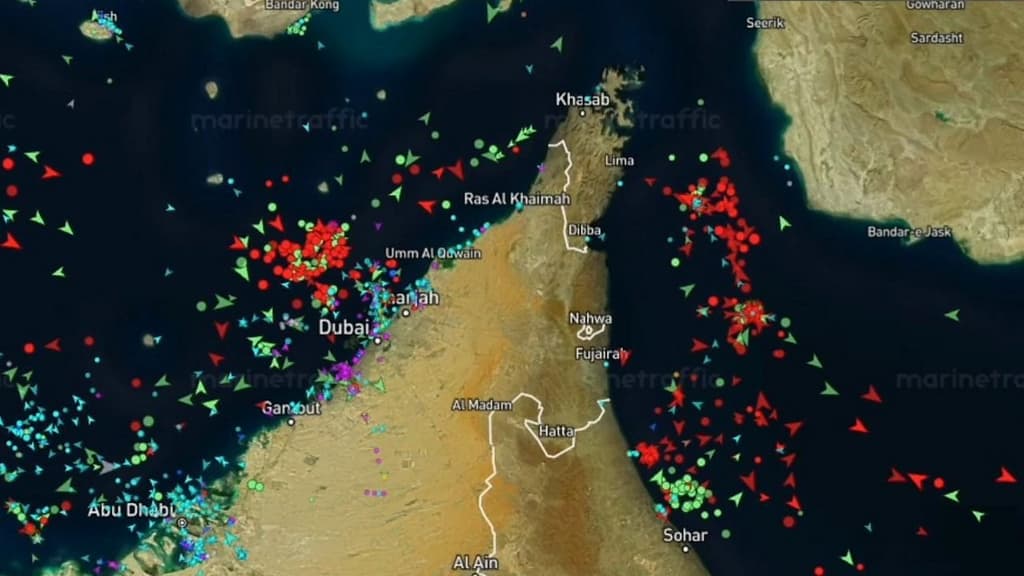
Ongoing US-Iran tensions, including renewed naval blockades and Iranian restrictions on vessel movements, have kept Strait of Hormuz transits at minimal levels since February 2026. Recent attacks on commercial ships, including two UAE-flagged vessels on August 13-14, prompted immediate US warnings of escalated economic and military pressure, resulting in near-standstill traffic with only one or two passages recorded in recent 24-hour periods. High war-risk insurance costs, IRGC enforcement of controlled routes, and shipowner avoidance have compounded the disruption to this critical chokepoint for oil and LNG flows. Any diplomatic de-escalation, new US-Iran arrangements, or verified safe-passage agreements could increase daily transits, while further incidents or sustained blockades raise the likelihood of complete zero-traffic days.
Eksperymentalne podsumowanie AI odwołujące się do danych Polymarket. To nie jest porada handlowa i nie ma wpływu na rozstrzyganie tego rynku. · Zaktualizowano0 ships transit Hormuz on any date by..?
0 ships transit Hormuz on any date by..?
$732,213 Wol.
August 31
34%
$732,213 Wol.
August 31
34%
Transit calls include container, dry bulk, roll-on/roll-off, general cargo, and tanker ships. Ships not reported by IMF PortWatch will not be considered.
This market will resolve as soon as IMF PortWatch publishes a daily number of transit calls equal to 0, or once complete data has been published for the specified period without such a publication. If complete data for the specified period has not been published within 28 calendar days of the end of the specified period, this market will resolve based on data published up to that point.
In case of obvious data integrity issues (i.e., erroneous data), the market may remain open until the end of the third calendar day (ET) after the date on which such data is first released to allow for corrections. Data integrity issues refer only to clerical or other similar errors in the underlying data, and do not include cases where IMF PortWatch differs from alternative sources. Revisions to previously published data points made within this market’s timeframe will be considered. However, they will not disqualify a previously published data point from qualifying except in the case of data integrity issues.
The resolution source for this market will be IMF PortWatch, specifically the transit calls data published for the Strait of Hormuz at https://portwatch.imf.org/pages/cb5856222a5b4105adc6ee7e880a1730, both in the chart and through downloadable files.
Rynek otwarty: Jul 29, 2026, 12:28 PM ET
Resolver
0x65070BE91...Transit calls include container, dry bulk, roll-on/roll-off, general cargo, and tanker ships. Ships not reported by IMF PortWatch will not be considered.
This market will resolve as soon as IMF PortWatch publishes a daily number of transit calls equal to 0, or once complete data has been published for the specified period without such a publication. If complete data for the specified period has not been published within 28 calendar days of the end of the specified period, this market will resolve based on data published up to that point.
In case of obvious data integrity issues (i.e., erroneous data), the market may remain open until the end of the third calendar day (ET) after the date on which such data is first released to allow for corrections. Data integrity issues refer only to clerical or other similar errors in the underlying data, and do not include cases where IMF PortWatch differs from alternative sources. Revisions to previously published data points made within this market’s timeframe will be considered. However, they will not disqualify a previously published data point from qualifying except in the case of data integrity issues.
The resolution source for this market will be IMF PortWatch, specifically the transit calls data published for the Strait of Hormuz at https://portwatch.imf.org/pages/cb5856222a5b4105adc6ee7e880a1730, both in the chart and through downloadable files.
Resolver
0x65070BE91...Ongoing US-Iran tensions, including renewed naval blockades and Iranian restrictions on vessel movements, have kept Strait of Hormuz transits at minimal levels since February 2026. Recent attacks on commercial ships, including two UAE-flagged vessels on August 13-14, prompted immediate US warnings of escalated economic and military pressure, resulting in near-standstill traffic with only one or two passages recorded in recent 24-hour periods. High war-risk insurance costs, IRGC enforcement of controlled routes, and shipowner avoidance have compounded the disruption to this critical chokepoint for oil and LNG flows. Any diplomatic de-escalation, new US-Iran arrangements, or verified safe-passage agreements could increase daily transits, while further incidents or sustained blockades raise the likelihood of complete zero-traffic days.
Eksperymentalne podsumowanie AI odwołujące się do danych Polymarket. To nie jest porada handlowa i nie ma wpływu na rozstrzyganie tego rynku. · Zaktualizowano
Uważaj na linki zewnętrzne.
Uważaj na linki zewnętrzne.
Często zadawane pytania