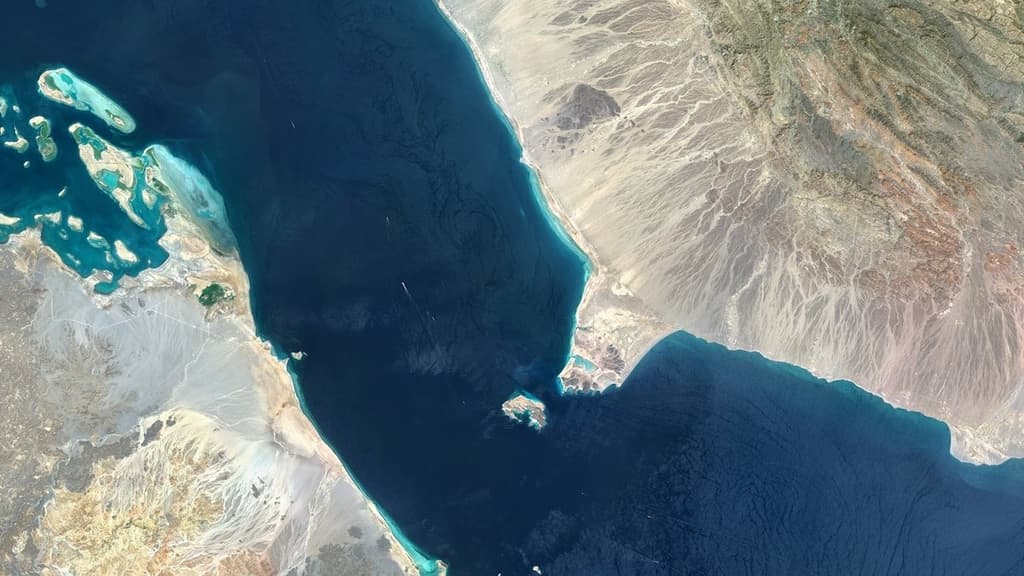
icon for Avg. # of ships transiting Bab el-Mandeb Strait end of July?

Avg. # of ships transiting Bab el-Mandeb Strait end of July?

icon for Avg. # of ships transiting Bab el-Mandeb Strait end of July?

Avg. # of ships transiting Bab el-Mandeb Strait end of July?

34-36 47%

37-39 43%

25-27 42%

31-33 42%

Polymarket
NOWE

34-36 47%

37-39 43%

25-27 42%

31-33 42%

Polymarket
NOWE

<25

$0 Wol.

41%

25-27

$0 Wol.

42%

28-30

$0 Wol.

40%

31-33

$0 Wol.

42%

34-36

$0 Wol.

47%

37-39

$0 Wol.

43%

40+

$0 Wol.

42%

This market will resolve according to the 7-day moving average of transit calls (“Arrivals of Ships”) for the Bab el-Mandeb Strait that IMF Portwatch reports for July 31, 2026. Transit calls include container, dry bulk, roll-on/roll-off, general cargo, and tanker ships. Ships not reported by IMF Portwatch will not be considered. This market will resolve as soon as the relevant data has been published. If the relevant data is not published within 14 calendar days of the specified date, this market will resolve based on the most recent data published up to that point. In case of obvious data integrity issues (i.e., erroneous data), the market may remain open until the end of the third calendar day (ET) after the date on which such data is first released to allow for corrections. Data integrity issues refer only to clerical or other similar errors in the underlying data, and do not include cases where IMF Portwatch differs from alternative sources. The resolution source for this market will be IMF PortWatch, specifically the “Arrivals of Ships” data published for the Bab el-Mandeb Strait at https://portwatch.imf.org/pages/6b1814d64903461b98144a6cc25eb79c. Geopolitical tensions tied to the 2026 Iran conflict continue to drive elevated risk premiums and rerouting decisions for Bab el-Mandeb transits, keeping daily ship counts well below pre-2023 norms of roughly 60-70 vessels. Recent data show January 2026 volumes at about 35 cargo ships per day on average, with March figures dipping to a 7-day moving average near 33 amid renewed Houthi threats and selective carrier pauses. Flat market-implied odds across the 28-39 range reflect uncertainty over whether fragile ceasefires will hold or escalate through July, with key swing factors including any fresh attacks, insurance rate shifts, or naval de-escalation signals that could quickly alter carrier routing economics and push volumes toward the lower or mid bins.

This market will resolve according to the 7-day moving average of transit calls (“Arrivals of Ships”) for the Bab el-Mandeb Strait that IMF Portwatch reports for July 31, 2026.

Transit calls include container, dry bulk, roll-on/roll-off, general cargo, and tanker ships. Ships not reported by IMF Portwatch will not be considered.

This market will resolve as soon as the relevant data has been published. If the relevant data is not published within 14 calendar days of the specified date, this market will resolve based on the most recent data published up to that point.

In case of obvious data integrity issues (i.e., erroneous data), the market may remain open until the end of the third calendar day (ET) after the date on which such data is first released to allow for corrections. Data integrity issues refer only to clerical or other similar errors in the underlying data, and do not include cases where IMF Portwatch differs from alternative sources.

The resolution source for this market will be IMF PortWatch, specifically the “Arrivals of Ships” data published for the Bab el-Mandeb Strait at https://portwatch.imf.org/pages/6b1814d64903461b98144a6cc25eb79c.
Wolumen
$0
Data zakończenia
Jul 31, 2026
Rynek otwarty
Jul 13, 2026, 10:56 PM ET
This market will resolve according to the 7-day moving average of transit calls (“Arrivals of Ships”) for the Bab el-Mandeb Strait that IMF Portwatch reports for July 31, 2026. Transit calls include container, dry bulk, roll-on/roll-off, general cargo, and tanker ships. Ships not reported by IMF Portwatch will not be considered. This market will resolve as soon as the relevant data has been published. If the relevant data is not published within 14 calendar days of the specified date, this market will resolve based on the most recent data published up to that point. In case of obvious data integrity issues (i.e., erroneous data), the market may remain open until the end of the third calendar day (ET) after the date on which such data is first released to allow for corrections. Data integrity issues refer only to clerical or other similar errors in the underlying data, and do not include cases where IMF Portwatch differs from alternative sources. The resolution source for this market will be IMF PortWatch, specifically the “Arrivals of Ships” data published for the Bab el-Mandeb Strait at https://portwatch.imf.org/pages/6b1814d64903461b98144a6cc25eb79c.
This market will resolve according to the 7-day moving average of transit calls (“Arrivals of Ships”) for the Bab el-Mandeb Strait that IMF Portwatch reports for July 31, 2026. Transit calls include container, dry bulk, roll-on/roll-off, general cargo, and tanker ships. Ships not reported by IMF Portwatch will not be considered. This market will resolve as soon as the relevant data has been published. If the relevant data is not published within 14 calendar days of the specified date, this market will resolve based on the most recent data published up to that point. In case of obvious data integrity issues (i.e., erroneous data), the market may remain open until the end of the third calendar day (ET) after the date on which such data is first released to allow for corrections. Data integrity issues refer only to clerical or other similar errors in the underlying data, and do not include cases where IMF Portwatch differs from alternative sources. The resolution source for this market will be IMF PortWatch, specifically the “Arrivals of Ships” data published for the Bab el-Mandeb Strait at https://portwatch.imf.org/pages/6b1814d64903461b98144a6cc25eb79c. Geopolitical tensions tied to the 2026 Iran conflict continue to drive elevated risk premiums and rerouting decisions for Bab el-Mandeb transits, keeping daily ship counts well below pre-2023 norms of roughly 60-70 vessels. Recent data show January 2026 volumes at about 35 cargo ships per day on average, with March figures dipping to a 7-day moving average near 33 amid renewed Houthi threats and selective carrier pauses. Flat market-implied odds across the 28-39 range reflect uncertainty over whether fragile ceasefires will hold or escalate through July, with key swing factors including any fresh attacks, insurance rate shifts, or naval de-escalation signals that could quickly alter carrier routing economics and push volumes toward the lower or mid bins.

This market will resolve according to the 7-day moving average of transit calls (“Arrivals of Ships”) for the Bab el-Mandeb Strait that IMF Portwatch reports for July 31, 2026.

Transit calls include container, dry bulk, roll-on/roll-off, general cargo, and tanker ships. Ships not reported by IMF Portwatch will not be considered.

This market will resolve as soon as the relevant data has been published. If the relevant data is not published within 14 calendar days of the specified date, this market will resolve based on the most recent data published up to that point.

In case of obvious data integrity issues (i.e., erroneous data), the market may remain open until the end of the third calendar day (ET) after the date on which such data is first released to allow for corrections. Data integrity issues refer only to clerical or other similar errors in the underlying data, and do not include cases where IMF Portwatch differs from alternative sources.

The resolution source for this market will be IMF PortWatch, specifically the “Arrivals of Ships” data published for the Bab el-Mandeb Strait at https://portwatch.imf.org/pages/6b1814d64903461b98144a6cc25eb79c.
Wolumen
$0
Data zakończenia
Jul 31, 2026
Rynek otwarty
Jul 13, 2026, 10:56 PM ET
This market will resolve according to the 7-day moving average of transit calls (“Arrivals of Ships”) for the Bab el-Mandeb Strait that IMF Portwatch reports for July 31, 2026. Transit calls include container, dry bulk, roll-on/roll-off, general cargo, and tanker ships. Ships not reported by IMF Portwatch will not be considered. This market will resolve as soon as the relevant data has been published. If the relevant data is not published within 14 calendar days of the specified date, this market will resolve based on the most recent data published up to that point. In case of obvious data integrity issues (i.e., erroneous data), the market may remain open until the end of the third calendar day (ET) after the date on which such data is first released to allow for corrections. Data integrity issues refer only to clerical or other similar errors in the underlying data, and do not include cases where IMF Portwatch differs from alternative sources. The resolution source for this market will be IMF PortWatch, specifically the “Arrivals of Ships” data published for the Bab el-Mandeb Strait at https://portwatch.imf.org/pages/6b1814d64903461b98144a6cc25eb79c.

Uważaj na linki zewnętrzne.

Często zadawane pytania

"Avg. # of ships transiting Bab el-Mandeb Strait end of July?" to rynek prognoz na Polymarket z 7 możliwymi wynikami, gdzie traderzy kupują i sprzedają udziały na podstawie tego, co ich zdaniem się wydarzy. Obecny wiodący wynik to "34-36" z 47%, za nim "37-39" z 43%. Ceny odzwierciedlają zbiorowe prawdopodobieństwa w czasie rzeczywistym. Na przykład udział wyceniony na 47¢ implikuje, że rynek zbiorowo przypisuje 47% szansy na ten wynik. Te kursy zmieniają się ciągle, gdy traderzy reagują na nowe informacje. Udziały w poprawnym wyniku można wymienić na $1 za sztukę po rozstrzygnięciu rynku.

"Avg. # of ships transiting Bab el-Mandeb Strait end of July?" to nowo utworzony rynek na Polymarket, uruchomiony Jul 13, 2026. Jako wczesny rynek, to Twoja okazja, aby być jednym z pierwszych traderów, którzy ustalą kursy i określą początkowe sygnały cenowe rynku. Możesz też dodać tę stronę do zakładek, aby śledzić wolumen i aktywność handlową w miarę rozwoju rynku.

Aby handlować na "Avg. # of ships transiting Bab el-Mandeb Strait end of July?", przeglądaj 7 dostępnych wyników na tej stronie. Każdy wynik wyświetla bieżącą cenę reprezentującą implikowane prawdopodobieństwo rynku. Aby zająć pozycję, wybierz wynik, który uważasz za najbardziej prawdopodobny, wybierz "Tak", aby handlować na jego korzyść, lub "Nie", aby handlować przeciw niemu, wpisz kwotę i kliknij "Handluj". Jeśli wybrany wynik okaże się poprawny, Twoje udziały "Tak" wypłacą $1 za sztukę. Jeśli jest niepoprawny, wypłacą $0. Możesz też sprzedać swoje udziały w dowolnym momencie przed rozstrzygnięciem.

Obecnym faworytem dla "Avg. # of ships transiting Bab el-Mandeb Strait end of July?" jest "34-36" z 47%, co oznacza, że rynek przypisuje 47% szansy na ten wynik. Następny najbliższy wynik to "37-39" z 43%. Te kursy aktualizują się w czasie rzeczywistym, gdy traderzy kupują i sprzedają udziały, odzwierciedlając najnowszy zbiorowy pogląd na to, co jest najbardziej prawdopodobne. Sprawdzaj regularnie lub dodaj tę stronę do zakładek, aby śledzić zmiany kursów.

Zasady rozstrzygania "Avg. # of ships transiting Bab el-Mandeb Strait end of July?" określają dokładnie, co musi się wydarzyć, aby każdy wynik został ogłoszony zwycięzcą — w tym oficjalne źródła danych używane do ustalenia wyniku. Możesz przejrzeć pełne kryteria rozstrzygania w sekcji "Zasady" na tej stronie nad komentarzami. Zalecamy dokładne zapoznanie się z zasadami przed handlem, ponieważ określają one precyzyjne warunki, przypadki graniczne i źródła regulujące rozstrzyganie tego rynku.