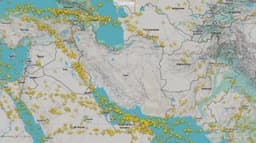
Heightened military tensions between Iran, Israel, and the United States continue to shape airspace policy, with the Tehran Flight Information Region remaining only partially open as of mid-August 2026. Western sectors have stayed restricted since large-scale strikes and Iranian missile responses in March, while eastern overflight routes partially resumed in June amid ongoing air defense needs. Recent EASA advisories and NOTAMs reflect risks from renewed activity near the Strait of Hormuz and around major airports like Imam Khomeini. Diplomatic channels involving mediators have produced temporary pauses rather than full reopenings, and trader focus centers on whether further escalation or de-escalation before key resolution windows will trigger complete commercial suspension affecting multiple hubs.
Resumo experimental gerado por IA com dados do Polymarket. Isto não é aconselhamento de trading e não tem qualquer papel na resolução deste mercado. · AtualizadoFechamento total do espaço aéreo do Irã até...?
Fechamento total do espaço aéreo do Irã até...?
$8,388,149 Vol.
31 de agosto
6%
30 de setembro
15%
31 de dezembro
30%
$8,388,149 Vol.
31 de agosto
6%
30 de setembro
15%
31 de dezembro
30%
A “general closure” refers to a cancellation or suspension of aviation which is generally applicable to all commercial flights transiting Iranian airspace (“Tehran FIR”). A qualifying closure must apply generally to all of Iran or the Tehran FIR; limited cancellations, delays, or partial closures will not qualify. A closure which applies generally to commercial aviation across Iranian airspace, with limited exceptions for certain categories of flights, however, will qualify (e.g. exceptions for certain flights pre-approved by the Iranian Civil Aviation Authority may be permitted).
Qualifying previous examples include the February 28, 2026 total closure of Iranian airspace (https://www.iranintl.com/en/202602289115) and the January 2026 total closure of Iranian airspace except to international flights with express governmental permission (https://www.reuters.com/world/middle-east/iran-shuts-airspace-most-flights-flightradar24-says-2026-01-14/). Non-qualifying examples include the January 27, 2026 partial closure of Iranian airspace around the Strait of Hormuz (https://www.aa.com.tr/en/middle-east/iran-issues-airspace-notice-for-military-drills-near-strait-of-hormuz/3812508), the April 2024 closure of Iran’s western airspace (https://www.reuters.com/world/middle-east/iranian-airports-cancel-flights-until-monday-morning-2024-04-14/), and the January 25 - April 25, 2026 VFR (Visual Flight Rules) flights suspension which did not broadly close commercial aviation in Iran (https://www.intellinews.com/iran-suspends-general-aviation-and-vfr-flights-in-new-airspace-directive-421997/).
Warnings, No-Fly-Zones, or other flight restrictions imposed by airlines or countries other than Iran will not be sufficient for a “Yes” resolution.
Airspace closures which occur solely due to weather conditions, earthquakes, or volcanic eruptions, will not qualify.
The primary resolution sources for this market will be official information from Iranian aviation authorities and a consensus of credible reporting.
Mercado Aberto: Jun 25, 2026, 7:21 PM ET
Resolver
0x65070BE91...A “general closure” refers to a cancellation or suspension of aviation which is generally applicable to all commercial flights transiting Iranian airspace (“Tehran FIR”). A qualifying closure must apply generally to all of Iran or the Tehran FIR; limited cancellations, delays, or partial closures will not qualify. A closure which applies generally to commercial aviation across Iranian airspace, with limited exceptions for certain categories of flights, however, will qualify (e.g. exceptions for certain flights pre-approved by the Iranian Civil Aviation Authority may be permitted).
Qualifying previous examples include the February 28, 2026 total closure of Iranian airspace (https://www.iranintl.com/en/202602289115) and the January 2026 total closure of Iranian airspace except to international flights with express governmental permission (https://www.reuters.com/world/middle-east/iran-shuts-airspace-most-flights-flightradar24-says-2026-01-14/). Non-qualifying examples include the January 27, 2026 partial closure of Iranian airspace around the Strait of Hormuz (https://www.aa.com.tr/en/middle-east/iran-issues-airspace-notice-for-military-drills-near-strait-of-hormuz/3812508), the April 2024 closure of Iran’s western airspace (https://www.reuters.com/world/middle-east/iranian-airports-cancel-flights-until-monday-morning-2024-04-14/), and the January 25 - April 25, 2026 VFR (Visual Flight Rules) flights suspension which did not broadly close commercial aviation in Iran (https://www.intellinews.com/iran-suspends-general-aviation-and-vfr-flights-in-new-airspace-directive-421997/).
Warnings, No-Fly-Zones, or other flight restrictions imposed by airlines or countries other than Iran will not be sufficient for a “Yes” resolution.
Airspace closures which occur solely due to weather conditions, earthquakes, or volcanic eruptions, will not qualify.
The primary resolution sources for this market will be official information from Iranian aviation authorities and a consensus of credible reporting.
Resolver
0x65070BE91...Heightened military tensions between Iran, Israel, and the United States continue to shape airspace policy, with the Tehran Flight Information Region remaining only partially open as of mid-August 2026. Western sectors have stayed restricted since large-scale strikes and Iranian missile responses in March, while eastern overflight routes partially resumed in June amid ongoing air defense needs. Recent EASA advisories and NOTAMs reflect risks from renewed activity near the Strait of Hormuz and around major airports like Imam Khomeini. Diplomatic channels involving mediators have produced temporary pauses rather than full reopenings, and trader focus centers on whether further escalation or de-escalation before key resolution windows will trigger complete commercial suspension affecting multiple hubs.
Resumo experimental gerado por IA com dados do Polymarket. Isto não é aconselhamento de trading e não tem qualquer papel na resolução deste mercado. · Atualizado

Cuidado com os links externos.
Cuidado com os links externos.
Frequently Asked Questions