
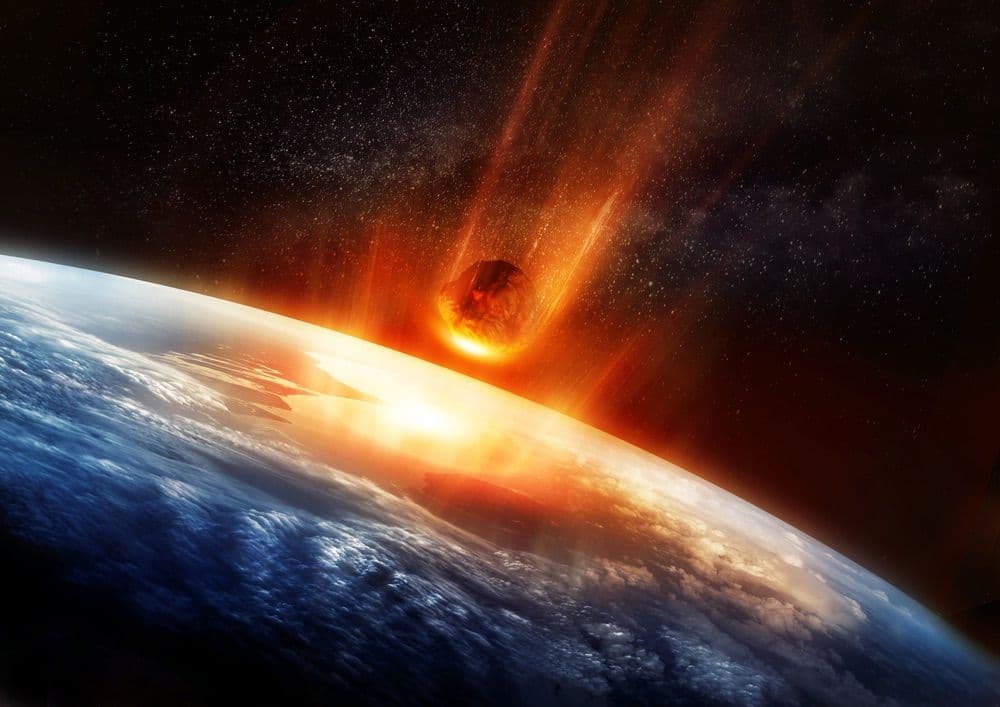
Extensive NASA CNEOS monitoring, ESA risk lists, and ground-based surveys like Pan-STARRS have identified no near-Earth objects on collision courses capable of producing a 1-megaton airburst in 2026, driving the 98.5% market-implied odds on "No." Historical flux models place such events at roughly once every few centuries, with the 2013 Chelyabinsk bolide at ~0.5 megatons remaining the most recent benchmark. Continuous tracking of thousands of NEOs reinforces this consensus among traders. Realistic scenarios that could still shift the outcome include discovery of a previously undetected long-period comet or a small, dark asteroid evading current surveys, though both face steep observational and trajectory-validation barriers before year-end.
สรุปจาก AI ทดลองที่อ้างอิงข้อมูลจาก Polymarket ไม่ใช่คำแนะนำในการเทรดและไม่มีผลต่อการตัดสินตลาดนี้ · อัปเดตแล้ว1 megaton meteor strike in 2026?
1 megaton meteor strike in 2026?
$116,895 ปริมาณ
$116,895 ปริมาณ
$116,895 ปริมาณ
$116,895 ปริมาณ
The object must be classified as a natural meteoroid; events involving artificial objects or reentry vehicles do not qualify.
The primary resolution source will be the NASA JPL Fireball and Bolide Data repository: https://cneos.jpl.nasa.gov/fireballs/. The relevant field for determining impact energy is the “Impact Energy (kt)” column. If this dataset has not been updated to include all relevant dates by February 28, 2027, or if the NASA JPL Fireball and Bolide Data repository becomes permanently unavailable, this market may resolve based on a consensus of credible sources including the European Space Agency (ESA), the International Asteroid Warning Network (IAWN), the U.S. Department of Defense, or credible reporting of a scientific consensus, such as a NASA press release.
ตลาดเปิดเมื่อ: Jan 2, 2026, 2:24 PM ET
ผู้ตัดสินผล
0x65070BE91...The object must be classified as a natural meteoroid; events involving artificial objects or reentry vehicles do not qualify.
The primary resolution source will be the NASA JPL Fireball and Bolide Data repository: https://cneos.jpl.nasa.gov/fireballs/. The relevant field for determining impact energy is the “Impact Energy (kt)” column. If this dataset has not been updated to include all relevant dates by February 28, 2027, or if the NASA JPL Fireball and Bolide Data repository becomes permanently unavailable, this market may resolve based on a consensus of credible sources including the European Space Agency (ESA), the International Asteroid Warning Network (IAWN), the U.S. Department of Defense, or credible reporting of a scientific consensus, such as a NASA press release.
ผู้ตัดสินผล
0x65070BE91...Extensive NASA CNEOS monitoring, ESA risk lists, and ground-based surveys like Pan-STARRS have identified no near-Earth objects on collision courses capable of producing a 1-megaton airburst in 2026, driving the 98.5% market-implied odds on "No." Historical flux models place such events at roughly once every few centuries, with the 2013 Chelyabinsk bolide at ~0.5 megatons remaining the most recent benchmark. Continuous tracking of thousands of NEOs reinforces this consensus among traders. Realistic scenarios that could still shift the outcome include discovery of a previously undetected long-period comet or a small, dark asteroid evading current surveys, though both face steep observational and trajectory-validation barriers before year-end.
สรุปจาก AI ทดลองที่อ้างอิงข้อมูลจาก Polymarket ไม่ใช่คำแนะนำในการเทรดและไม่มีผลต่อการตัดสินตลาดนี้ · อัปเดตแล้ว
ระวังลิงก์ภายนอก
ระวังลิงก์ภายนอก
คำถามที่พบบ่อย