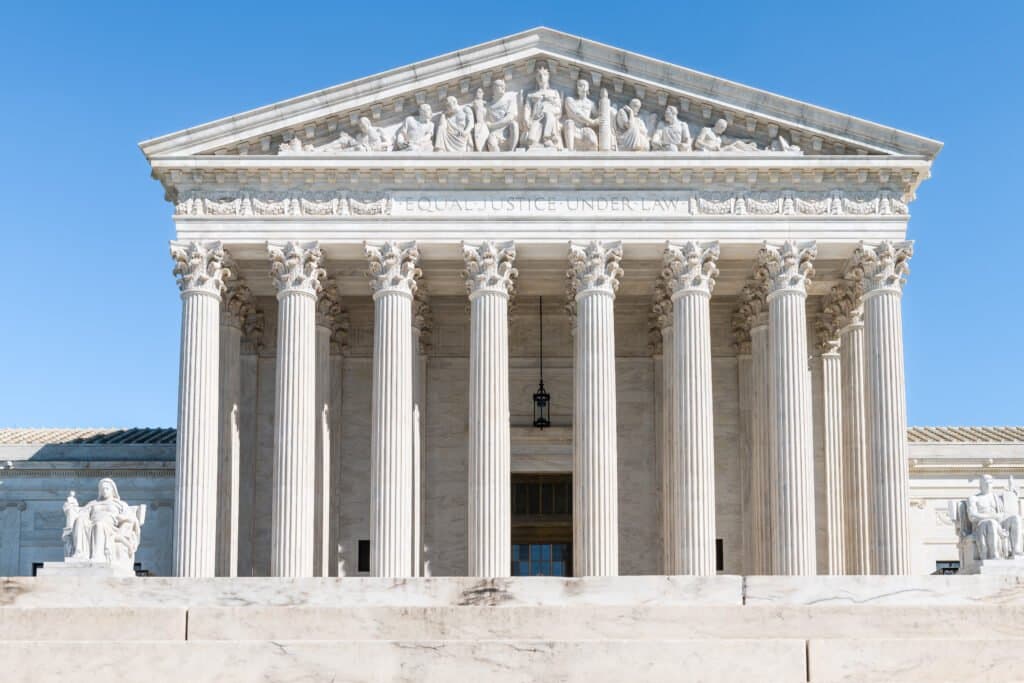
icon for Will SCOTUS let Trump build the White House ballroom by September 30?

Will SCOTUS let Trump build the White House ballroom by September 30?

icon for Will SCOTUS let Trump build the White House ballroom by September 30?

Will SCOTUS let Trump build the White House ballroom by September 30?

51% tsansa
Polymarket
BAGO
51% tsansa
Polymarket
BAGO
The Supreme Court of the United States is expected to be asked to review lower-court rulings blocking construction of a new White House ballroom on the former site of the East Wing offices. As of market creation, a preliminary injunction affirmed by the D.C. Circuit blocks above-ground construction while permitting below-ground work. This market will resolve to "Yes" if, by September 30, 2026, 11:59 PM ET, the Supreme Court of the United States issues any ruling or order that has the effect of permitting construction to resume on any above-ground portion of the ballroom project. Otherwise, this market will resolve to "No." A qualifying ruling or order includes a merits decision, a stay of a lower-court injunction, or any other form of interim or permanent relief, so long as its effect is that above-ground construction is legally permitted to proceed. A ruling or order affecting only below-ground work will not qualify. Once a qualifying ruling or order has been issued, this market will resolve to "Yes" regardless of whether the ruling or order is later vacated, reversed, or superseded, and regardless of whether construction actually resumes. This market will resolve to "No" if no qualifying ruling or order is issued by the deadline, including if the Supreme Court declines to hear the case, dismisses it, or resolves it on grounds that leave the block on above-ground construction in place. Above-ground construction becoming permitted through any mechanism other than a Supreme Court ruling or order — including congressional authorization, settlement, or dismissal of the underlying lawsuit — will not qualify. The primary resolution source for this market will be official information from the Supreme Court of the United States (including orders published at supremecourt.gov); however, a consensus of credible reporting may also be used.The closely contested trader consensus around 51% reflects the Trump administration’s emergency application to the Supreme Court for a stay of the appeals court injunction blocking above-ground construction on the $400 million White House ballroom project. A divided D.C. Circuit panel upheld a district court ruling requiring congressional authorization, with the order set to take effect around August 21 unless justices intervene. The administration argues national security imperatives and notes the project is already 65% complete, while challengers emphasize separation-of-powers limits on executive spending. SCOTUS briefing deadlines in mid-August and historical patterns on emergency stays for executive construction create narrow balance, with any prompt grant or denial likely to shift implied probabilities ahead of the September 30 resolution date.

The Supreme Court of the United States is expected to be asked to review lower-court rulings blocking construction of a new White House ballroom on the former site of the East Wing offices. As of market creation, a preliminary injunction affirmed by the D.C. Circuit blocks above-ground construction while permitting below-ground work.

This market will resolve to "Yes" if, by September 30, 2026, 11:59 PM ET, the Supreme Court of the United States issues any ruling or order that has the effect of permitting construction to resume on any above-ground portion of the ballroom project. Otherwise, this market will resolve to "No."

A qualifying ruling or order includes a merits decision, a stay of a lower-court injunction, or any other form of interim or permanent relief, so long as its effect is that above-ground construction is legally permitted to proceed. A ruling or order affecting only below-ground work will not qualify.

Once a qualifying ruling or order has been issued, this market will resolve to "Yes" regardless of whether the ruling or order is later vacated, reversed, or superseded, and regardless of whether construction actually resumes.

This market will resolve to "No" if no qualifying ruling or order is issued by the deadline, including if the Supreme Court declines to hear the case, dismisses it, or resolves it on grounds that leave the block on above-ground construction in place. Above-ground construction becoming permitted through any mechanism other than a Supreme Court ruling or order — including congressional authorization, settlement, or dismissal of the underlying lawsuit — will not qualify.

The primary resolution source for this market will be official information from the Supreme Court of the United States (including orders published at supremecourt.gov); however, a consensus of credible reporting may also be used.
Volume
$2,229
Petsa ng Pagtatapos
Sep 30, 2026
Binuksan ang Market
Aug 7, 2026, 4:54 PM ET
The Supreme Court of the United States is expected to be asked to review lower-court rulings blocking construction of a new White House ballroom on the former site of the East Wing offices. As of market creation, a preliminary injunction affirmed by the D.C. Circuit blocks above-ground construction while permitting below-ground work. This market will resolve to "Yes" if, by September 30, 2026, 11:59 PM ET, the Supreme Court of the United States issues any ruling or order that has the effect of permitting construction to resume on any above-ground portion of the ballroom project. Otherwise, this market will resolve to "No." A qualifying ruling or order includes a merits decision, a stay of a lower-court injunction, or any other form of interim or permanent relief, so long as its effect is that above-ground construction is legally permitted to proceed. A ruling or order affecting only below-ground work will not qualify. Once a qualifying ruling or order has been issued, this market will resolve to "Yes" regardless of whether the ruling or order is later vacated, reversed, or superseded, and regardless of whether construction actually resumes. This market will resolve to "No" if no qualifying ruling or order is issued by the deadline, including if the Supreme Court declines to hear the case, dismisses it, or resolves it on grounds that leave the block on above-ground construction in place. Above-ground construction becoming permitted through any mechanism other than a Supreme Court ruling or order — including congressional authorization, settlement, or dismissal of the underlying lawsuit — will not qualify. The primary resolution source for this market will be official information from the Supreme Court of the United States (including orders published at supremecourt.gov); however, a consensus of credible reporting may also be used.
The Supreme Court of the United States is expected to be asked to review lower-court rulings blocking construction of a new White House ballroom on the former site of the East Wing offices. As of market creation, a preliminary injunction affirmed by the D.C. Circuit blocks above-ground construction while permitting below-ground work. This market will resolve to "Yes" if, by September 30, 2026, 11:59 PM ET, the Supreme Court of the United States issues any ruling or order that has the effect of permitting construction to resume on any above-ground portion of the ballroom project. Otherwise, this market will resolve to "No." A qualifying ruling or order includes a merits decision, a stay of a lower-court injunction, or any other form of interim or permanent relief, so long as its effect is that above-ground construction is legally permitted to proceed. A ruling or order affecting only below-ground work will not qualify. Once a qualifying ruling or order has been issued, this market will resolve to "Yes" regardless of whether the ruling or order is later vacated, reversed, or superseded, and regardless of whether construction actually resumes. This market will resolve to "No" if no qualifying ruling or order is issued by the deadline, including if the Supreme Court declines to hear the case, dismisses it, or resolves it on grounds that leave the block on above-ground construction in place. Above-ground construction becoming permitted through any mechanism other than a Supreme Court ruling or order — including congressional authorization, settlement, or dismissal of the underlying lawsuit — will not qualify. The primary resolution source for this market will be official information from the Supreme Court of the United States (including orders published at supremecourt.gov); however, a consensus of credible reporting may also be used.The closely contested trader consensus around 51% reflects the Trump administration’s emergency application to the Supreme Court for a stay of the appeals court injunction blocking above-ground construction on the $400 million White House ballroom project. A divided D.C. Circuit panel upheld a district court ruling requiring congressional authorization, with the order set to take effect around August 21 unless justices intervene. The administration argues national security imperatives and notes the project is already 65% complete, while challengers emphasize separation-of-powers limits on executive spending. SCOTUS briefing deadlines in mid-August and historical patterns on emergency stays for executive construction create narrow balance, with any prompt grant or denial likely to shift implied probabilities ahead of the September 30 resolution date.

The Supreme Court of the United States is expected to be asked to review lower-court rulings blocking construction of a new White House ballroom on the former site of the East Wing offices. As of market creation, a preliminary injunction affirmed by the D.C. Circuit blocks above-ground construction while permitting below-ground work.

This market will resolve to "Yes" if, by September 30, 2026, 11:59 PM ET, the Supreme Court of the United States issues any ruling or order that has the effect of permitting construction to resume on any above-ground portion of the ballroom project. Otherwise, this market will resolve to "No."

A qualifying ruling or order includes a merits decision, a stay of a lower-court injunction, or any other form of interim or permanent relief, so long as its effect is that above-ground construction is legally permitted to proceed. A ruling or order affecting only below-ground work will not qualify.

Once a qualifying ruling or order has been issued, this market will resolve to "Yes" regardless of whether the ruling or order is later vacated, reversed, or superseded, and regardless of whether construction actually resumes.

This market will resolve to "No" if no qualifying ruling or order is issued by the deadline, including if the Supreme Court declines to hear the case, dismisses it, or resolves it on grounds that leave the block on above-ground construction in place. Above-ground construction becoming permitted through any mechanism other than a Supreme Court ruling or order — including congressional authorization, settlement, or dismissal of the underlying lawsuit — will not qualify.

The primary resolution source for this market will be official information from the Supreme Court of the United States (including orders published at supremecourt.gov); however, a consensus of credible reporting may also be used.
Volume
$2,229
Petsa ng Pagtatapos
Sep 30, 2026
Binuksan ang Market
Aug 7, 2026, 4:54 PM ET
The Supreme Court of the United States is expected to be asked to review lower-court rulings blocking construction of a new White House ballroom on the former site of the East Wing offices. As of market creation, a preliminary injunction affirmed by the D.C. Circuit blocks above-ground construction while permitting below-ground work. This market will resolve to "Yes" if, by September 30, 2026, 11:59 PM ET, the Supreme Court of the United States issues any ruling or order that has the effect of permitting construction to resume on any above-ground portion of the ballroom project. Otherwise, this market will resolve to "No." A qualifying ruling or order includes a merits decision, a stay of a lower-court injunction, or any other form of interim or permanent relief, so long as its effect is that above-ground construction is legally permitted to proceed. A ruling or order affecting only below-ground work will not qualify. Once a qualifying ruling or order has been issued, this market will resolve to "Yes" regardless of whether the ruling or order is later vacated, reversed, or superseded, and regardless of whether construction actually resumes. This market will resolve to "No" if no qualifying ruling or order is issued by the deadline, including if the Supreme Court declines to hear the case, dismisses it, or resolves it on grounds that leave the block on above-ground construction in place. Above-ground construction becoming permitted through any mechanism other than a Supreme Court ruling or order — including congressional authorization, settlement, or dismissal of the underlying lawsuit — will not qualify. The primary resolution source for this market will be official information from the Supreme Court of the United States (including orders published at supremecourt.gov); however, a consensus of credible reporting may also be used.

Mag-ingat sa mga external link.

Mga Madalas na Tanong

Ang "Will SCOTUS let Trump build the White House ballroom by September 30?" ay isang prediction market sa Polymarket kung saan bumibili at nagbebenta ang mga trader ng "Yes" o "No" shares batay sa kung naniniwala silang mangyayari ang event na ito. Ang kasalukuyang crowd-sourced probability ay 51% para sa "Yes." Halimbawa, kung ang "Yes" ay naka-presyo sa 51¢, ang market ay kolektibong nagtatakda ng 51% na tsansa na mangyayari ang event na ito. Patuloy na nagbabago ang mga odds na ito habang tumutugon ang mga trader sa mga bagong development at impormasyon. Ang mga shares sa tamang outcome ay mare-redeem sa $1 bawat isa sa market resolution.

Ang "Will SCOTUS let Trump build the White House ballroom by September 30?" ay isang bagong likhang market sa Polymarket, inilunsad noong Aug 7, 2026. Bilang isang maagang market, ito ang iyong pagkakataon na maging kabilang sa mga unang trader na magtakda ng odds at mag-establish ng mga paunang price signal ng market. Maaari mo ring i-bookmark ang pahinang ito para subaybayan ang volume at trading activity habang lumalaki ang market sa paglipas ng panahon.

Para mag-trade sa "Will SCOTUS let Trump build the White House ballroom by September 30?," piliin lang kung naniniwala ka na ang sagot ay "Yes" o "No." Ang bawat panig ay may kasalukuyang presyo na sumasalamin sa implied probability ng market. Ilagay ang iyong halaga at i-click ang "Trade." Kung bibili ka ng "Yes" shares at na-resolve ang outcome bilang "Yes," nagbabayad ang bawat share ng $1. Kung na-resolve bilang "No," ang iyong "Yes" shares ay nagkakahalaga ng $0. Maaari ka ring magbenta ng iyong shares anumang oras bago ang resolution kung gusto mong i-lock in ang kita o bawasan ang pagkalugi.

Ang kasalukuyang probability para sa "Will SCOTUS let Trump build the White House ballroom by September 30?" ay 51% para sa "Yes." Ibig sabihin nito na kasalukuyang naniniwala ang Polymarket crowd na may 51% tsansa na mangyayari ang event na ito. Nag-a-update ang mga odds na ito sa real-time batay sa actual trades, na nagbibigay ng patuloy na ina-update na signal kung ano ang inaasahan ng market na mangyayari.

Ang mga resolution rules para sa "Will SCOTUS let Trump build the White House ballroom by September 30?" ay tiyak na nagde-define kung ano ang kailangang mangyari para sa bawat outcome na maideklara bilang panalo — kasama ang mga opisyal na data source na ginagamit para matukoy ang resulta. Maaari mong i-review ang kumpletong resolution criteria sa "Rules" section sa pahinang ito sa itaas ng mga komento. Inirerekomenda namin na basahin nang mabuti ang mga patakaran bago mag-trade, dahil tinutukoy nila ang mga tiyak na kondisyon, edge cases, at mga source na namamahala kung paano nise-settle ang market na ito.