
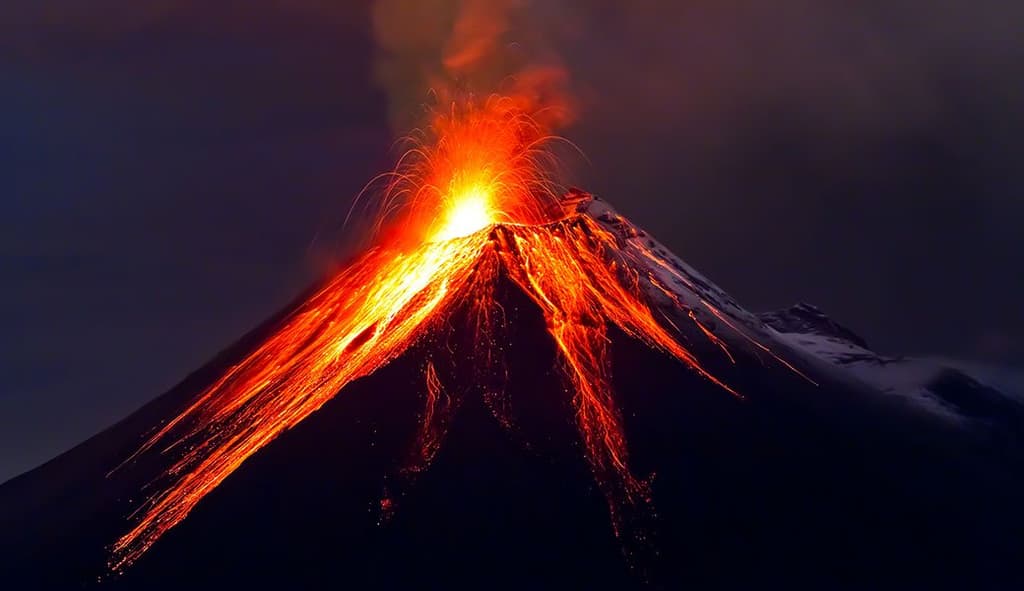
Major eruptions reaching VEI 6 or higher remain rare, with an average recurrence of roughly 50–100 years globally based on the geologic record; the most recent was Pinatubo in 1991. As of mid-August 2026, official monitoring by the USGS and Smithsonian Global Volcanism Program shows only typical background seismicity and deformation at monitored systems, with dozens of smaller eruptions recorded this year but none approaching the required explosivity or volume thresholds. This absence of precursors through more than seven months underpins the market's strong 93.6% implied probability for no event. A sudden escalation at a restless caldera could still occur before year-end, though such rapid transitions to VEI 6 are historically uncommon without extended warning signs.
Tóm tắt AI thử nghiệm tham chiếu dữ liệu Polymarket. Đây không phải tư vấn giao dịch và không ảnh hưởng đến cách thị trường này được giải quyết. · Cập nhậtMajor volcano eruption (VEI ≥6) in 2026?
$127,900 KL.
$127,900 KL.
$127,900 KL.
$127,900 KL.
The primary resolution source will be the Smithsonian Institution Global Volcanism Program (GVP: https://volcano.si.edu/), specifically the ‘VEI 6’ figure for 2026 released on the page currently titled "Eruptions Avg 2000-2024 (N/T)" (https://volcano.si.edu/faq/index.cfm?question=eruptionsbyyear) as of March 31, 2027, 12 PM ET. Any prior updates will not be considered finalized.
If this dataset has not been updated to include all relevant events by March 31, 2027, or if the Smithsonian GVP becomes permanently unavailable, this market may resolve based on a consensus of credible scientific sources, including the U.S. Geological Survey (USGS), national or regional volcanic observatories, or credible reporting of a scientific consensus.
Note: Smithsonian Institution Global Volcanism Program databases, which include eruptions that reached the relevant threshold prior to this market’s timeframe (e.g., https://volcano.si.edu/faq/index.cfm?question=eruptionsbyyear&checkyear=2025), will not be considered.
Thị trường mở: Dec 29, 2025, 6:24 PM ET
Resolver
0x65070BE91...The primary resolution source will be the Smithsonian Institution Global Volcanism Program (GVP: https://volcano.si.edu/), specifically the ‘VEI 6’ figure for 2026 released on the page currently titled "Eruptions Avg 2000-2024 (N/T)" (https://volcano.si.edu/faq/index.cfm?question=eruptionsbyyear) as of March 31, 2027, 12 PM ET. Any prior updates will not be considered finalized.
If this dataset has not been updated to include all relevant events by March 31, 2027, or if the Smithsonian GVP becomes permanently unavailable, this market may resolve based on a consensus of credible scientific sources, including the U.S. Geological Survey (USGS), national or regional volcanic observatories, or credible reporting of a scientific consensus.
Note: Smithsonian Institution Global Volcanism Program databases, which include eruptions that reached the relevant threshold prior to this market’s timeframe (e.g., https://volcano.si.edu/faq/index.cfm?question=eruptionsbyyear&checkyear=2025), will not be considered.
Resolver
0x65070BE91...Major eruptions reaching VEI 6 or higher remain rare, with an average recurrence of roughly 50–100 years globally based on the geologic record; the most recent was Pinatubo in 1991. As of mid-August 2026, official monitoring by the USGS and Smithsonian Global Volcanism Program shows only typical background seismicity and deformation at monitored systems, with dozens of smaller eruptions recorded this year but none approaching the required explosivity or volume thresholds. This absence of precursors through more than seven months underpins the market's strong 93.6% implied probability for no event. A sudden escalation at a restless caldera could still occur before year-end, though such rapid transitions to VEI 6 are historically uncommon without extended warning signs.
Tóm tắt AI thử nghiệm tham chiếu dữ liệu Polymarket. Đây không phải tư vấn giao dịch và không ảnh hưởng đến cách thị trường này được giải quyết. · Cập nhật


Cẩn thận với liên kết bên ngoài.
Câu hỏi thường gặp