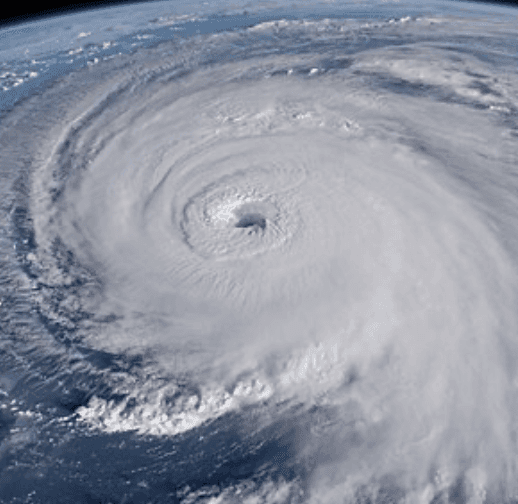
Current trader sentiment reflects substantial uncertainty in Eastern and Central Pacific tropical cyclone development through late August 2026, with closely matched probabilities around 48-53.5% across mid-to-late month windows and for no August hurricane. An active El Niño pattern, warmer-than-average sea surface temperatures, and reduced wind shear provide favorable conditions for organization, as highlighted by NOAA’s above-normal seasonal outlook. A potential tropical cyclone near Hawaii, monitored since August 12 at tropical storm intensity, represents the most immediate candidate for intensification, though National Hurricane Center model guidance shows variability in timing and strengthening potential. Historical analogs indicate peak formation often clusters late in the month, yet divergent forecast runs on steering and moisture leave the exact window unresolved until updated model cycles and satellite observations clarify development thresholds.
Tóm tắt AI thử nghiệm tham chiếu dữ liệu Polymarket. Đây không phải tư vấn giao dịch và không ảnh hưởng đến cách thị trường này được giải quyết. · Cập nhậtWhen will the next hurricane form in the Pacific?
When will the next hurricane form in the Pacific?
August 17 to August 21, 2026 37%
No Pacific hurricane will form in August 2026 30%
August 13 to August 16, 2026 0
August 22 to August 26, 2026 0
August 13 to August 16, 2026
46%
August 17 to August 21, 2026
37%
August 22 to August 26, 2026
50%
August 27 to August 31, 2026
45%
No Pacific hurricane will form in August 2026
30%
August 17 to August 21, 2026 37%
No Pacific hurricane will form in August 2026 30%
August 13 to August 16, 2026 0
August 22 to August 26, 2026 0
August 13 to August 16, 2026
46%
August 17 to August 21, 2026
37%
August 22 to August 26, 2026
50%
August 27 to August 31, 2026
45%
No Pacific hurricane will form in August 2026
30%
A tropical cyclone is considered a hurricane when it has maximum sustained winds of 74 mph or greater (Category 1 or higher on the Saffir-Simpson Hurricane Wind Scale). For this market, the "Pacific" comprises the Eastern Pacific basin and the Central Pacific basin as tracked by the NHC and CPHC. Systems classified as typhoons do not count. A system is considered to have "formed" as a hurricane at the date and time of the first NHC or CPHC public advisory that classifies a system in these basins as a hurricane. Resolution is based on that first advisory, regardless of any later downward revision or reclassification. The sole determinant of when the hurricane formed is the issuance timestamp of that first classifying advisory, not the estimated time at which the system's winds first reached 74 mph; for a system that straddles midnight between August 31 and September 1, 2026, the applicable bracket is determined solely by whether that advisory's issuance timestamp falls before or after 12:00 AM ET on September 1, 2026.
The bracket "No Pacific hurricane will form in August 2026" will resolve "Yes" if no NHC or CPHC advisory classifies any Eastern Pacific or Central Pacific system as a hurricane at any time from 12:00 AM ET on August 13, 2026 through 11:59 PM ET on August 31, 2026.
The resolution sources for this market are the U.S. National Hurricane Center (NHC), available here: https://www.nhc.noaa.gov/, and the Central Pacific Hurricane Center (CPHC), available here: https://www.nhc.noaa.gov/?cpac
Thị trường mở: Aug 12, 2026, 11:19 AM ET
Nguồn giải quyết
https://www.nhc.noaa.gov/Resolver
0x69c47De9D...A tropical cyclone is considered a hurricane when it has maximum sustained winds of 74 mph or greater (Category 1 or higher on the Saffir-Simpson Hurricane Wind Scale). For this market, the "Pacific" comprises the Eastern Pacific basin and the Central Pacific basin as tracked by the NHC and CPHC. Systems classified as typhoons do not count. A system is considered to have "formed" as a hurricane at the date and time of the first NHC or CPHC public advisory that classifies a system in these basins as a hurricane. Resolution is based on that first advisory, regardless of any later downward revision or reclassification. The sole determinant of when the hurricane formed is the issuance timestamp of that first classifying advisory, not the estimated time at which the system's winds first reached 74 mph; for a system that straddles midnight between August 31 and September 1, 2026, the applicable bracket is determined solely by whether that advisory's issuance timestamp falls before or after 12:00 AM ET on September 1, 2026.
The bracket "No Pacific hurricane will form in August 2026" will resolve "Yes" if no NHC or CPHC advisory classifies any Eastern Pacific or Central Pacific system as a hurricane at any time from 12:00 AM ET on August 13, 2026 through 11:59 PM ET on August 31, 2026.
The resolution sources for this market are the U.S. National Hurricane Center (NHC), available here: https://www.nhc.noaa.gov/, and the Central Pacific Hurricane Center (CPHC), available here: https://www.nhc.noaa.gov/?cpac
Nguồn giải quyết
https://www.nhc.noaa.gov/Resolver
0x69c47De9D...Current trader sentiment reflects substantial uncertainty in Eastern and Central Pacific tropical cyclone development through late August 2026, with closely matched probabilities around 48-53.5% across mid-to-late month windows and for no August hurricane. An active El Niño pattern, warmer-than-average sea surface temperatures, and reduced wind shear provide favorable conditions for organization, as highlighted by NOAA’s above-normal seasonal outlook. A potential tropical cyclone near Hawaii, monitored since August 12 at tropical storm intensity, represents the most immediate candidate for intensification, though National Hurricane Center model guidance shows variability in timing and strengthening potential. Historical analogs indicate peak formation often clusters late in the month, yet divergent forecast runs on steering and moisture leave the exact window unresolved until updated model cycles and satellite observations clarify development thresholds.
Tóm tắt AI thử nghiệm tham chiếu dữ liệu Polymarket. Đây không phải tư vấn giao dịch và không ảnh hưởng đến cách thị trường này được giải quyết. · Cập nhật
Cẩn thận với liên kết bên ngoài.
Cẩn thận với liên kết bên ngoài.
Câu hỏi thường gặp