
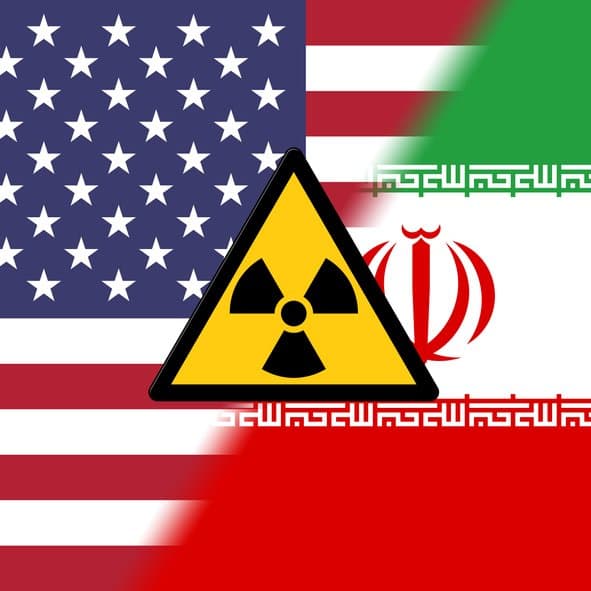
icon for 美國-伊朗最終核協議由… ?

美國-伊朗最終核協議由… ?

icon for 美國-伊朗最終核協議由… ?

美國-伊朗最終核協議由… ?

$629,799 交易量

2026-06-30
Polymarket

$629,799 交易量

Polymarket

6月30日

$114,664 交易量

1%

7月31日

$115,708 交易量

5%

8月13日

$63,028 交易量

14%

8月18日

$154,033 交易量

22%

8月31日

$182,398 交易量

28%

On June 14, 2026, the United States and Iran announced a written diplomatic agreement, including a 60-day extendable period in which both countries committed to negotiate toward a “final deal” regarding Iran’s nuclear program and other topics. This market resolves to “Yes” if a qualifying written diplomatic instrument between the United States and Iran has been mutually signed or adopted by the specified date, 11:59 PM ET. Otherwise, this market resolves to “No.” Unless the written instrument is formally adopted without signature as described below, the instrument must be signed by both the United States and Iran. Both parties must either sign the same document or sign individual documents that substantively and directly indicate acceptance of the same underlying instrument, regardless of minor formatting, wording, or translation differences between the signed versions. Both physical signatures and officially-issued electronic signatures will qualify as signatures. If the written instrument is recognized by the United States and Iran as not requiring signature for execution, formal adoption of the instrument by both countries without signature will qualify. Formal adoption may be established by official actions, including: (i) an official joint statement announcing that the United States and Iran have adopted, approved, executed, concluded, or otherwise finalized the instrument; (ii) mutual official confirmation that the same published instrument has been agreed to, adopted, approved, executed, or concluded by both countries; (iii) adoption, approval, or endorsement through an official resolution, ministerial decision, executive decision, or equivalent institutional act, where that act is the mechanism by which the relevant country adopts the instrument; or (iv) an exchange of official diplomatic notes or letters confirming acceptance of the same instrument. A qualifying written diplomatic instrument must: (i) Be identified as the final deal contemplated by the June 14, 2026, memorandum of understanding, either in official United States or Iranian communications, or by a consensus of credible reporting; (ii) Establish at least one specific obligation limiting Iran's nuclear program through a concrete, measurable benchmark against which compliance could be tested, which may take the form of a defined limit, prohibition, or quantity (e.g., a specific cap on the purity level to which Iran may enrich uranium, or an explicit commitment for Iran to surrender, destroy, or dilute its enriched uranium stockpile). Non-specific or vague restrictions, with no defined metric (e.g., a pledge not to pursue nuclear weapons, a commitment to maintain the status quo, or an agreement to abide IAEA monitoring or inspections requirements that do not specifically restrict Iran’s nuclear program) will not qualify. The content of the qualifying instrument must be expressed as an agreed obligation to be implemented. The following do not qualify: (i) a provision the substantive obligation of which remains explicitly subject to a future agreement, negotiation process, or mutually agreed follow-on instrument; (ii) a provision explicitly framed as a minimum requirement for a future negotiation, rather than a present obligation; (iii) a floor, placeholder, or minimum standard established explicitly for the purpose of structuring ongoing or future talks. A definite and unconditional obligation may qualify, even if technical or procedural details, including the exact implementation date, timeframe, or sequencing, remain subject to future arrangements, provided that the obligation still establishes a concrete, measurable benchmark against which compliance could be tested. Conditional obligations do not qualify. Whether an instrument qualifies will be primarily determined by its officially released text. A qualifying instrument must be signed or formally adopted by both the United States and Iran by the specified date, 11:59 PM ET. If such an instrument is signed or formally adopted by that time, but the complete text has not been released, and genuine material ambiguity remains as to whether it satisfies this market’s requirements, this market may remain open for up to 28 calendar days after the specified date pending release of the text. If the text has still not been released after 28 calendar days, official and definitive announcements from the United States or Iran, and a consensus of credible reporting, will be used to determine whether the instrument qualifies. An instrument to which parties other than the United States and Iran are also party will qualify, provided that both the United States and Iran are parties to the instrument and all other requirements are satisfied. Once a diplomatic instrument has been signed or formally adopted without signature by both the United States and Iran and confirmed to satisfy the requirements of a qualifying written diplomatic instrument, this market’s condition is met, regardless of whether the instrument later enters into force, is ratified, receives legislative or treaty consent, or is subsequently repudiated, withdrawn from, or not implemented by the United States or Iran. The primary resolution sources for this market will be official communications from the governments of the United States and Iran, or their authorized representatives. A consensus of credible reporting from major news agencies of record may also be used.US and Iranian officials signed a memorandum of understanding in mid-June 2026 that extended a ceasefire, reopened the Strait of Hormuz to commercial traffic, and outlined limited sanctions relief while deferring core nuclear issues. The framework sets a 60-day window ending around mid-August for technical negotiations on uranium enrichment limits, down-blending of existing highly enriched stockpiles under IAEA supervision, verification measures, and related sanctions. Planned follow-on talks in Switzerland were postponed amid regional tensions. These developments, following earlier rounds of diplomacy and a period of direct conflict, have shaped trader assessments of whether a comprehensive final agreement on Iran's nuclear program can be finalized before the interim deadline or any specified market resolution date. Key variables include compliance steps, IAEA access, and any external pressures from other regional actors.

On June 14, 2026, the United States and Iran announced a written diplomatic agreement, including a 60-day extendable period in which both countries committed to negotiate toward a “final deal” regarding Iran’s nuclear program and other topics.

This market resolves to “Yes” if a qualifying written diplomatic instrument between the United States and Iran has been mutually signed or adopted by the specified date, 11:59 PM ET. Otherwise, this market resolves to “No.”

Unless the written instrument is formally adopted without signature as described below, the instrument must be signed by both the United States and Iran. Both parties must either sign the same document or sign individual documents that substantively and directly indicate acceptance of the same underlying instrument, regardless of minor formatting, wording, or translation differences between the signed versions. Both physical signatures and officially-issued electronic signatures will qualify as signatures.

If the written instrument is recognized by the United States and Iran as not requiring signature for execution, formal adoption of the instrument by both countries without signature will qualify. Formal adoption may be established by official actions, including:

(i) an official joint statement announcing that the United States and Iran have adopted, approved, executed, concluded, or otherwise finalized the instrument;
(ii) mutual official confirmation that the same published instrument has been agreed to, adopted, approved, executed, or concluded by both countries;
(iii) adoption, approval, or endorsement through an official resolution, ministerial decision, executive decision, or equivalent institutional act, where that act is the mechanism by which the relevant country adopts the instrument; or
(iv) an exchange of official diplomatic notes or letters confirming acceptance of the same instrument.

A qualifying written diplomatic instrument must:

(i) Be identified as the final deal contemplated by the June 14, 2026, memorandum of understanding, either in official United States or Iranian communications, or by a consensus of credible reporting;
(ii) Establish at least one specific obligation limiting Iran's nuclear program through a concrete, measurable benchmark against which compliance could be tested, which may take the form of a defined limit, prohibition, or quantity (e.g., a specific cap on the purity level to which Iran may enrich uranium, or an explicit commitment for Iran to surrender, destroy, or dilute its enriched uranium stockpile). Non-specific or vague restrictions, with no defined metric (e.g., a pledge not to pursue nuclear weapons, a commitment to maintain the status quo, or an agreement to abide IAEA monitoring or inspections requirements that do not specifically restrict Iran’s nuclear program) will not qualify.

The content of the qualifying instrument must be expressed as an agreed obligation to be implemented. The following do not qualify:

(i) a provision the substantive obligation of which remains explicitly subject to a future agreement, negotiation process, or mutually agreed follow-on instrument;
(ii) a provision explicitly framed as a minimum requirement for a future negotiation, rather than a present obligation;
(iii) a floor, placeholder, or minimum standard established explicitly for the purpose of structuring ongoing or future talks.

A definite and unconditional obligation may qualify, even if technical or procedural details, including the exact implementation date, timeframe, or sequencing, remain subject to future arrangements, provided that the obligation still establishes a concrete, measurable benchmark against which compliance could be tested. Conditional obligations do not qualify.

Whether an instrument qualifies will be primarily determined by its officially released text. A qualifying instrument must be signed or formally adopted by both the United States and Iran by the specified date, 11:59 PM ET. If such an instrument is signed or formally adopted by that time, but the complete text has not been released, and genuine material ambiguity remains as to whether it satisfies this market’s requirements, this market may remain open for up to 28 calendar days after the specified date pending release of the text. If the text has still not been released after 28 calendar days, official and definitive announcements from the United States or Iran, and a consensus of credible reporting, will be used to determine whether the instrument qualifies.

An instrument to which parties other than the United States and Iran are also party will qualify, provided that both the United States and Iran are parties to the instrument and all other requirements are satisfied.

Once a diplomatic instrument has been signed or formally adopted without signature by both the United States and Iran and confirmed to satisfy the requirements of a qualifying written diplomatic instrument, this market’s condition is met, regardless of whether the instrument later enters into force, is ratified, receives legislative or treaty consent, or is subsequently repudiated, withdrawn from, or not implemented by the United States or Iran.

The primary resolution sources for this market will be official communications from the governments of the United States and Iran, or their authorized representatives. A consensus of credible reporting from major news agencies of record may also be used.
交易量
$629,799
結束日期
2026-08-31
市場開放時間
Jun 21, 2026, 5:39 PM ET
On June 14, 2026, the United States and Iran announced a written diplomatic agreement, including a 60-day extendable period in which both countries committed to negotiate toward a “final deal” regarding Iran’s nuclear program and other topics. This market resolves to “Yes” if a qualifying written diplomatic instrument between the United States and Iran has been mutually signed or adopted by the specified date, 11:59 PM ET. Otherwise, this market resolves to “No.” Unless the written instrument is formally adopted without signature as described below, the instrument must be signed by both the United States and Iran. Both parties must either sign the same document or sign individual documents that substantively and directly indicate acceptance of the same underlying instrument, regardless of minor formatting, wording, or translation differences between the signed versions. Both physical signatures and officially-issued electronic signatures will qualify as signatures. If the written instrument is recognized by the United States and Iran as not requiring signature for execution, formal adoption of the instrument by both countries without signature will qualify. Formal adoption may be established by official actions, including: (i) an official joint statement announcing that the United States and Iran have adopted, approved, executed, concluded, or otherwise finalized the instrument; (ii) mutual official confirmation that the same published instrument has been agreed to, adopted, approved, executed, or concluded by both countries; (iii) adoption, approval, or endorsement through an official resolution, ministerial decision, executive decision, or equivalent institutional act, where that act is the mechanism by which the relevant country adopts the instrument; or (iv) an exchange of official diplomatic notes or letters confirming acceptance of the same instrument. A qualifying written diplomatic instrument must: (i) Be identified as the final deal contemplated by the June 14, 2026, memorandum of understanding, either in official United States or Iranian communications, or by a consensus of credible reporting; (ii) Establish at least one specific obligation limiting Iran's nuclear program through a concrete, measurable benchmark against which compliance could be tested, which may take the form of a defined limit, prohibition, or quantity (e.g., a specific cap on the purity level to which Iran may enrich uranium, or an explicit commitment for Iran to surrender, destroy, or dilute its enriched uranium stockpile). Non-specific or vague restrictions, with no defined metric (e.g., a pledge not to pursue nuclear weapons, a commitment to maintain the status quo, or an agreement to abide IAEA monitoring or inspections requirements that do not specifically restrict Iran’s nuclear program) will not qualify. The content of the qualifying instrument must be expressed as an agreed obligation to be implemented. The following do not qualify: (i) a provision the substantive obligation of which remains explicitly subject to a future agreement, negotiation process, or mutually agreed follow-on instrument; (ii) a provision explicitly framed as a minimum requirement for a future negotiation, rather than a present obligation; (iii) a floor, placeholder, or minimum standard established explicitly for the purpose of structuring ongoing or future talks. A definite and unconditional obligation may qualify, even if technical or procedural details, including the exact implementation date, timeframe, or sequencing, remain subject to future arrangements, provided that the obligation still establishes a concrete, measurable benchmark against which compliance could be tested. Conditional obligations do not qualify. Whether an instrument qualifies will be primarily determined by its officially released text. A qualifying instrument must be signed or formally adopted by both the United States and Iran by the specified date, 11:59 PM ET. If such an instrument is signed or formally adopted by that time, but the complete text has not been released, and genuine material ambiguity remains as to whether it satisfies this market’s requirements, this market may remain open for up to 28 calendar days after the specified date pending release of the text. If the text has still not been released after 28 calendar days, official and definitive announcements from the United States or Iran, and a consensus of credible reporting, will be used to determine whether the instrument qualifies. An instrument to which parties other than the United States and Iran are also party will qualify, provided that both the United States and Iran are parties to the instrument and all other requirements are satisfied. Once a diplomatic instrument has been signed or formally adopted without signature by both the United States and Iran and confirmed to satisfy the requirements of a qualifying written diplomatic instrument, this market’s condition is met, regardless of whether the instrument later enters into force, is ratified, receives legislative or treaty consent, or is subsequently repudiated, withdrawn from, or not implemented by the United States or Iran. The primary resolution sources for this market will be official communications from the governments of the United States and Iran, or their authorized representatives. A consensus of credible reporting from major news agencies of record may also be used.
On June 14, 2026, the United States and Iran announced a written diplomatic agreement, including a 60-day extendable period in which both countries committed to negotiate toward a “final deal” regarding Iran’s nuclear program and other topics. This market resolves to “Yes” if a qualifying written diplomatic instrument between the United States and Iran has been mutually signed or adopted by the specified date, 11:59 PM ET. Otherwise, this market resolves to “No.” Unless the written instrument is formally adopted without signature as described below, the instrument must be signed by both the United States and Iran. Both parties must either sign the same document or sign individual documents that substantively and directly indicate acceptance of the same underlying instrument, regardless of minor formatting, wording, or translation differences between the signed versions. Both physical signatures and officially-issued electronic signatures will qualify as signatures. If the written instrument is recognized by the United States and Iran as not requiring signature for execution, formal adoption of the instrument by both countries without signature will qualify. Formal adoption may be established by official actions, including: (i) an official joint statement announcing that the United States and Iran have adopted, approved, executed, concluded, or otherwise finalized the instrument; (ii) mutual official confirmation that the same published instrument has been agreed to, adopted, approved, executed, or concluded by both countries; (iii) adoption, approval, or endorsement through an official resolution, ministerial decision, executive decision, or equivalent institutional act, where that act is the mechanism by which the relevant country adopts the instrument; or (iv) an exchange of official diplomatic notes or letters confirming acceptance of the same instrument. A qualifying written diplomatic instrument must: (i) Be identified as the final deal contemplated by the June 14, 2026, memorandum of understanding, either in official United States or Iranian communications, or by a consensus of credible reporting; (ii) Establish at least one specific obligation limiting Iran's nuclear program through a concrete, measurable benchmark against which compliance could be tested, which may take the form of a defined limit, prohibition, or quantity (e.g., a specific cap on the purity level to which Iran may enrich uranium, or an explicit commitment for Iran to surrender, destroy, or dilute its enriched uranium stockpile). Non-specific or vague restrictions, with no defined metric (e.g., a pledge not to pursue nuclear weapons, a commitment to maintain the status quo, or an agreement to abide IAEA monitoring or inspections requirements that do not specifically restrict Iran’s nuclear program) will not qualify. The content of the qualifying instrument must be expressed as an agreed obligation to be implemented. The following do not qualify: (i) a provision the substantive obligation of which remains explicitly subject to a future agreement, negotiation process, or mutually agreed follow-on instrument; (ii) a provision explicitly framed as a minimum requirement for a future negotiation, rather than a present obligation; (iii) a floor, placeholder, or minimum standard established explicitly for the purpose of structuring ongoing or future talks. A definite and unconditional obligation may qualify, even if technical or procedural details, including the exact implementation date, timeframe, or sequencing, remain subject to future arrangements, provided that the obligation still establishes a concrete, measurable benchmark against which compliance could be tested. Conditional obligations do not qualify. Whether an instrument qualifies will be primarily determined by its officially released text. A qualifying instrument must be signed or formally adopted by both the United States and Iran by the specified date, 11:59 PM ET. If such an instrument is signed or formally adopted by that time, but the complete text has not been released, and genuine material ambiguity remains as to whether it satisfies this market’s requirements, this market may remain open for up to 28 calendar days after the specified date pending release of the text. If the text has still not been released after 28 calendar days, official and definitive announcements from the United States or Iran, and a consensus of credible reporting, will be used to determine whether the instrument qualifies. An instrument to which parties other than the United States and Iran are also party will qualify, provided that both the United States and Iran are parties to the instrument and all other requirements are satisfied. Once a diplomatic instrument has been signed or formally adopted without signature by both the United States and Iran and confirmed to satisfy the requirements of a qualifying written diplomatic instrument, this market’s condition is met, regardless of whether the instrument later enters into force, is ratified, receives legislative or treaty consent, or is subsequently repudiated, withdrawn from, or not implemented by the United States or Iran. The primary resolution sources for this market will be official communications from the governments of the United States and Iran, or their authorized representatives. A consensus of credible reporting from major news agencies of record may also be used.US and Iranian officials signed a memorandum of understanding in mid-June 2026 that extended a ceasefire, reopened the Strait of Hormuz to commercial traffic, and outlined limited sanctions relief while deferring core nuclear issues. The framework sets a 60-day window ending around mid-August for technical negotiations on uranium enrichment limits, down-blending of existing highly enriched stockpiles under IAEA supervision, verification measures, and related sanctions. Planned follow-on talks in Switzerland were postponed amid regional tensions. These developments, following earlier rounds of diplomacy and a period of direct conflict, have shaped trader assessments of whether a comprehensive final agreement on Iran's nuclear program can be finalized before the interim deadline or any specified market resolution date. Key variables include compliance steps, IAEA access, and any external pressures from other regional actors.

On June 14, 2026, the United States and Iran announced a written diplomatic agreement, including a 60-day extendable period in which both countries committed to negotiate toward a “final deal” regarding Iran’s nuclear program and other topics.

This market resolves to “Yes” if a qualifying written diplomatic instrument between the United States and Iran has been mutually signed or adopted by the specified date, 11:59 PM ET. Otherwise, this market resolves to “No.”

Unless the written instrument is formally adopted without signature as described below, the instrument must be signed by both the United States and Iran. Both parties must either sign the same document or sign individual documents that substantively and directly indicate acceptance of the same underlying instrument, regardless of minor formatting, wording, or translation differences between the signed versions. Both physical signatures and officially-issued electronic signatures will qualify as signatures.

If the written instrument is recognized by the United States and Iran as not requiring signature for execution, formal adoption of the instrument by both countries without signature will qualify. Formal adoption may be established by official actions, including:

(i) an official joint statement announcing that the United States and Iran have adopted, approved, executed, concluded, or otherwise finalized the instrument;
(ii) mutual official confirmation that the same published instrument has been agreed to, adopted, approved, executed, or concluded by both countries;
(iii) adoption, approval, or endorsement through an official resolution, ministerial decision, executive decision, or equivalent institutional act, where that act is the mechanism by which the relevant country adopts the instrument; or
(iv) an exchange of official diplomatic notes or letters confirming acceptance of the same instrument.

A qualifying written diplomatic instrument must:

(i) Be identified as the final deal contemplated by the June 14, 2026, memorandum of understanding, either in official United States or Iranian communications, or by a consensus of credible reporting;
(ii) Establish at least one specific obligation limiting Iran's nuclear program through a concrete, measurable benchmark against which compliance could be tested, which may take the form of a defined limit, prohibition, or quantity (e.g., a specific cap on the purity level to which Iran may enrich uranium, or an explicit commitment for Iran to surrender, destroy, or dilute its enriched uranium stockpile). Non-specific or vague restrictions, with no defined metric (e.g., a pledge not to pursue nuclear weapons, a commitment to maintain the status quo, or an agreement to abide IAEA monitoring or inspections requirements that do not specifically restrict Iran’s nuclear program) will not qualify.

The content of the qualifying instrument must be expressed as an agreed obligation to be implemented. The following do not qualify:

(i) a provision the substantive obligation of which remains explicitly subject to a future agreement, negotiation process, or mutually agreed follow-on instrument;
(ii) a provision explicitly framed as a minimum requirement for a future negotiation, rather than a present obligation;
(iii) a floor, placeholder, or minimum standard established explicitly for the purpose of structuring ongoing or future talks.

A definite and unconditional obligation may qualify, even if technical or procedural details, including the exact implementation date, timeframe, or sequencing, remain subject to future arrangements, provided that the obligation still establishes a concrete, measurable benchmark against which compliance could be tested. Conditional obligations do not qualify.

Whether an instrument qualifies will be primarily determined by its officially released text. A qualifying instrument must be signed or formally adopted by both the United States and Iran by the specified date, 11:59 PM ET. If such an instrument is signed or formally adopted by that time, but the complete text has not been released, and genuine material ambiguity remains as to whether it satisfies this market’s requirements, this market may remain open for up to 28 calendar days after the specified date pending release of the text. If the text has still not been released after 28 calendar days, official and definitive announcements from the United States or Iran, and a consensus of credible reporting, will be used to determine whether the instrument qualifies.

An instrument to which parties other than the United States and Iran are also party will qualify, provided that both the United States and Iran are parties to the instrument and all other requirements are satisfied.

Once a diplomatic instrument has been signed or formally adopted without signature by both the United States and Iran and confirmed to satisfy the requirements of a qualifying written diplomatic instrument, this market’s condition is met, regardless of whether the instrument later enters into force, is ratified, receives legislative or treaty consent, or is subsequently repudiated, withdrawn from, or not implemented by the United States or Iran.

The primary resolution sources for this market will be official communications from the governments of the United States and Iran, or their authorized representatives. A consensus of credible reporting from major news agencies of record may also be used.
交易量
$629,799
結束日期
2026-08-31
市場開放時間
Jun 21, 2026, 5:39 PM ET
On June 14, 2026, the United States and Iran announced a written diplomatic agreement, including a 60-day extendable period in which both countries committed to negotiate toward a “final deal” regarding Iran’s nuclear program and other topics. This market resolves to “Yes” if a qualifying written diplomatic instrument between the United States and Iran has been mutually signed or adopted by the specified date, 11:59 PM ET. Otherwise, this market resolves to “No.” Unless the written instrument is formally adopted without signature as described below, the instrument must be signed by both the United States and Iran. Both parties must either sign the same document or sign individual documents that substantively and directly indicate acceptance of the same underlying instrument, regardless of minor formatting, wording, or translation differences between the signed versions. Both physical signatures and officially-issued electronic signatures will qualify as signatures. If the written instrument is recognized by the United States and Iran as not requiring signature for execution, formal adoption of the instrument by both countries without signature will qualify. Formal adoption may be established by official actions, including: (i) an official joint statement announcing that the United States and Iran have adopted, approved, executed, concluded, or otherwise finalized the instrument; (ii) mutual official confirmation that the same published instrument has been agreed to, adopted, approved, executed, or concluded by both countries; (iii) adoption, approval, or endorsement through an official resolution, ministerial decision, executive decision, or equivalent institutional act, where that act is the mechanism by which the relevant country adopts the instrument; or (iv) an exchange of official diplomatic notes or letters confirming acceptance of the same instrument. A qualifying written diplomatic instrument must: (i) Be identified as the final deal contemplated by the June 14, 2026, memorandum of understanding, either in official United States or Iranian communications, or by a consensus of credible reporting; (ii) Establish at least one specific obligation limiting Iran's nuclear program through a concrete, measurable benchmark against which compliance could be tested, which may take the form of a defined limit, prohibition, or quantity (e.g., a specific cap on the purity level to which Iran may enrich uranium, or an explicit commitment for Iran to surrender, destroy, or dilute its enriched uranium stockpile). Non-specific or vague restrictions, with no defined metric (e.g., a pledge not to pursue nuclear weapons, a commitment to maintain the status quo, or an agreement to abide IAEA monitoring or inspections requirements that do not specifically restrict Iran’s nuclear program) will not qualify. The content of the qualifying instrument must be expressed as an agreed obligation to be implemented. The following do not qualify: (i) a provision the substantive obligation of which remains explicitly subject to a future agreement, negotiation process, or mutually agreed follow-on instrument; (ii) a provision explicitly framed as a minimum requirement for a future negotiation, rather than a present obligation; (iii) a floor, placeholder, or minimum standard established explicitly for the purpose of structuring ongoing or future talks. A definite and unconditional obligation may qualify, even if technical or procedural details, including the exact implementation date, timeframe, or sequencing, remain subject to future arrangements, provided that the obligation still establishes a concrete, measurable benchmark against which compliance could be tested. Conditional obligations do not qualify. Whether an instrument qualifies will be primarily determined by its officially released text. A qualifying instrument must be signed or formally adopted by both the United States and Iran by the specified date, 11:59 PM ET. If such an instrument is signed or formally adopted by that time, but the complete text has not been released, and genuine material ambiguity remains as to whether it satisfies this market’s requirements, this market may remain open for up to 28 calendar days after the specified date pending release of the text. If the text has still not been released after 28 calendar days, official and definitive announcements from the United States or Iran, and a consensus of credible reporting, will be used to determine whether the instrument qualifies. An instrument to which parties other than the United States and Iran are also party will qualify, provided that both the United States and Iran are parties to the instrument and all other requirements are satisfied. Once a diplomatic instrument has been signed or formally adopted without signature by both the United States and Iran and confirmed to satisfy the requirements of a qualifying written diplomatic instrument, this market’s condition is met, regardless of whether the instrument later enters into force, is ratified, receives legislative or treaty consent, or is subsequently repudiated, withdrawn from, or not implemented by the United States or Iran. The primary resolution sources for this market will be official communications from the governments of the United States and Iran, or their authorized representatives. A consensus of credible reporting from major news agencies of record may also be used.

警惕外部連結哦。

Frequently Asked Questions

"美國-伊朗最終核協議由… ?" is a prediction market on Polymarket with 5 possible outcomes where traders buy and sell shares based on what they believe will happen. The current leading outcome is "8月31日" at 28%, followed by "8月18日" at 22%. Prices reflect real-time crowd-sourced probabilities. For example, a share priced at 28¢ implies that the market collectively assigns a 28% chance to that outcome. These odds shift continuously as traders react to new developments and information. Shares in the correct outcome are redeemable for $1 each upon market resolution.

As of today, "美國-伊朗最終核協議由… ?" has generated $629.8K in total trading volume since the market launched on Jun 21, 2026. This level of trading activity reflects strong engagement from the Polymarket community and helps ensure that the current odds are informed by a deep pool of market participants. You can track live price movements and trade on any outcome directly on this page.

To trade on "美國-伊朗最終核協議由… ?," browse the 5 available outcomes listed on this page. Each outcome displays a current price representing the market's implied probability. To take a position, select the outcome you believe is most likely, choose "Yes" to trade in favor of it or "No" to trade against it, enter your amount, and click "Trade." If your chosen outcome is correct when the market resolves, your "Yes" shares pay out $1 each. If it's incorrect, they pay out $0. You can also sell your shares at any time before resolution if you want to lock in a profit or cut a loss.

The current frontrunner for "美國-伊朗最終核協議由… ?" is "8月31日" at 28%, meaning the market assigns a 28% chance to that outcome. The next closest outcome is "8月18日" at 22%. These odds update in real-time as traders buy and sell shares, so they reflect the latest collective view of what's most likely to happen. Check back frequently or bookmark this page to follow how the odds shift as new information emerges.

The resolution rules for "美國-伊朗最終核協議由… ?" define exactly what needs to happen for each outcome to be declared a winner — including the official data sources used to determine the result. You can review the complete resolution criteria in the "Rules" section on this page above the comments. We recommend reading the rules carefully before trading, as they specify the precise conditions, edge cases, and sources that govern how this market is settled.