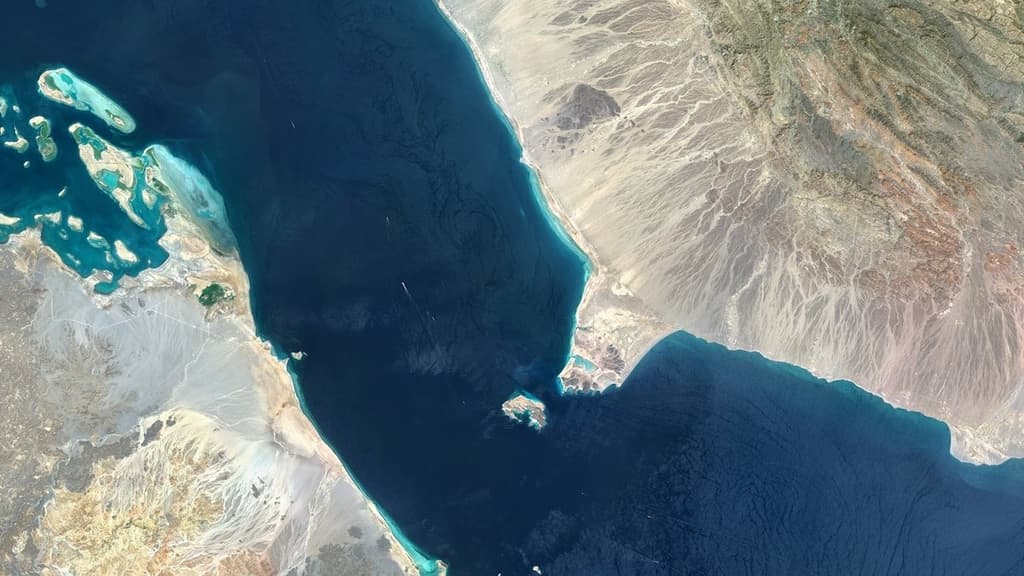
Recent Houthi attacks on Saudi Red Sea facilities have driven volatility in Bab el-Mandeb transits, with daily volumes fluctuating between 29 and 41 vessels in late July amid heightened insurance premiums and selective rerouting by carriers. This uncertainty produces tightly clustered market-implied odds near 47–49.5% across the 180–220+ bins, reflecting trader consensus that weekly totals could settle in a narrow range depending on whether attacks intensify or ease before August 3. Key swing factors include daily average trends, freight rate spikes, and any shifts in major liners’ routing policies, all priced in by capital-at-risk participants assessing near-term geopolitical risk versus historical throughput baselines.
基於Polymarket數據的AI實驗性摘要。這不是交易建議,也不影響該市場的結算方式。 · 更新於220+ 50%
少於180艘 50%
200-219 50%
180-199 47%
最新
最新
2026-08-09
少於180艘
50%
180-199
47%
200-219
50%
220+
50%
220+ 50%
少於180艘 50%
200-219 50%
180-199 47%
最新
最新
2026-08-09
少於180艘
$0 交易量
50%
180-199
$0 交易量
47%
200-219
$0 交易量
50%
220+
$0 交易量
50%
This market will resolve according to the total number of transit calls that IMF Portwatch reports for the Bab el-Mandeb Strait for all days from August 3, 2026, through August 9, 2026, inclusive.
Transit calls include container, dry bulk, roll-on/roll-off, general cargo, and tanker ships. Ships not reported by IMF Portwatch will not be considered.
This market will resolve as soon as all relevant data has been published. If the relevant data is not published within 14 calendar days of the specified date, this market will resolve based on the most recent data published up to that point.
In case of obvious data integrity issues (i.e., erroneous data), the market may remain open until the end of the third calendar day (ET) after the date on which such data is first released to allow for corrections. Data integrity issues refer only to clerical or other similar errors in the underlying data, and do not include cases where IMF Portwatch differs from alternative sources.
Only revisions to previously published data points made before all relevant data has been published will be considered.
The resolution source for this market will be IMF PortWatch, specifically the “Arrivals of Ships” data published for the Bab el-Mandeb Strait at https://portwatch.imf.org/pages/6b1814d64903461b98144a6cc25eb79c.Recent Houthi attacks on Saudi Red Sea facilities have driven volatility in Bab el-Mandeb transits, with daily volumes fluctuating between 29 and 41 vessels in late July amid heightened insurance premiums and selective rerouting by carriers. This uncertainty produces tightly clustered market-implied odds near 47–49.5% across the 180–220+ bins, reflecting trader consensus that weekly totals could settle in a narrow range depending on whether attacks intensify or ease before August 3. Key swing factors include daily average trends, freight rate spikes, and any shifts in major liners’ routing policies, all priced in by capital-at-risk participants assessing near-term geopolitical risk versus historical throughput baselines.
This market will resolve according to the total number of transit calls that IMF Portwatch reports for the Bab el-Mandeb Strait for all days from August 3, 2026, through August 9, 2026, inclusive.
Transit calls include container, dry bulk, roll-on/roll-off, general cargo, and tanker ships. Ships not reported by IMF Portwatch will not be considered.
This market will resolve as soon as all relevant data has been published. If the relevant data is not published within 14 calendar days of the specified date, this market will resolve based on the most recent data published up to that point.
In case of obvious data integrity issues (i.e., erroneous data), the market may remain open until the end of the third calendar day (ET) after the date on which such data is first released to allow for corrections. Data integrity issues refer only to clerical or other similar errors in the underlying data, and do not include cases where IMF Portwatch differs from alternative sources.
Only revisions to previously published data points made before all relevant data has been published will be considered.
The resolution source for this market will be IMF PortWatch, specifically the “Arrivals of Ships” data published for the Bab el-Mandeb Strait at https://portwatch.imf.org/pages/6b1814d64903461b98144a6cc25eb79c.
Transit calls include container, dry bulk, roll-on/roll-off, general cargo, and tanker ships. Ships not reported by IMF Portwatch will not be considered.
This market will resolve as soon as all relevant data has been published. If the relevant data is not published within 14 calendar days of the specified date, this market will resolve based on the most recent data published up to that point.
In case of obvious data integrity issues (i.e., erroneous data), the market may remain open until the end of the third calendar day (ET) after the date on which such data is first released to allow for corrections. Data integrity issues refer only to clerical or other similar errors in the underlying data, and do not include cases where IMF Portwatch differs from alternative sources.
Only revisions to previously published data points made before all relevant data has been published will be considered.
The resolution source for this market will be IMF PortWatch, specifically the “Arrivals of Ships” data published for the Bab el-Mandeb Strait at https://portwatch.imf.org/pages/6b1814d64903461b98144a6cc25eb79c.
市場開放時間: Jul 31, 2026, 6:21 PM ET
交易量
$0結束日期
2026-08-09市場開放時間
Jul 31, 2026, 6:21 PM ETResolver
0x69c47De9D...This market will resolve according to the total number of transit calls that IMF Portwatch reports for the Bab el-Mandeb Strait for all days from August 3, 2026, through August 9, 2026, inclusive.
Transit calls include container, dry bulk, roll-on/roll-off, general cargo, and tanker ships. Ships not reported by IMF Portwatch will not be considered.
This market will resolve as soon as all relevant data has been published. If the relevant data is not published within 14 calendar days of the specified date, this market will resolve based on the most recent data published up to that point.
In case of obvious data integrity issues (i.e., erroneous data), the market may remain open until the end of the third calendar day (ET) after the date on which such data is first released to allow for corrections. Data integrity issues refer only to clerical or other similar errors in the underlying data, and do not include cases where IMF Portwatch differs from alternative sources.
Only revisions to previously published data points made before all relevant data has been published will be considered.
The resolution source for this market will be IMF PortWatch, specifically the “Arrivals of Ships” data published for the Bab el-Mandeb Strait at https://portwatch.imf.org/pages/6b1814d64903461b98144a6cc25eb79c.Recent Houthi attacks on Saudi Red Sea facilities have driven volatility in Bab el-Mandeb transits, with daily volumes fluctuating between 29 and 41 vessels in late July amid heightened insurance premiums and selective rerouting by carriers. This uncertainty produces tightly clustered market-implied odds near 47–49.5% across the 180–220+ bins, reflecting trader consensus that weekly totals could settle in a narrow range depending on whether attacks intensify or ease before August 3. Key swing factors include daily average trends, freight rate spikes, and any shifts in major liners’ routing policies, all priced in by capital-at-risk participants assessing near-term geopolitical risk versus historical throughput baselines.
This market will resolve according to the total number of transit calls that IMF Portwatch reports for the Bab el-Mandeb Strait for all days from August 3, 2026, through August 9, 2026, inclusive.
Transit calls include container, dry bulk, roll-on/roll-off, general cargo, and tanker ships. Ships not reported by IMF Portwatch will not be considered.
This market will resolve as soon as all relevant data has been published. If the relevant data is not published within 14 calendar days of the specified date, this market will resolve based on the most recent data published up to that point.
In case of obvious data integrity issues (i.e., erroneous data), the market may remain open until the end of the third calendar day (ET) after the date on which such data is first released to allow for corrections. Data integrity issues refer only to clerical or other similar errors in the underlying data, and do not include cases where IMF Portwatch differs from alternative sources.
Only revisions to previously published data points made before all relevant data has been published will be considered.
The resolution source for this market will be IMF PortWatch, specifically the “Arrivals of Ships” data published for the Bab el-Mandeb Strait at https://portwatch.imf.org/pages/6b1814d64903461b98144a6cc25eb79c.
Transit calls include container, dry bulk, roll-on/roll-off, general cargo, and tanker ships. Ships not reported by IMF Portwatch will not be considered.
This market will resolve as soon as all relevant data has been published. If the relevant data is not published within 14 calendar days of the specified date, this market will resolve based on the most recent data published up to that point.
In case of obvious data integrity issues (i.e., erroneous data), the market may remain open until the end of the third calendar day (ET) after the date on which such data is first released to allow for corrections. Data integrity issues refer only to clerical or other similar errors in the underlying data, and do not include cases where IMF Portwatch differs from alternative sources.
Only revisions to previously published data points made before all relevant data has been published will be considered.
The resolution source for this market will be IMF PortWatch, specifically the “Arrivals of Ships” data published for the Bab el-Mandeb Strait at https://portwatch.imf.org/pages/6b1814d64903461b98144a6cc25eb79c.
交易量
$0結束日期
2026-08-09市場開放時間
Jul 31, 2026, 6:21 PM ETResolver
0x69c47De9D...Recent Houthi attacks on Saudi Red Sea facilities have driven volatility in Bab el-Mandeb transits, with daily volumes fluctuating between 29 and 41 vessels in late July amid heightened insurance premiums and selective rerouting by carriers. This uncertainty produces tightly clustered market-implied odds near 47–49.5% across the 180–220+ bins, reflecting trader consensus that weekly totals could settle in a narrow range depending on whether attacks intensify or ease before August 3. Key swing factors include daily average trends, freight rate spikes, and any shifts in major liners’ routing policies, all priced in by capital-at-risk participants assessing near-term geopolitical risk versus historical throughput baselines.
基於Polymarket數據的AI實驗性摘要。這不是交易建議,也不影響該市場的結算方式。 · 更新於
警惕外部連結哦。
警惕外部連結哦。
Frequently Asked Questions