
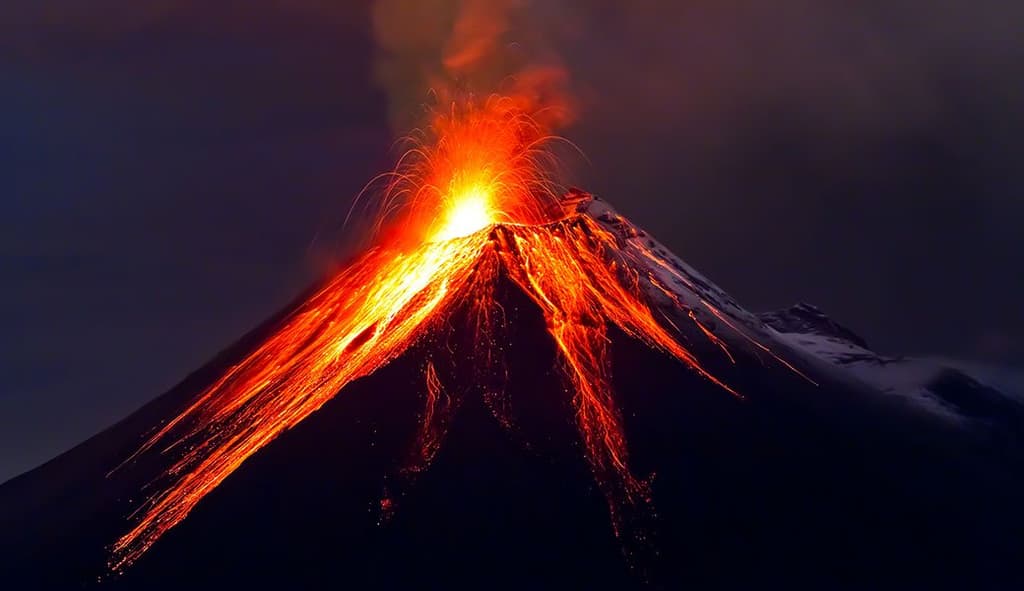
**No VEI ≥6 eruption in 2026 carries a 92.2% market-implied probability because such colossal events remain statistically rare, with average return times of 50–100 years based on Holocene records from the Smithsonian Global Volcanism Program.** The most recent confirmed VEI 6 occurred with Pinatubo in 1991, and 2025–2026 activity has been limited to modest events, including ongoing Kīlauea effusive episodes (VEI 1) and Semeru or Lewotobi plumes reaching VEI 4 at most. Official monitoring by the USGS, GVP, and national agencies shows no widespread precursory signals—such as extreme inflation, seismic swarms, or SO₂ spikes—at caldera systems capable of Plinian-scale output. While an unforeseen escalation at an under-monitored or newly restless volcano cannot be ruled out, the absence of detectable unrest through mid-September 2026 strongly supports trader consensus favoring “No.”
基于Polymarket数据的AI实验性摘要。这不是交易建议,也不影响该市场的结算方式。 · 更新于是
$146,823 交易量
$146,823 交易量
是
$146,823 交易量
$146,823 交易量
The primary resolution source will be the Smithsonian Institution Global Volcanism Program (GVP: https://volcano.si.edu/), specifically the ‘VEI 6’ figure for 2026 released on the page currently titled "Eruptions Avg 2000-2024 (N/T)" (https://volcano.si.edu/faq/index.cfm?question=eruptionsbyyear) as of March 31, 2027, 12 PM ET. Any prior updates will not be considered finalized.
If this dataset has not been updated to include all relevant events by March 31, 2027, or if the Smithsonian GVP becomes permanently unavailable, this market may resolve based on a consensus of credible scientific sources, including the U.S. Geological Survey (USGS), national or regional volcanic observatories, or credible reporting of a scientific consensus.
Note: Smithsonian Institution Global Volcanism Program databases, which include eruptions that reached the relevant threshold prior to this market’s timeframe (e.g., https://volcano.si.edu/faq/index.cfm?question=eruptionsbyyear&checkyear=2025), will not be considered.
市场开放时间: Dec 29, 2025, 6:24 PM ET
The primary resolution source will be the Smithsonian Institution Global Volcanism Program (GVP: https://volcano.si.edu/), specifically the ‘VEI 6’ figure for 2026 released on the page currently titled "Eruptions Avg 2000-2024 (N/T)" (https://volcano.si.edu/faq/index.cfm?question=eruptionsbyyear) as of March 31, 2027, 12 PM ET. Any prior updates will not be considered finalized.
If this dataset has not been updated to include all relevant events by March 31, 2027, or if the Smithsonian GVP becomes permanently unavailable, this market may resolve based on a consensus of credible scientific sources, including the U.S. Geological Survey (USGS), national or regional volcanic observatories, or credible reporting of a scientific consensus.
Note: Smithsonian Institution Global Volcanism Program databases, which include eruptions that reached the relevant threshold prior to this market’s timeframe (e.g., https://volcano.si.edu/faq/index.cfm?question=eruptionsbyyear&checkyear=2025), will not be considered.
**No VEI ≥6 eruption in 2026 carries a 92.2% market-implied probability because such colossal events remain statistically rare, with average return times of 50–100 years based on Holocene records from the Smithsonian Global Volcanism Program.** The most recent confirmed VEI 6 occurred with Pinatubo in 1991, and 2025–2026 activity has been limited to modest events, including ongoing Kīlauea effusive episodes (VEI 1) and Semeru or Lewotobi plumes reaching VEI 4 at most. Official monitoring by the USGS, GVP, and national agencies shows no widespread precursory signals—such as extreme inflation, seismic swarms, or SO₂ spikes—at caldera systems capable of Plinian-scale output. While an unforeseen escalation at an under-monitored or newly restless volcano cannot be ruled out, the absence of detectable unrest through mid-September 2026 strongly supports trader consensus favoring “No.”
基于Polymarket数据的AI实验性摘要。这不是交易建议,也不影响该市场的结算方式。 · 更新于

警惕外部链接哦。
警惕外部链接哦。
常见问题