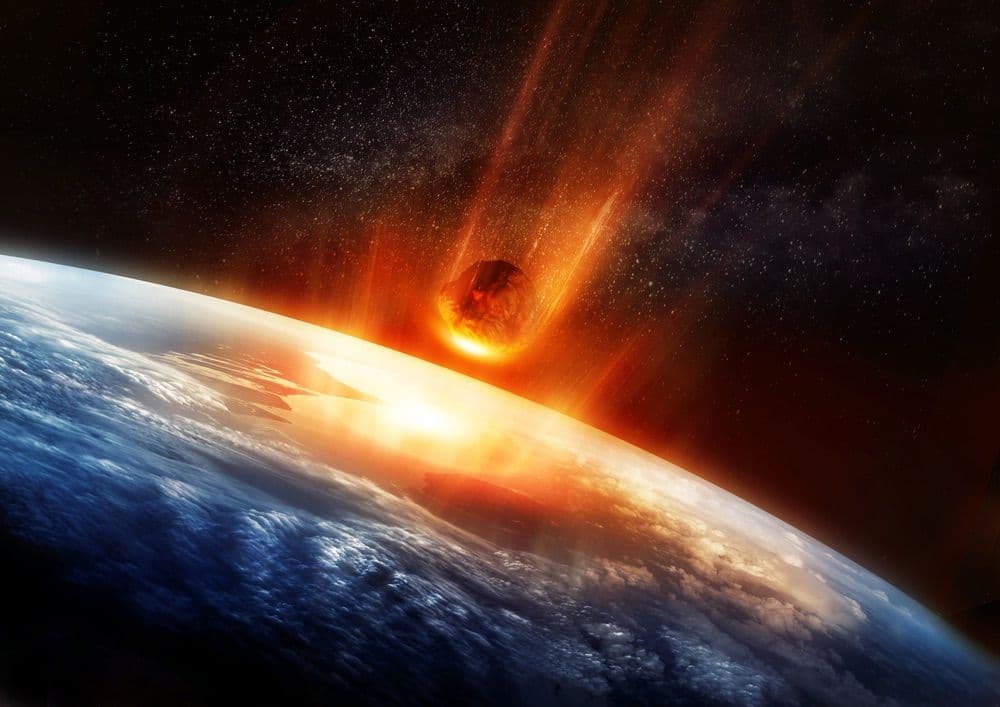
Advanced near-Earth object monitoring by NASA’s CNEOS, ESA surveys, and ground-based telescopes like Pan-STARRS has identified no asteroids or comets on trajectories capable of producing a 1-megaton atmospheric airburst in 2026. Historical flux models place such events at roughly once every several centuries, with the 2013 Chelyabinsk bolide at only ~440 kilotons serving as the modern benchmark. Continuous sky surveys, refined orbital calculations, and the absence of any large undetected objects underpin the 98.3% market-implied probability for “No.” While an undetected long-period comet or rare trajectory miscalculation remains theoretically possible, current detection networks and the short remaining timeframe make these outcomes highly improbable before year-end resolution via the JPL fireball database.
Resumen experimental generado por IA con datos de Polymarket. Esto no es asesoramiento de trading y no influye en cómo se resuelve este mercado. · Actualizado¿Golpe de meteoro de 1 megatón en 2026?
¿Golpe de meteoro de 1 megatón en 2026?
Sí
$116,343 Vol.
$116,343 Vol.
Sí
$116,343 Vol.
$116,343 Vol.
The object must be classified as a natural meteoroid; events involving artificial objects or reentry vehicles do not qualify.
The primary resolution source will be the NASA JPL Fireball and Bolide Data repository: https://cneos.jpl.nasa.gov/fireballs/. The relevant field for determining impact energy is the “Impact Energy (kt)” column. If this dataset has not been updated to include all relevant dates by February 28, 2027, or if the NASA JPL Fireball and Bolide Data repository becomes permanently unavailable, this market may resolve based on a consensus of credible sources including the European Space Agency (ESA), the International Asteroid Warning Network (IAWN), the U.S. Department of Defense, or credible reporting of a scientific consensus, such as a NASA press release.
Mercado abierto: Jan 2, 2026, 2:24 PM ET
Resolver
0x65070BE91...The object must be classified as a natural meteoroid; events involving artificial objects or reentry vehicles do not qualify.
The primary resolution source will be the NASA JPL Fireball and Bolide Data repository: https://cneos.jpl.nasa.gov/fireballs/. The relevant field for determining impact energy is the “Impact Energy (kt)” column. If this dataset has not been updated to include all relevant dates by February 28, 2027, or if the NASA JPL Fireball and Bolide Data repository becomes permanently unavailable, this market may resolve based on a consensus of credible sources including the European Space Agency (ESA), the International Asteroid Warning Network (IAWN), the U.S. Department of Defense, or credible reporting of a scientific consensus, such as a NASA press release.
Resolver
0x65070BE91...Advanced near-Earth object monitoring by NASA’s CNEOS, ESA surveys, and ground-based telescopes like Pan-STARRS has identified no asteroids or comets on trajectories capable of producing a 1-megaton atmospheric airburst in 2026. Historical flux models place such events at roughly once every several centuries, with the 2013 Chelyabinsk bolide at only ~440 kilotons serving as the modern benchmark. Continuous sky surveys, refined orbital calculations, and the absence of any large undetected objects underpin the 98.3% market-implied probability for “No.” While an undetected long-period comet or rare trajectory miscalculation remains theoretically possible, current detection networks and the short remaining timeframe make these outcomes highly improbable before year-end resolution via the JPL fireball database.
Resumen experimental generado por IA con datos de Polymarket. Esto no es asesoramiento de trading y no influye en cómo se resuelve este mercado. · Actualizado
Cuidado con los enlaces externos.
Cuidado con los enlaces externos.
Preguntas frecuentes