
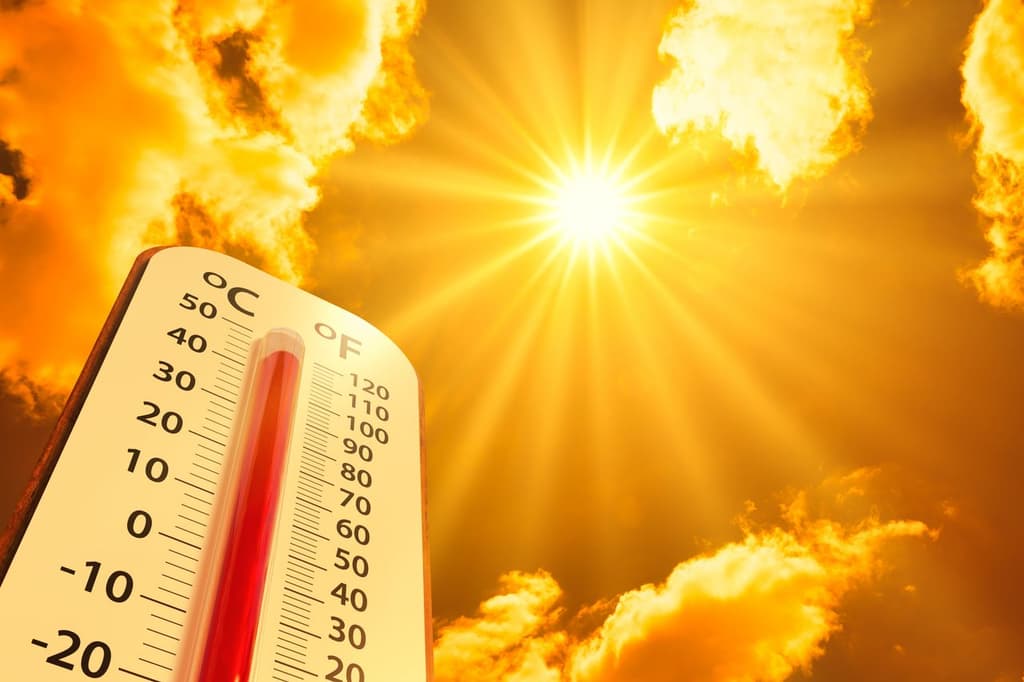
Recent Copernicus Climate Change Service analysis from ERA5 data confirms August 2026 as the warmest August on record, with a global surface air temperature anomaly of 1.65°C above the 1850–1900 pre-industrial baseline—driven by record extra-polar sea surface temperatures and strong El Niño conditions in the equatorial Pacific superimposed on long-term anthropogenic warming. This aligns with the market's near-certain consensus around 1.38–1.41°C in the primary resolving dataset, reflecting consistent observational trends from multiple agencies amid ongoing greenhouse gas accumulation. Model runs and historical analogs indicate limited upside risk from further intensification, though revisions in final processed data or alternative baselines could introduce minor variance before settlement.
Experimental AI-generated summary referencing Polymarket data. This is not trading advice and plays no role in how this market resolves. · UpdatedAugust 2026 Temperature Increase (ºC) (HIGHER STRIKES)
August 2026 Temperature Increase (ºC) (HIGHER STRIKES)
1.38–1.41ºC 100.0%
<1.30ºC <1%
1.30–1.33ºC <1%
1.34–1.37ºC <1%
$20,855 Vol.
$20,855 Vol.
<1.30ºC
No
1.30–1.33ºC
No
1.34–1.37ºC
No
1.38–1.41ºC
Yes
1.42–1.45ºC
No
>1.45ºC
No
1.38–1.41ºC 100.0%
<1.30ºC <1%
1.30–1.33ºC <1%
1.34–1.37ºC <1%
$20,855 Vol.
$20,855 Vol.
<1.30ºC
No
1.30–1.33ºC
No
1.34–1.37ºC
No
1.38–1.41ºC
Yes
1.42–1.45ºC
No
>1.45ºC
No
An anomaly within a named bracket for August 2026 is necessary and sufficient to resolve this market immediately once the data becomes available, regardless of whether the figure for August 2026 is later revised.
The primary resolution source for this market will be the figure found in the table titled "GLOBAL Land-Ocean Temperature Index in 0.01 degrees Celsius" under the column "Aug" in the row "2026" (https://data.giss.nasa.gov/gistemp/tabledata_v4/GLB.Ts+dSST.txt).
If NASA’s “Global Temperature Index” is rendered permanently unavailable, other information from NASA may be used.
If no information for August 2026 is provided by NASA by October 1, 2026, 11:59 PM ET, this market will resolve to the lowest range bracket.
Market Opened: Aug 14, 2026, 2:30 PM ET
Resolver
0x69c47De9D...Outcome proposed: Yes
No dispute
Final outcome: Yes
An anomaly within a named bracket for August 2026 is necessary and sufficient to resolve this market immediately once the data becomes available, regardless of whether the figure for August 2026 is later revised.
The primary resolution source for this market will be the figure found in the table titled "GLOBAL Land-Ocean Temperature Index in 0.01 degrees Celsius" under the column "Aug" in the row "2026" (https://data.giss.nasa.gov/gistemp/tabledata_v4/GLB.Ts+dSST.txt).
If NASA’s “Global Temperature Index” is rendered permanently unavailable, other information from NASA may be used.
If no information for August 2026 is provided by NASA by October 1, 2026, 11:59 PM ET, this market will resolve to the lowest range bracket.
Resolver
0x69c47De9D...Outcome proposed: Yes
No dispute
Final outcome: Yes
Recent Copernicus Climate Change Service analysis from ERA5 data confirms August 2026 as the warmest August on record, with a global surface air temperature anomaly of 1.65°C above the 1850–1900 pre-industrial baseline—driven by record extra-polar sea surface temperatures and strong El Niño conditions in the equatorial Pacific superimposed on long-term anthropogenic warming. This aligns with the market's near-certain consensus around 1.38–1.41°C in the primary resolving dataset, reflecting consistent observational trends from multiple agencies amid ongoing greenhouse gas accumulation. Model runs and historical analogs indicate limited upside risk from further intensification, though revisions in final processed data or alternative baselines could introduce minor variance before settlement.
Experimental AI-generated summary referencing Polymarket data. This is not trading advice and plays no role in how this market resolves. · Updated
Beware of external links.
Beware of external links.
Frequently Asked Questions