
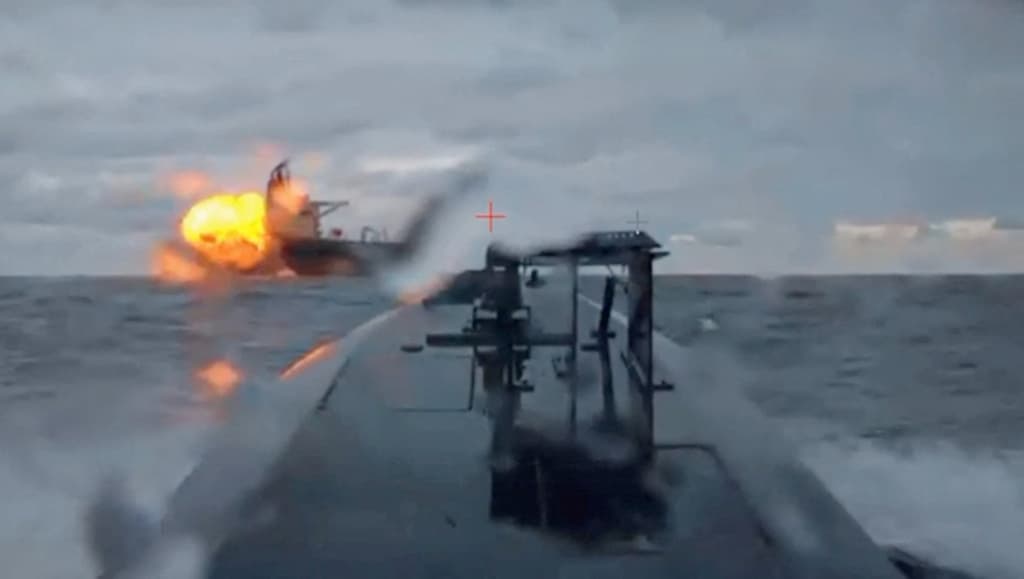
Ukraine has sustained a campaign of naval drone and missile strikes against Russian vessels and shadow fleet tankers in the Black Sea, with the most recent confirmed action occurring on September 3 when forces hit the vessel Nefrit near Sochi, alongside reported strikes on port infrastructure. This follows the July launch of Operation MoLoChKa, which expanded from the Sea of Azov into the Black Sea and produced claims of over 100 vessels struck in weeks through coordinated unmanned systems attacks aimed at disrupting Russian logistics, oil exports, and support for occupied Crimea. Russia has responded with intensified missile and drone strikes on Ukrainian ports, grain carriers, and supply routes, raising risks for commercial shipping while both sides target vessels they link to the opposing war effort. No fixed end date has been announced for Ukrainian operations, and future strikes remain tied to tactical opportunities amid active conflict dynamics.
Résumé expérimental généré par IA à partir des données Polymarket. Ceci n'est pas un conseil de trading et ne joue aucun rôle dans la résolution de ce marché. · Mis à jour$8,472 Vol.
22 août
Oui
31 août
Oui
$8,472 Vol.
22 août
Oui
31 août
Oui
A "strike" is defined as the use of aerial bombs, drones, naval drones, naval guns, artillery, or missiles (including cruise or ballistic missiles) which impact a vessel anywhere in the Black Sea, regardless of flag, ownership, or damage level.
Strikes attributed to Ukraine by media or third parties will qualify, regardless of whether Ukraine publicly denies involvement or if definitive attribution is not confirmed.
Ship seizures, boarding, or the use of small arms fire will not qualify. An intercepted missile or drone that does not impact the vessel will not qualify, even if debris lands on or near the vessel.
The primary resolution source will be a consensus of credible reporting.
The occurrence, attribution, and timing of a qualifying incident will be primarily determined based on a consensus of information available from the resolution sources. Where multiple sources conflict regarding the occurrence, attribution, or timing of a relevant incident, this market will remain open until the earlier of: i) the confirmation of the occurrence, attribution, and timing of the incident based on a consensus of information available from the resolution sources or ii) 3 full calendar days (EET) from the date of the first credibly reported evidence of the incident. If this period would extend past the end date, this market will remain open to allow for 3 full calendar days to pass. If, at the end of the third calendar day, conflicting reports remain as to the occurrence, attribution, or timing of the incident, this market will resolve based on the totality of information available from the resolution sources at that time. No single statement, denial, or presentation of evidence will govern where it is contradicted by the totality of information.
Marché ouvert : Aug 17, 2026, 7:38 PM ET
Résolveur
0x65070BE91...Résultat proposé: Oui
Aucune contestation
Résultat final: Oui
A "strike" is defined as the use of aerial bombs, drones, naval drones, naval guns, artillery, or missiles (including cruise or ballistic missiles) which impact a vessel anywhere in the Black Sea, regardless of flag, ownership, or damage level.
Strikes attributed to Ukraine by media or third parties will qualify, regardless of whether Ukraine publicly denies involvement or if definitive attribution is not confirmed.
Ship seizures, boarding, or the use of small arms fire will not qualify. An intercepted missile or drone that does not impact the vessel will not qualify, even if debris lands on or near the vessel.
The primary resolution source will be a consensus of credible reporting.
The occurrence, attribution, and timing of a qualifying incident will be primarily determined based on a consensus of information available from the resolution sources. Where multiple sources conflict regarding the occurrence, attribution, or timing of a relevant incident, this market will remain open until the earlier of: i) the confirmation of the occurrence, attribution, and timing of the incident based on a consensus of information available from the resolution sources or ii) 3 full calendar days (EET) from the date of the first credibly reported evidence of the incident. If this period would extend past the end date, this market will remain open to allow for 3 full calendar days to pass. If, at the end of the third calendar day, conflicting reports remain as to the occurrence, attribution, or timing of the incident, this market will resolve based on the totality of information available from the resolution sources at that time. No single statement, denial, or presentation of evidence will govern where it is contradicted by the totality of information.
Résolveur
0x65070BE91...Résultat proposé: Oui
Aucune contestation
Résultat final: Oui
Ukraine has sustained a campaign of naval drone and missile strikes against Russian vessels and shadow fleet tankers in the Black Sea, with the most recent confirmed action occurring on September 3 when forces hit the vessel Nefrit near Sochi, alongside reported strikes on port infrastructure. This follows the July launch of Operation MoLoChKa, which expanded from the Sea of Azov into the Black Sea and produced claims of over 100 vessels struck in weeks through coordinated unmanned systems attacks aimed at disrupting Russian logistics, oil exports, and support for occupied Crimea. Russia has responded with intensified missile and drone strikes on Ukrainian ports, grain carriers, and supply routes, raising risks for commercial shipping while both sides target vessels they link to the opposing war effort. No fixed end date has been announced for Ukrainian operations, and future strikes remain tied to tactical opportunities amid active conflict dynamics.
Résumé expérimental généré par IA à partir des données Polymarket. Ceci n'est pas un conseil de trading et ne joue aucun rôle dans la résolution de ce marché. · Mis à jour

Méfiez-vous des liens externes.
Méfiez-vous des liens externes.
Questions fréquentes