icon for SCOTUS laissera-t-il Trump construire la salle de bal de la Maison Blanche d'ici le 30 septembre ?

SCOTUS laissera-t-il Trump construire la salle de bal de la Maison Blanche d'ici le 30 septembre ?

icon for SCOTUS laissera-t-il Trump construire la salle de bal de la Maison Blanche d'ici le 30 septembre ?

SCOTUS laissera-t-il Trump construire la salle de bal de la Maison Blanche d'ici le 30 septembre ?

Oui

52% chance
Polymarket
NOUVEAU

Oui

52% chance
Polymarket
NOUVEAU
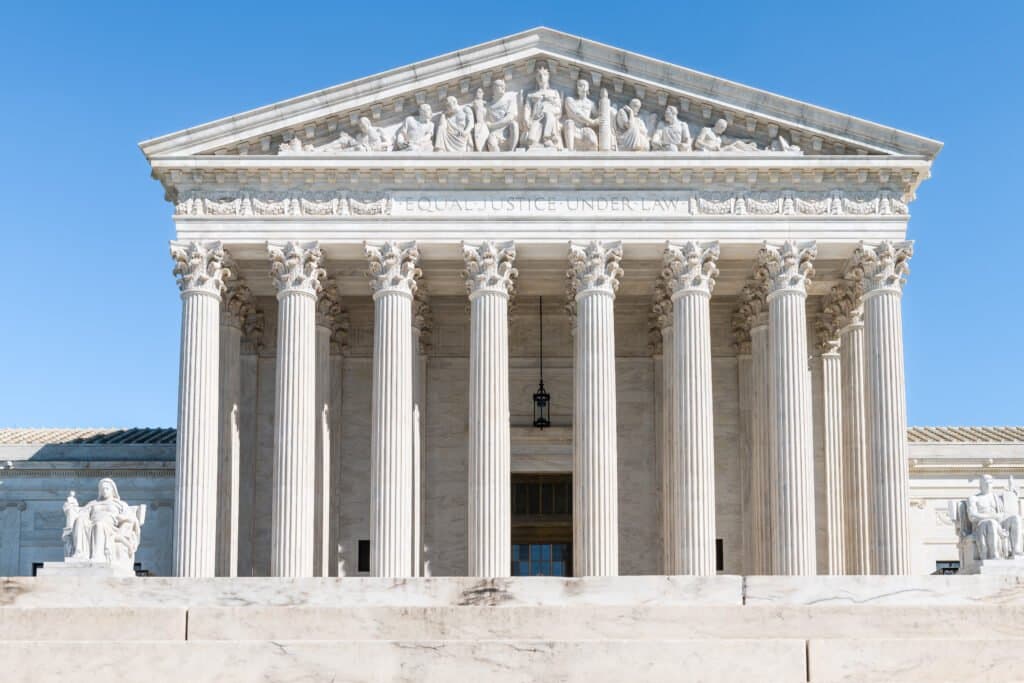
The Supreme Court of the United States is expected to be asked to review lower-court rulings blocking construction of a new White House ballroom on the former site of the East Wing offices. As of market creation, a preliminary injunction affirmed by the D.C. Circuit blocks above-ground construction while permitting below-ground work. This market will resolve to "Yes" if, by September 30, 2026, 11:59 PM ET, the Supreme Court of the United States issues any ruling or order that has the effect of permitting construction to resume on any above-ground portion of the ballroom project. Otherwise, this market will resolve to "No." A qualifying ruling or order includes a merits decision, a stay of a lower-court injunction, or any other form of interim or permanent relief, so long as its effect is that above-ground construction is legally permitted to proceed. A ruling or order affecting only below-ground work will not qualify. Once a qualifying ruling or order has been issued, this market will resolve to "Yes" regardless of whether the ruling or order is later vacated, reversed, or superseded, and regardless of whether construction actually resumes. This market will resolve to "No" if no qualifying ruling or order is issued by the deadline, including if the Supreme Court declines to hear the case, dismisses it, or resolves it on grounds that leave the block on above-ground construction in place. Above-ground construction becoming permitted through any mechanism other than a Supreme Court ruling or order — including congressional authorization, settlement, or dismissal of the underlying lawsuit — will not qualify. The primary resolution source for this market will be official information from the Supreme Court of the United States (including orders published at supremecourt.gov); however, a consensus of credible reporting may also be used.The closely contested 51.5% implied probability for a “Yes” outcome reflects uncertainty over whether the Supreme Court will grant emergency relief allowing above-ground construction on the White House ballroom project to resume and reach substantial completion by September 30. Recent developments center on the Trump administration’s August 14 emergency application to the justices, which seeks to lift a D.C. Circuit panel’s recent order upholding a district court block on the work while litigation continues; the Court has set a tight response deadline, and Solicitor General filings emphasize national security needs and rapid progress already made on underground elements. Countervailing factors include the appeals court’s emphasis on congressional approval requirements for major alterations to the White House complex and ongoing challenges from preservation groups, creating procedural and substantive hurdles that could lead to denial or a narrowed stay. Any ruling before the market’s cutoff, further lower-court developments, or shifts in the project’s documented status could quickly alter trader assessments of the emergency docket’s likely path.

The Supreme Court of the United States is expected to be asked to review lower-court rulings blocking construction of a new White House ballroom on the former site of the East Wing offices. As of market creation, a preliminary injunction affirmed by the D.C. Circuit blocks above-ground construction while permitting below-ground work.

This market will resolve to "Yes" if, by September 30, 2026, 11:59 PM ET, the Supreme Court of the United States issues any ruling or order that has the effect of permitting construction to resume on any above-ground portion of the ballroom project. Otherwise, this market will resolve to "No."

A qualifying ruling or order includes a merits decision, a stay of a lower-court injunction, or any other form of interim or permanent relief, so long as its effect is that above-ground construction is legally permitted to proceed. A ruling or order affecting only below-ground work will not qualify.

Once a qualifying ruling or order has been issued, this market will resolve to "Yes" regardless of whether the ruling or order is later vacated, reversed, or superseded, and regardless of whether construction actually resumes.

This market will resolve to "No" if no qualifying ruling or order is issued by the deadline, including if the Supreme Court declines to hear the case, dismisses it, or resolves it on grounds that leave the block on above-ground construction in place. Above-ground construction becoming permitted through any mechanism other than a Supreme Court ruling or order — including congressional authorization, settlement, or dismissal of the underlying lawsuit — will not qualify.

The primary resolution source for this market will be official information from the Supreme Court of the United States (including orders published at supremecourt.gov); however, a consensus of credible reporting may also be used.
Volume
$2,229
Date de fin
30 sept. 2026
Marché ouvert
Aug 7, 2026, 4:54 PM ET
The Supreme Court of the United States is expected to be asked to review lower-court rulings blocking construction of a new White House ballroom on the former site of the East Wing offices. As of market creation, a preliminary injunction affirmed by the D.C. Circuit blocks above-ground construction while permitting below-ground work. This market will resolve to "Yes" if, by September 30, 2026, 11:59 PM ET, the Supreme Court of the United States issues any ruling or order that has the effect of permitting construction to resume on any above-ground portion of the ballroom project. Otherwise, this market will resolve to "No." A qualifying ruling or order includes a merits decision, a stay of a lower-court injunction, or any other form of interim or permanent relief, so long as its effect is that above-ground construction is legally permitted to proceed. A ruling or order affecting only below-ground work will not qualify. Once a qualifying ruling or order has been issued, this market will resolve to "Yes" regardless of whether the ruling or order is later vacated, reversed, or superseded, and regardless of whether construction actually resumes. This market will resolve to "No" if no qualifying ruling or order is issued by the deadline, including if the Supreme Court declines to hear the case, dismisses it, or resolves it on grounds that leave the block on above-ground construction in place. Above-ground construction becoming permitted through any mechanism other than a Supreme Court ruling or order — including congressional authorization, settlement, or dismissal of the underlying lawsuit — will not qualify. The primary resolution source for this market will be official information from the Supreme Court of the United States (including orders published at supremecourt.gov); however, a consensus of credible reporting may also be used.
The Supreme Court of the United States is expected to be asked to review lower-court rulings blocking construction of a new White House ballroom on the former site of the East Wing offices. As of market creation, a preliminary injunction affirmed by the D.C. Circuit blocks above-ground construction while permitting below-ground work. This market will resolve to "Yes" if, by September 30, 2026, 11:59 PM ET, the Supreme Court of the United States issues any ruling or order that has the effect of permitting construction to resume on any above-ground portion of the ballroom project. Otherwise, this market will resolve to "No." A qualifying ruling or order includes a merits decision, a stay of a lower-court injunction, or any other form of interim or permanent relief, so long as its effect is that above-ground construction is legally permitted to proceed. A ruling or order affecting only below-ground work will not qualify. Once a qualifying ruling or order has been issued, this market will resolve to "Yes" regardless of whether the ruling or order is later vacated, reversed, or superseded, and regardless of whether construction actually resumes. This market will resolve to "No" if no qualifying ruling or order is issued by the deadline, including if the Supreme Court declines to hear the case, dismisses it, or resolves it on grounds that leave the block on above-ground construction in place. Above-ground construction becoming permitted through any mechanism other than a Supreme Court ruling or order — including congressional authorization, settlement, or dismissal of the underlying lawsuit — will not qualify. The primary resolution source for this market will be official information from the Supreme Court of the United States (including orders published at supremecourt.gov); however, a consensus of credible reporting may also be used.The closely contested 51.5% implied probability for a “Yes” outcome reflects uncertainty over whether the Supreme Court will grant emergency relief allowing above-ground construction on the White House ballroom project to resume and reach substantial completion by September 30. Recent developments center on the Trump administration’s August 14 emergency application to the justices, which seeks to lift a D.C. Circuit panel’s recent order upholding a district court block on the work while litigation continues; the Court has set a tight response deadline, and Solicitor General filings emphasize national security needs and rapid progress already made on underground elements. Countervailing factors include the appeals court’s emphasis on congressional approval requirements for major alterations to the White House complex and ongoing challenges from preservation groups, creating procedural and substantive hurdles that could lead to denial or a narrowed stay. Any ruling before the market’s cutoff, further lower-court developments, or shifts in the project’s documented status could quickly alter trader assessments of the emergency docket’s likely path.

The Supreme Court of the United States is expected to be asked to review lower-court rulings blocking construction of a new White House ballroom on the former site of the East Wing offices. As of market creation, a preliminary injunction affirmed by the D.C. Circuit blocks above-ground construction while permitting below-ground work.

This market will resolve to "Yes" if, by September 30, 2026, 11:59 PM ET, the Supreme Court of the United States issues any ruling or order that has the effect of permitting construction to resume on any above-ground portion of the ballroom project. Otherwise, this market will resolve to "No."

A qualifying ruling or order includes a merits decision, a stay of a lower-court injunction, or any other form of interim or permanent relief, so long as its effect is that above-ground construction is legally permitted to proceed. A ruling or order affecting only below-ground work will not qualify.

Once a qualifying ruling or order has been issued, this market will resolve to "Yes" regardless of whether the ruling or order is later vacated, reversed, or superseded, and regardless of whether construction actually resumes.

This market will resolve to "No" if no qualifying ruling or order is issued by the deadline, including if the Supreme Court declines to hear the case, dismisses it, or resolves it on grounds that leave the block on above-ground construction in place. Above-ground construction becoming permitted through any mechanism other than a Supreme Court ruling or order — including congressional authorization, settlement, or dismissal of the underlying lawsuit — will not qualify.

The primary resolution source for this market will be official information from the Supreme Court of the United States (including orders published at supremecourt.gov); however, a consensus of credible reporting may also be used.
Volume
$2,229
Date de fin
30 sept. 2026
Marché ouvert
Aug 7, 2026, 4:54 PM ET
The Supreme Court of the United States is expected to be asked to review lower-court rulings blocking construction of a new White House ballroom on the former site of the East Wing offices. As of market creation, a preliminary injunction affirmed by the D.C. Circuit blocks above-ground construction while permitting below-ground work. This market will resolve to "Yes" if, by September 30, 2026, 11:59 PM ET, the Supreme Court of the United States issues any ruling or order that has the effect of permitting construction to resume on any above-ground portion of the ballroom project. Otherwise, this market will resolve to "No." A qualifying ruling or order includes a merits decision, a stay of a lower-court injunction, or any other form of interim or permanent relief, so long as its effect is that above-ground construction is legally permitted to proceed. A ruling or order affecting only below-ground work will not qualify. Once a qualifying ruling or order has been issued, this market will resolve to "Yes" regardless of whether the ruling or order is later vacated, reversed, or superseded, and regardless of whether construction actually resumes. This market will resolve to "No" if no qualifying ruling or order is issued by the deadline, including if the Supreme Court declines to hear the case, dismisses it, or resolves it on grounds that leave the block on above-ground construction in place. Above-ground construction becoming permitted through any mechanism other than a Supreme Court ruling or order — including congressional authorization, settlement, or dismissal of the underlying lawsuit — will not qualify. The primary resolution source for this market will be official information from the Supreme Court of the United States (including orders published at supremecourt.gov); however, a consensus of credible reporting may also be used.

Méfiez-vous des liens externes.

Questions fréquentes

« SCOTUS laissera-t-il Trump construire la salle de bal de la Maison Blanche d'ici le 30 septembre ? » est un marché de prédiction sur Polymarket avec 2 résultats possibles où les traders achètent et vendent des parts selon ce qu'ils pensent qu'il se passera. Le résultat en tête actuel est « La Cour suprême permettra-t-elle à Trump de construire la salle de bal de la Maison-Blanche d'ici le 30 septembre ? » à 52%. Les prix reflètent des probabilités en temps réel de la communauté. Par exemple, une part cotée à 52¢ implique que le marché attribue collectivement une probabilité de 52% à ce résultat. Ces cotes changent en permanence. Les parts du résultat correct sont échangeables contre $1 chacune lors de la résolution du marché.

« SCOTUS laissera-t-il Trump construire la salle de bal de la Maison Blanche d'ici le 30 septembre ? » est un marché nouvellement créé sur Polymarket, lancé le Aug 7, 2026. En tant que marché récent, c'est votre opportunité d'être parmi les premiers traders à définir les cotes et établir les premiers signaux de prix du marché. Vous pouvez également ajouter cette page à vos favoris pour suivre le volume et l'activité de trading au fil du temps.

Pour trader sur « SCOTUS laissera-t-il Trump construire la salle de bal de la Maison Blanche d'ici le 30 septembre ? », parcourez les 2 résultats disponibles sur cette page. Chaque résultat affiche un prix actuel représentant la probabilité implicite du marché. Pour prendre position, sélectionnez le résultat que vous estimez le plus probable, choisissez « Oui » pour trader en sa faveur ou « Non » pour trader contre, entrez votre montant et cliquez sur « Trader ». Si votre résultat choisi est correct lors de la résolution, vos parts « Oui » rapportent $1 chacune. S'il est incorrect, elles rapportent $0. Vous pouvez également vendre vos parts avant la résolution.

Le favori actuel pour « SCOTUS laissera-t-il Trump construire la salle de bal de la Maison Blanche d'ici le 30 septembre ? » est « La Cour suprême permettra-t-elle à Trump de construire la salle de bal de la Maison-Blanche d'ici le 30 septembre ? » à 52%, ce qui signifie que le marché attribue une probabilité de 52% à ce résultat. Ces cotes sont mises à jour en temps réel à mesure que les traders achètent et vendent des parts. Revenez fréquemment ou ajoutez cette page à vos favoris.

Les règles de résolution de « SCOTUS laissera-t-il Trump construire la salle de bal de la Maison Blanche d'ici le 30 septembre ? » définissent exactement ce qui doit se produire pour que chaque résultat soit déclaré gagnant, y compris les sources de données officielles utilisées pour déterminer le résultat. Vous pouvez consulter les critères de résolution complets dans la section « Règles » sur cette page au-dessus des commentaires. Nous recommandons de lire attentivement les règles avant de trader, car elles précisent les conditions exactes, les cas particuliers et les sources.