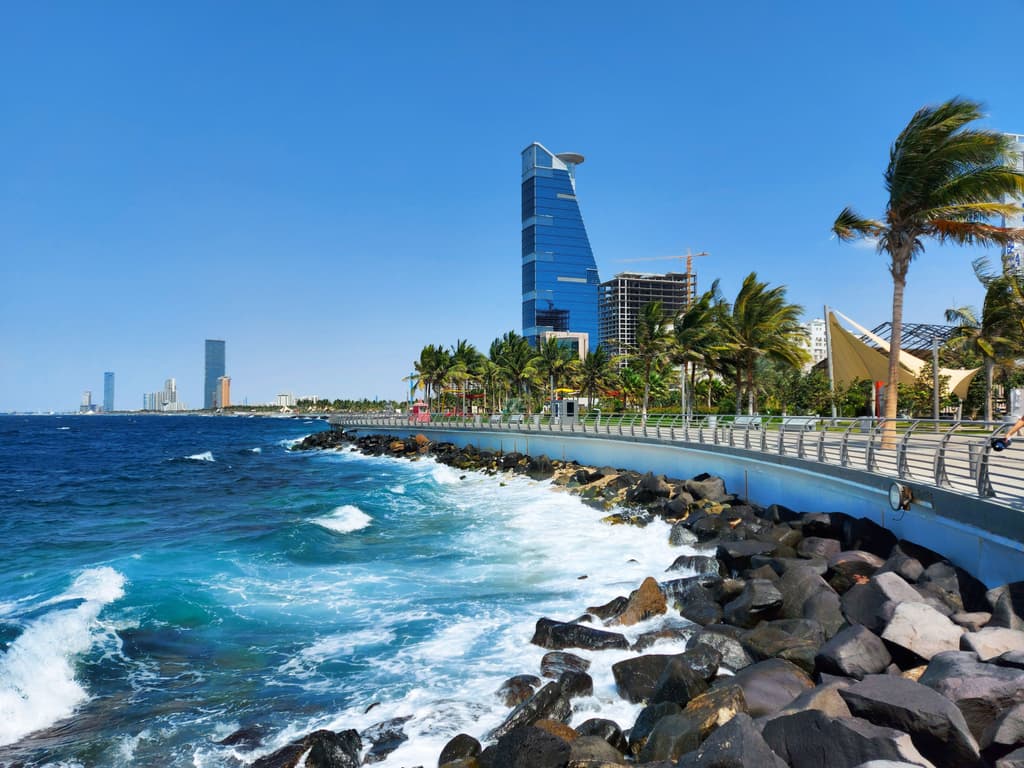
Current forecasts from multiple models indicate Jeddah nighttime lows on August 29 will likely fall between 29–32°C, aligning with the closely matched market-implied probabilities near 26–28% for those outcomes. High humidity from Red Sea maritime air (often 50–80%) limits radiative cooling after sunset, while light variable winds and minimal cloud cover allow modest overnight drops from daytime highs near 37–39°C. Historical August climatology shows average lows of 28–30°C, but recent persistent subsidence and warm advection have kept readings slightly elevated. Small variations in sea-breeze timing, dew-point depression, or urban heat retention could easily shift the exact minimum by 1–2°C, sustaining tight spreads among the leading bins as traders weigh model consensus against local microclimate effects.
Ringkasan eksperimental yang dihasilkan AI dengan referensi data Polymarket. Ini bukan saran trading dan tidak berperan dalam bagaimana pasar ini diselesaikan. · DiperbaruiLowest temperature in Jeddah on August 29?
Lowest temperature in Jeddah on August 29?
31°C 52%
27°C 48%
26°C 42%
30°C 27%
24°C or below
23%
25°C
10%
26°C
42%
27°C
48%
28°C
23%
29°C
24%
30°C
27%
31°C
28%
32°C
26%
33°C
1%
34°C or higher
2%
31°C 52%
27°C 48%
26°C 42%
30°C 27%
24°C or below
23%
25°C
10%
26°C
42%
27°C
48%
28°C
23%
29°C
24%
30°C
27%
31°C
28%
32°C
26%
33°C
1%
34°C or higher
2%
The resolution source for this market will be information from NOAA, specifically the lowest reading under the "Temp" column for all times on this day, available here: https://www.weather.gov/wrh/timeseries?site=oejn
If NOAA data is unavailable or missing for the observation period, Weather Underground will be used as the secondary resolution source.
To toggle between Fahrenheit and Celsius, click the "Switch to Metric Units" button until the relevant table displays °C.
This market can not resolve until the first data point for the following date has been published on the resolution source.
The resolution source for this market measures temperatures to whole degrees Celsius (eg, 9°C). Thus, this is the level of precision that will be used when resolving the market.
Revisions to temperatures recorded within this market's timeframe will be considered until the first datapoint for the following date has been published, after which any alterations will not be considered.
Pasar Dibuka: Aug 27, 2026, 12:31 AM ET
Sumber Resolusi
https://www.weather.gov/wrh/timeseries?site=oejnResolver
0x69c47De9D...The resolution source for this market will be information from NOAA, specifically the lowest reading under the "Temp" column for all times on this day, available here: https://www.weather.gov/wrh/timeseries?site=oejn
If NOAA data is unavailable or missing for the observation period, Weather Underground will be used as the secondary resolution source.
To toggle between Fahrenheit and Celsius, click the "Switch to Metric Units" button until the relevant table displays °C.
This market can not resolve until the first data point for the following date has been published on the resolution source.
The resolution source for this market measures temperatures to whole degrees Celsius (eg, 9°C). Thus, this is the level of precision that will be used when resolving the market.
Revisions to temperatures recorded within this market's timeframe will be considered until the first datapoint for the following date has been published, after which any alterations will not be considered.
Sumber Resolusi
https://www.weather.gov/wrh/timeseries?site=oejnResolver
0x69c47De9D...Current forecasts from multiple models indicate Jeddah nighttime lows on August 29 will likely fall between 29–32°C, aligning with the closely matched market-implied probabilities near 26–28% for those outcomes. High humidity from Red Sea maritime air (often 50–80%) limits radiative cooling after sunset, while light variable winds and minimal cloud cover allow modest overnight drops from daytime highs near 37–39°C. Historical August climatology shows average lows of 28–30°C, but recent persistent subsidence and warm advection have kept readings slightly elevated. Small variations in sea-breeze timing, dew-point depression, or urban heat retention could easily shift the exact minimum by 1–2°C, sustaining tight spreads among the leading bins as traders weigh model consensus against local microclimate effects.
Ringkasan eksperimental yang dihasilkan AI dengan referensi data Polymarket. Ini bukan saran trading dan tidak berperan dalam bagaimana pasar ini diselesaikan. · Diperbarui
Hati-hati dengan link eksternal.
Hati-hati dengan link eksternal.
Pertanyaan yang Sering Diajukan