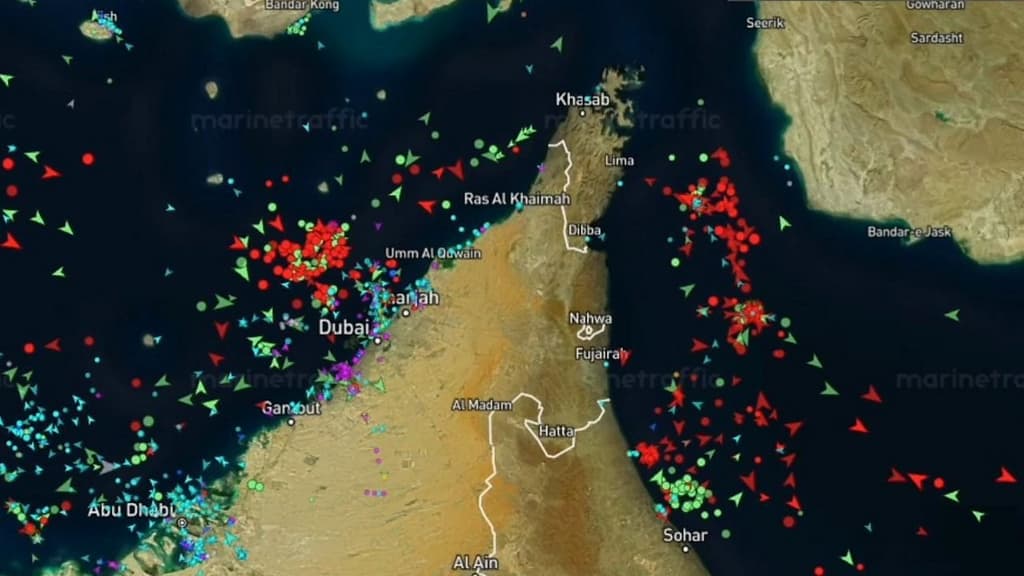
Tensions between the United States and Iran, including a naval blockade of Iranian ports and repeated attacks on vessels, have reduced Strait of Hormuz traffic to a small fraction of pre-2026 war levels, with multiple days in August recording fewer than 10 transits amid heightened risks from missiles, drones, and mines. A fragile ceasefire reached in June has expired without renewal as talks stall, prompting further U.S. economic pressure and Iranian warnings about controlling passage lanes near its territory or closing key routes. Recent incidents, such as strikes on ADNOC-linked tankers on August 13, have driven operators to favor limited or AIS-dark routing while insurance costs and security concerns deter broader commercial use. These dynamics, alongside demining operations and competing claims over northern versus southern corridors, shape trader assessments of whether complete daily halts remain possible before any resolution timeline.
Resumo experimental gerado por IA com dados do Polymarket. Isto não é aconselhamento de trading e não tem qualquer papel na resolução deste mercado. · Atualizado0 naves transitam por Ormuz em qualquer data até...?
0 naves transitam por Ormuz em qualquer data até...?
$734,002 Vol.
August 31
51%
$734,002 Vol.
August 31
51%
Transit calls include container, dry bulk, roll-on/roll-off, general cargo, and tanker ships. Ships not reported by IMF PortWatch will not be considered.
This market will resolve as soon as IMF PortWatch publishes a daily number of transit calls equal to 0, or once complete data has been published for the specified period without such a publication. If complete data for the specified period has not been published within 28 calendar days of the end of the specified period, this market will resolve based on data published up to that point.
In case of obvious data integrity issues (i.e., erroneous data), the market may remain open until the end of the third calendar day (ET) after the date on which such data is first released to allow for corrections. Data integrity issues refer only to clerical or other similar errors in the underlying data, and do not include cases where IMF PortWatch differs from alternative sources. Revisions to previously published data points made within this market’s timeframe will be considered. However, they will not disqualify a previously published data point from qualifying except in the case of data integrity issues.
The resolution source for this market will be IMF PortWatch, specifically the transit calls data published for the Strait of Hormuz at https://portwatch.imf.org/pages/cb5856222a5b4105adc6ee7e880a1730, both in the chart and through downloadable files.
Mercado Aberto: Jul 29, 2026, 12:28 PM ET
Resolver
0x65070BE91...Transit calls include container, dry bulk, roll-on/roll-off, general cargo, and tanker ships. Ships not reported by IMF PortWatch will not be considered.
This market will resolve as soon as IMF PortWatch publishes a daily number of transit calls equal to 0, or once complete data has been published for the specified period without such a publication. If complete data for the specified period has not been published within 28 calendar days of the end of the specified period, this market will resolve based on data published up to that point.
In case of obvious data integrity issues (i.e., erroneous data), the market may remain open until the end of the third calendar day (ET) after the date on which such data is first released to allow for corrections. Data integrity issues refer only to clerical or other similar errors in the underlying data, and do not include cases where IMF PortWatch differs from alternative sources. Revisions to previously published data points made within this market’s timeframe will be considered. However, they will not disqualify a previously published data point from qualifying except in the case of data integrity issues.
The resolution source for this market will be IMF PortWatch, specifically the transit calls data published for the Strait of Hormuz at https://portwatch.imf.org/pages/cb5856222a5b4105adc6ee7e880a1730, both in the chart and through downloadable files.
Resolver
0x65070BE91...Tensions between the United States and Iran, including a naval blockade of Iranian ports and repeated attacks on vessels, have reduced Strait of Hormuz traffic to a small fraction of pre-2026 war levels, with multiple days in August recording fewer than 10 transits amid heightened risks from missiles, drones, and mines. A fragile ceasefire reached in June has expired without renewal as talks stall, prompting further U.S. economic pressure and Iranian warnings about controlling passage lanes near its territory or closing key routes. Recent incidents, such as strikes on ADNOC-linked tankers on August 13, have driven operators to favor limited or AIS-dark routing while insurance costs and security concerns deter broader commercial use. These dynamics, alongside demining operations and competing claims over northern versus southern corridors, shape trader assessments of whether complete daily halts remain possible before any resolution timeline.
Resumo experimental gerado por IA com dados do Polymarket. Isto não é aconselhamento de trading e não tem qualquer papel na resolução deste mercado. · Atualizado
Cuidado com os links externos.
Cuidado com os links externos.
Frequently Asked Questions