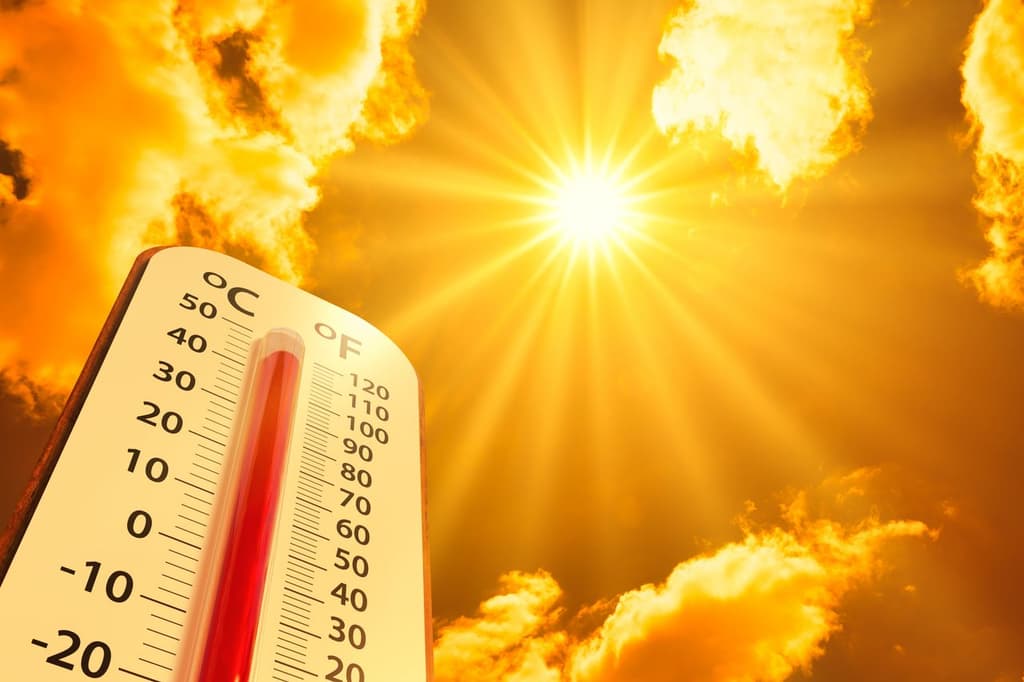
Recent El Niño intensification in the tropical Pacific, with Niño 3.4 anomalies climbing above +1.5°C, represents the dominant near-term driver elevating trader-implied odds for August 2026 global surface temperature anomalies clustered near 1.34–1.45°C above the 1850–1900 baseline. Official monitoring from NOAA and Copernicus shows July 2026 tying prior record warmth at roughly 1.18°C above the 20th-century average, with ocean heat content sustaining high values into August amid developing positive Indian Ocean Dipole conditions. Long-term anthropogenic forcing underpins the elevated baseline, while short-term atmospheric variability and forecast model spread around peak El Niño timing create the narrow probability margins across bins. Updated seasonal outlooks and early August observational data will refine resolution thresholds in coming weeks.
基於Polymarket數據的AI實驗性摘要。這不是交易建議,也不影響該市場的結算方式。 · 更新於2026年8月溫度升高( ºC ) (更高)
2026年8月溫度升高( ºC ) (更高)
1.30–1.33ºC 40%
1.42–1.45ºC 40%
1.34–1.37ºC 39%
1.38–1.41ºC 39%
<1.30ºC
25%
1.30–1.33ºC
40%
1.34–1.37ºC
39%
1.38–1.41ºC
39%
1.42–1.45ºC
40%
>1.45ºC
39%
1.30–1.33ºC 40%
1.42–1.45ºC 40%
1.34–1.37ºC 39%
1.38–1.41ºC 39%
<1.30ºC
25%
1.30–1.33ºC
40%
1.34–1.37ºC
39%
1.38–1.41ºC
39%
1.42–1.45ºC
40%
>1.45ºC
39%
An anomaly within a named bracket for August 2026 is necessary and sufficient to resolve this market immediately once the data becomes available, regardless of whether the figure for August 2026 is later revised.
The primary resolution source for this market will be the figure found in the table titled "GLOBAL Land-Ocean Temperature Index in 0.01 degrees Celsius" under the column "Aug" in the row "2026" (https://data.giss.nasa.gov/gistemp/tabledata_v4/GLB.Ts+dSST.txt).
If NASA’s “Global Temperature Index” is rendered permanently unavailable, other information from NASA may be used.
If no information for August 2026 is provided by NASA by October 1, 2026, 11:59 PM ET, this market will resolve to the lowest range bracket.
市場開放時間: Aug 14, 2026, 2:30 PM ET
Resolver
0x69c47De9D...An anomaly within a named bracket for August 2026 is necessary and sufficient to resolve this market immediately once the data becomes available, regardless of whether the figure for August 2026 is later revised.
The primary resolution source for this market will be the figure found in the table titled "GLOBAL Land-Ocean Temperature Index in 0.01 degrees Celsius" under the column "Aug" in the row "2026" (https://data.giss.nasa.gov/gistemp/tabledata_v4/GLB.Ts+dSST.txt).
If NASA’s “Global Temperature Index” is rendered permanently unavailable, other information from NASA may be used.
If no information for August 2026 is provided by NASA by October 1, 2026, 11:59 PM ET, this market will resolve to the lowest range bracket.
Resolver
0x69c47De9D...Recent El Niño intensification in the tropical Pacific, with Niño 3.4 anomalies climbing above +1.5°C, represents the dominant near-term driver elevating trader-implied odds for August 2026 global surface temperature anomalies clustered near 1.34–1.45°C above the 1850–1900 baseline. Official monitoring from NOAA and Copernicus shows July 2026 tying prior record warmth at roughly 1.18°C above the 20th-century average, with ocean heat content sustaining high values into August amid developing positive Indian Ocean Dipole conditions. Long-term anthropogenic forcing underpins the elevated baseline, while short-term atmospheric variability and forecast model spread around peak El Niño timing create the narrow probability margins across bins. Updated seasonal outlooks and early August observational data will refine resolution thresholds in coming weeks.
基於Polymarket數據的AI實驗性摘要。這不是交易建議,也不影響該市場的結算方式。 · 更新於
警惕外部連結哦。
警惕外部連結哦。
Frequently Asked Questions