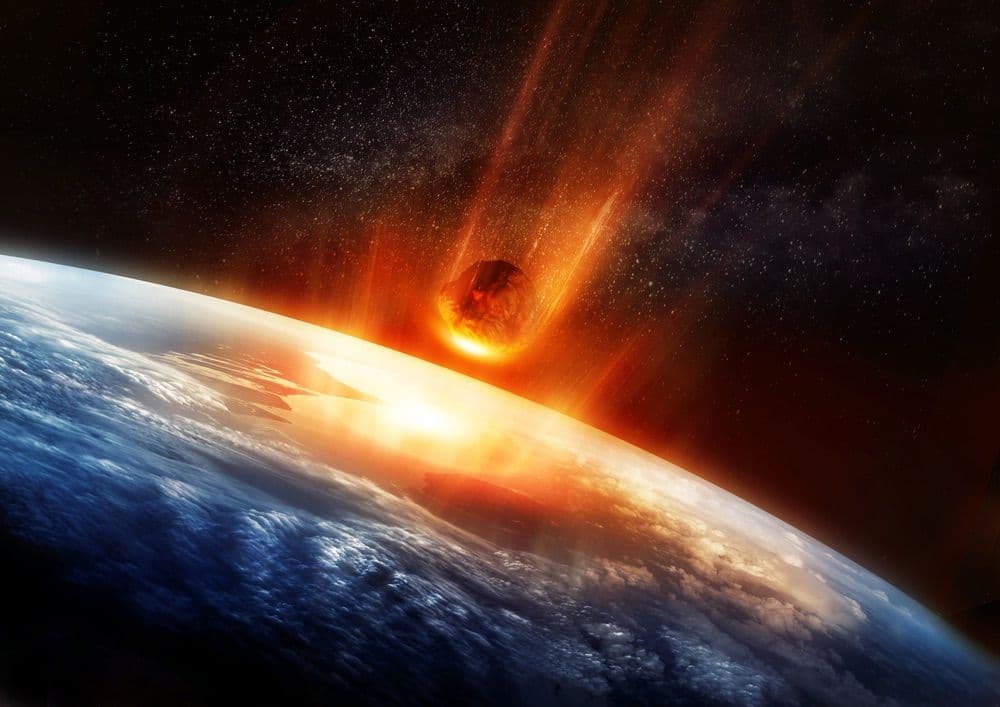
icon for Major meteor strike (10kt+) in 2026?

Major meteor strike (10kt+) in 2026?

icon for Major meteor strike (10kt+) in 2026?

Major meteor strike (10kt+) in 2026?

Dez. 31

Dez. 31

14% Chance
Polymarket

$171,993 Vol.

14% Chance
Polymarket

$171,993 Vol.

This market will resolve to "Yes" if a natural meteoroid (bolide) explodes in Earth's atmosphere with a total impact energy greater than or equal to 10 kilotons of TNT equivalent between January 1 and December 31, 2026, 11:59 PM ET. Otherwise, this market will resolve to “No”. The object must be classified as a natural meteoroid; events involving artificial objects or reentry vehicles do not qualify. The primary resolution source will be the NASA JPL Fireball and Bolide Data repository: https://cneos.jpl.nasa.gov/fireballs/. The relevant field for determining impact energy is the “Impact Energy (kt)” column. If this dataset has not been updated to include all relevant dates by February 28, 2027, or if the NASA JPL Fireball and Bolide Data repository becomes permanently unavailable, this market may resolve based on a consensus of credible sources including the European Space Agency (ESA), the International Asteroid Warning Network (IAWN), the U.S. Department of Defense, or credible reporting of a scientific consensus, such as a NASA press release.No catalogued near-Earth objects large enough to deliver a 10 kt or greater airburst remain on collision trajectories for 2026, according to NASA’s CNEOS and ESA monitoring. Recent fireball activity, including the March Ohio event releasing roughly 0.25 kt and smaller Massachusetts and Houston incidents, has stayed well below the threshold despite a statistically notable rise in eyewitness reports. That surge reflects improved detection networks and seasonal “fireball season” patterns rather than elevated hazard. Historical records show 10 kt-class impacts occur on decadal rather than annual timescales for meter-scale objects, keeping trader consensus heavily weighted toward “No.” Ongoing surveys could still reveal previously undetected small impactors before year-end, yet current orbital data and mid-year timing leave little room for a reversal.

This market will resolve to "Yes" if a natural meteoroid (bolide) explodes in Earth's atmosphere with a total impact energy greater than or equal to 10 kilotons of TNT equivalent between January 1 and December 31, 2026, 11:59 PM ET. Otherwise, this market will resolve to “No”.

The object must be classified as a natural meteoroid; events involving artificial objects or reentry vehicles do not qualify.

The primary resolution source will be the NASA JPL Fireball and Bolide Data repository: https://cneos.jpl.nasa.gov/fireballs/. The relevant field for determining impact energy is the “Impact Energy (kt)” column. If this dataset has not been updated to include all relevant dates by February 28, 2027, or if the NASA JPL Fireball and Bolide Data repository becomes permanently unavailable, this market may resolve based on a consensus of credible sources including the European Space Agency (ESA), the International Asteroid Warning Network (IAWN), the U.S. Department of Defense, or credible reporting of a scientific consensus, such as a NASA press release.
Volumen
$171,993
Enddatum
31. Dez. 2026
Markt eröffnet
Dec 31, 2025, 1:18 PM ET
This market will resolve to "Yes" if a natural meteoroid (bolide) explodes in Earth's atmosphere with a total impact energy greater than or equal to 10 kilotons of TNT equivalent between January 1 and December 31, 2026, 11:59 PM ET. Otherwise, this market will resolve to “No”. The object must be classified as a natural meteoroid; events involving artificial objects or reentry vehicles do not qualify. The primary resolution source will be the NASA JPL Fireball and Bolide Data repository: https://cneos.jpl.nasa.gov/fireballs/. The relevant field for determining impact energy is the “Impact Energy (kt)” column. If this dataset has not been updated to include all relevant dates by February 28, 2027, or if the NASA JPL Fireball and Bolide Data repository becomes permanently unavailable, this market may resolve based on a consensus of credible sources including the European Space Agency (ESA), the International Asteroid Warning Network (IAWN), the U.S. Department of Defense, or credible reporting of a scientific consensus, such as a NASA press release.
This market will resolve to "Yes" if a natural meteoroid (bolide) explodes in Earth's atmosphere with a total impact energy greater than or equal to 10 kilotons of TNT equivalent between January 1 and December 31, 2026, 11:59 PM ET. Otherwise, this market will resolve to “No”. The object must be classified as a natural meteoroid; events involving artificial objects or reentry vehicles do not qualify. The primary resolution source will be the NASA JPL Fireball and Bolide Data repository: https://cneos.jpl.nasa.gov/fireballs/. The relevant field for determining impact energy is the “Impact Energy (kt)” column. If this dataset has not been updated to include all relevant dates by February 28, 2027, or if the NASA JPL Fireball and Bolide Data repository becomes permanently unavailable, this market may resolve based on a consensus of credible sources including the European Space Agency (ESA), the International Asteroid Warning Network (IAWN), the U.S. Department of Defense, or credible reporting of a scientific consensus, such as a NASA press release.No catalogued near-Earth objects large enough to deliver a 10 kt or greater airburst remain on collision trajectories for 2026, according to NASA’s CNEOS and ESA monitoring. Recent fireball activity, including the March Ohio event releasing roughly 0.25 kt and smaller Massachusetts and Houston incidents, has stayed well below the threshold despite a statistically notable rise in eyewitness reports. That surge reflects improved detection networks and seasonal “fireball season” patterns rather than elevated hazard. Historical records show 10 kt-class impacts occur on decadal rather than annual timescales for meter-scale objects, keeping trader consensus heavily weighted toward “No.” Ongoing surveys could still reveal previously undetected small impactors before year-end, yet current orbital data and mid-year timing leave little room for a reversal.

This market will resolve to "Yes" if a natural meteoroid (bolide) explodes in Earth's atmosphere with a total impact energy greater than or equal to 10 kilotons of TNT equivalent between January 1 and December 31, 2026, 11:59 PM ET. Otherwise, this market will resolve to “No”.

The object must be classified as a natural meteoroid; events involving artificial objects or reentry vehicles do not qualify.

The primary resolution source will be the NASA JPL Fireball and Bolide Data repository: https://cneos.jpl.nasa.gov/fireballs/. The relevant field for determining impact energy is the “Impact Energy (kt)” column. If this dataset has not been updated to include all relevant dates by February 28, 2027, or if the NASA JPL Fireball and Bolide Data repository becomes permanently unavailable, this market may resolve based on a consensus of credible sources including the European Space Agency (ESA), the International Asteroid Warning Network (IAWN), the U.S. Department of Defense, or credible reporting of a scientific consensus, such as a NASA press release.
Volumen
$171,993
Enddatum
31. Dez. 2026
Markt eröffnet
Dec 31, 2025, 1:18 PM ET
This market will resolve to "Yes" if a natural meteoroid (bolide) explodes in Earth's atmosphere with a total impact energy greater than or equal to 10 kilotons of TNT equivalent between January 1 and December 31, 2026, 11:59 PM ET. Otherwise, this market will resolve to “No”. The object must be classified as a natural meteoroid; events involving artificial objects or reentry vehicles do not qualify. The primary resolution source will be the NASA JPL Fireball and Bolide Data repository: https://cneos.jpl.nasa.gov/fireballs/. The relevant field for determining impact energy is the “Impact Energy (kt)” column. If this dataset has not been updated to include all relevant dates by February 28, 2027, or if the NASA JPL Fireball and Bolide Data repository becomes permanently unavailable, this market may resolve based on a consensus of credible sources including the European Space Agency (ESA), the International Asteroid Warning Network (IAWN), the U.S. Department of Defense, or credible reporting of a scientific consensus, such as a NASA press release.

Vorsicht bei externen Links.

Häufig gestellte Fragen

„Major meteor strike (10kt+) in 2026?" ist ein Prognosemarkt auf Polymarket, auf dem Händler „Ja"- oder „Nein"-Anteile kaufen und verkaufen, je nachdem, ob sie glauben, dass dieses Ereignis eintreten wird. Die aktuelle Wahrscheinlichkeit laut Community liegt bei 14% für „Yes". Wird „Ja" beispielsweise bei 14¢ gehandelt, schätzt der Markt die Wahrscheinlichkeit des Eintretens auf 14%. Diese Quoten ändern sich laufend, wenn Händler auf neue Entwicklungen und Informationen reagieren. Anteile am richtigen Ergebnis können bei Marktauflösung für jeweils $1 eingelöst werden.

Stand heute hat „Major meteor strike (10kt+) in 2026?" ein Gesamthandelsvolumen von $172K generiert, seit der Markt am Dec 31, 2025 gestartet wurde. Dieses Aktivitätsniveau spiegelt starkes Engagement der Polymarket-Community wider und stellt sicher, dass die aktuellen Quoten von einem breiten Pool an Marktteilnehmern geprägt werden. Sie können Live-Preisbewegungen verfolgen und direkt auf dieser Seite auf jedes Ergebnis handeln.

Um auf „Major meteor strike (10kt+) in 2026?" zu handeln, wählen Sie einfach, ob Sie glauben, dass die Antwort „Ja" oder „Nein" lautet. Jede Seite hat einen aktuellen Preis, der die implizierte Wahrscheinlichkeit des Marktes widerspiegelt. Geben Sie Ihren Betrag ein und klicken Sie auf „Handeln". Wenn Sie „Ja"-Anteile kaufen und das Ergebnis als „Ja" aufgelöst wird, zahlt jeder Anteil $1 aus. Wird es als „Nein" aufgelöst, zahlen Ihre „Ja"-Anteile $0. Sie können Ihre Anteile auch jederzeit vor der Auflösung verkaufen, um einen Gewinn zu sichern oder einen Verlust zu begrenzen.

Die aktuelle Wahrscheinlichkeit für „Major meteor strike (10kt+) in 2026?" liegt bei 14% für „Yes". Das bedeutet, die Polymarket-Community glaubt derzeit, dass eine Wahrscheinlichkeit von 14% besteht, dass dieses Ereignis eintritt. Diese Quoten werden in Echtzeit auf Basis tatsächlicher Handelsgeschäfte aktualisiert und liefern ein ständig aktualisiertes Signal dessen, was der Markt erwartet.

Die Auflösungsregeln für „Major meteor strike (10kt+) in 2026?" definieren genau, was passieren muss, damit jedes Ergebnis als Gewinner erklärt wird – einschließlich der offiziellen Datenquellen zur Bestimmung des Ergebnisses. Sie können die vollständigen Auflösungskriterien im Abschnitt „Regeln" auf dieser Seite über den Kommentaren einsehen. Wir empfehlen, die Regeln vor dem Handeln sorgfältig zu lesen, da sie die genauen Bedingungen, Sonderfälle und Quellen festlegen.