
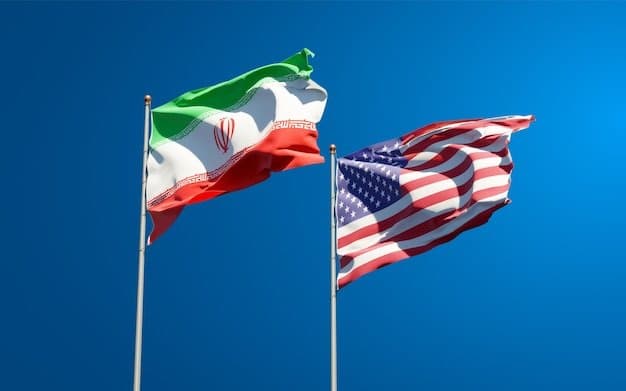
Recent US-Iran mediated talks on the UN General Assembly sidelines in New York have lifted the implied probability for a US venue to 34.5 percent, reflecting trader focus on follow-up momentum after envoys Steve Witkoff and Jared Kushner met Iranian Foreign Minister Abbas Araghchi. The wide dispersion across neutral or regional options—Egypt, Oman, Qatar, Switzerland, and others—stems from longstanding reliance on third-party hosts for sensitive diplomacy amid active regional tensions. Historical precedents in Oman and Switzerland underscore preferences for established, low-profile sites that facilitate mediation by Qatar or Pakistan. Consolidation behind one location would likely require clearer signals on timing, agenda priorities such as sanctions relief or the Strait of Hormuz, or a high-level commitment before the December 31 window closes.
Experimental AI-generated summary referencing Polymarket data. This is not trading advice and plays no role in how this market resolves. · UpdatedUSA 34%
Egypt 13%
No Meeting by December 31 10%
Qatar 8%
$11,491 Vol.
$11,491 Vol.
USA
34%
Egypt
13%
No Meeting by December 31
10%
Qatar
21%
Oman
7%
Switzerland
6%
Austria
5%
UAE
4%
Iraq
4%
Pakistan
4%
Other - Europe
3%
Saudi Arabia
3%
Other
3%
Turkey
3%
Italy
3%
Other - Middle East/North Africa
2%
Iran
12%
Kazakhstan
2%
Russia
1%
USA 34%
Egypt 13%
No Meeting by December 31 10%
Qatar 8%
$11,491 Vol.
$11,491 Vol.
USA
34%
Egypt
13%
No Meeting by December 31
10%
Qatar
21%
Oman
7%
Switzerland
6%
Austria
5%
UAE
4%
Iraq
4%
Pakistan
4%
Other - Europe
3%
Saudi Arabia
3%
Other
3%
Turkey
3%
Italy
3%
Other - Middle East/North Africa
2%
Iran
12%
Kazakhstan
2%
Russia
1%
This market will resolve according to the country in which the next direct or indirect senior-level diplomatic meeting between the United States and Iran begins by December 31, 2026, 11:59 PM ET.
A diplomatic meeting occurs when representatives of both listed countries who are acting in an official capacity and are authorized to engage in diplomacy on behalf of their respective governments or governing authorities deliberately meet for the purpose of diplomacy or negotiation. A qualifying meeting need not result in any agreement, joint statement, or further engagement.
A diplomatic meeting is senior-level if each listed entity is represented by a head of state, a head of government, or a vice president; a foreign minister; a minister of cabinet rank; the secretary or head of a national security council; the presiding officer of a national legislature; a special envoy; or another individual designated by the head of state or head of government to conduct diplomatic negotiations on their behalf. Individuals authorized only for technical, implementation, monitoring, staff-level, preparatory, or working-group-level talks will not be considered designated to conduct diplomatic negotiations on behalf of the head of state or head of government. This definition includes, but is not limited to, all of the following individuals: for the United States, Donald Trump, JD Vance, Marco Rubio, Scott Bessent, Steve Witkoff and Jared Kushner; and for Iran, Mojtaba Khamenei, Masoud Pezeshkian, Abbas Araghchi and Mohammad Bagher Ghalibaf. In each case, a qualifying representative must participate in the meeting.
A direct meeting refers to a diplomatic meeting where the representatives of both countries directly interact with each other in person. Meetings conducted through translators qualify, provided direct, face-to-face communication occurs. An indirect meeting refers to a meeting conducted indirectly through designated mediators or facilitators. A qualifying indirect meeting must meet both of the following criteria (i) the designated intermediaries act with the knowledge and authorization of both entities; (ii) representatives of both entities are physically present in the same facility, venue, or city as part of a single organized round of talks convened for the purpose of diplomatic engagement, with the intermediary conveying communications between the representatives or delegations on the same day. “The same day” means the same calendar day local time at the meeting location.
Sessions, proceedings, or convenings of standing international organizations, treaty bodies, or recurring multilateral summits or conferences (e.g., the United Nations General Assembly, G7, and G20 summits) do not qualify, unless a qualifying and deliberate diplomatic meeting between representatives of the listed countries is separately held alongside such a convening.
The following do not qualify as either a direct or indirect diplomatic meeting: chance encounters; standalone exchanges limited to greetings, courtesies, or photo opportunities; meetings conducted remotely, by telephone, or by any other means where the relevant representatives are not physically present at the same facility, venue, or city on the same day; discussions involving persons not authorized to engage in diplomacy or negotiation on behalf of their respective governments.
If a qualifying senior-level diplomatic meeting occurs in more than one country, resolution will be based on the country where the first qualifying senior-level diplomatic session begins.
If the next qualifying senior-level diplomatic meeting begins in any country in the Middle East or North Africa other than the listed options, this market will resolve to “Other - Middle East/North Africa.”
If the next qualifying senior-level diplomatic meeting begins in any country in Europe other than the listed options, this market will resolve to “Other - Europe.”
For purposes of this market, countries’ regions will be determined based on the U.S. State Department’s regional classifications in the “Countries and Areas List” (https://www.state.gov/countries-and-areas-list). Any country classified as part of “Europe and Eurasia” will be considered to be in Europe. Any country classified as part of “Near East (Middle East and North Africa)” will be considered to be in the Middle East/North Africa.
If the next qualifying senior-level diplomatic meeting begins in any unlisted country that is not classified in either specified region, this market will resolve to “Other.”
If no qualifying senior-level diplomatic meeting begins by December 31, 2026, 11:59 PM ET, this market will resolve to “No Meeting by December 31.”
The resolution sources for this market will be official information from the governments of the United States and Iran, and a consensus of credible reporting.
Market Opened: Sep 22, 2026, 7:05 PM ET
Resolver
0x69c47De9D...This market will resolve according to the country in which the next direct or indirect senior-level diplomatic meeting between the United States and Iran begins by December 31, 2026, 11:59 PM ET.
A diplomatic meeting occurs when representatives of both listed countries who are acting in an official capacity and are authorized to engage in diplomacy on behalf of their respective governments or governing authorities deliberately meet for the purpose of diplomacy or negotiation. A qualifying meeting need not result in any agreement, joint statement, or further engagement.
A diplomatic meeting is senior-level if each listed entity is represented by a head of state, a head of government, or a vice president; a foreign minister; a minister of cabinet rank; the secretary or head of a national security council; the presiding officer of a national legislature; a special envoy; or another individual designated by the head of state or head of government to conduct diplomatic negotiations on their behalf. Individuals authorized only for technical, implementation, monitoring, staff-level, preparatory, or working-group-level talks will not be considered designated to conduct diplomatic negotiations on behalf of the head of state or head of government. This definition includes, but is not limited to, all of the following individuals: for the United States, Donald Trump, JD Vance, Marco Rubio, Scott Bessent, Steve Witkoff and Jared Kushner; and for Iran, Mojtaba Khamenei, Masoud Pezeshkian, Abbas Araghchi and Mohammad Bagher Ghalibaf. In each case, a qualifying representative must participate in the meeting.
A direct meeting refers to a diplomatic meeting where the representatives of both countries directly interact with each other in person. Meetings conducted through translators qualify, provided direct, face-to-face communication occurs. An indirect meeting refers to a meeting conducted indirectly through designated mediators or facilitators. A qualifying indirect meeting must meet both of the following criteria (i) the designated intermediaries act with the knowledge and authorization of both entities; (ii) representatives of both entities are physically present in the same facility, venue, or city as part of a single organized round of talks convened for the purpose of diplomatic engagement, with the intermediary conveying communications between the representatives or delegations on the same day. “The same day” means the same calendar day local time at the meeting location.
Sessions, proceedings, or convenings of standing international organizations, treaty bodies, or recurring multilateral summits or conferences (e.g., the United Nations General Assembly, G7, and G20 summits) do not qualify, unless a qualifying and deliberate diplomatic meeting between representatives of the listed countries is separately held alongside such a convening.
The following do not qualify as either a direct or indirect diplomatic meeting: chance encounters; standalone exchanges limited to greetings, courtesies, or photo opportunities; meetings conducted remotely, by telephone, or by any other means where the relevant representatives are not physically present at the same facility, venue, or city on the same day; discussions involving persons not authorized to engage in diplomacy or negotiation on behalf of their respective governments.
If a qualifying senior-level diplomatic meeting occurs in more than one country, resolution will be based on the country where the first qualifying senior-level diplomatic session begins.
If the next qualifying senior-level diplomatic meeting begins in any country in the Middle East or North Africa other than the listed options, this market will resolve to “Other - Middle East/North Africa.”
If the next qualifying senior-level diplomatic meeting begins in any country in Europe other than the listed options, this market will resolve to “Other - Europe.”
For purposes of this market, countries’ regions will be determined based on the U.S. State Department’s regional classifications in the “Countries and Areas List” (https://www.state.gov/countries-and-areas-list). Any country classified as part of “Europe and Eurasia” will be considered to be in Europe. Any country classified as part of “Near East (Middle East and North Africa)” will be considered to be in the Middle East/North Africa.
If the next qualifying senior-level diplomatic meeting begins in any unlisted country that is not classified in either specified region, this market will resolve to “Other.”
If no qualifying senior-level diplomatic meeting begins by December 31, 2026, 11:59 PM ET, this market will resolve to “No Meeting by December 31.”
The resolution sources for this market will be official information from the governments of the United States and Iran, and a consensus of credible reporting.
Resolver
0x69c47De9D...Recent US-Iran mediated talks on the UN General Assembly sidelines in New York have lifted the implied probability for a US venue to 34.5 percent, reflecting trader focus on follow-up momentum after envoys Steve Witkoff and Jared Kushner met Iranian Foreign Minister Abbas Araghchi. The wide dispersion across neutral or regional options—Egypt, Oman, Qatar, Switzerland, and others—stems from longstanding reliance on third-party hosts for sensitive diplomacy amid active regional tensions. Historical precedents in Oman and Switzerland underscore preferences for established, low-profile sites that facilitate mediation by Qatar or Pakistan. Consolidation behind one location would likely require clearer signals on timing, agenda priorities such as sanctions relief or the Strait of Hormuz, or a high-level commitment before the December 31 window closes.
Experimental AI-generated summary referencing Polymarket data. This is not trading advice and plays no role in how this market resolves. · Updated

Beware of external links.
Beware of external links.
Frequently Asked Questions