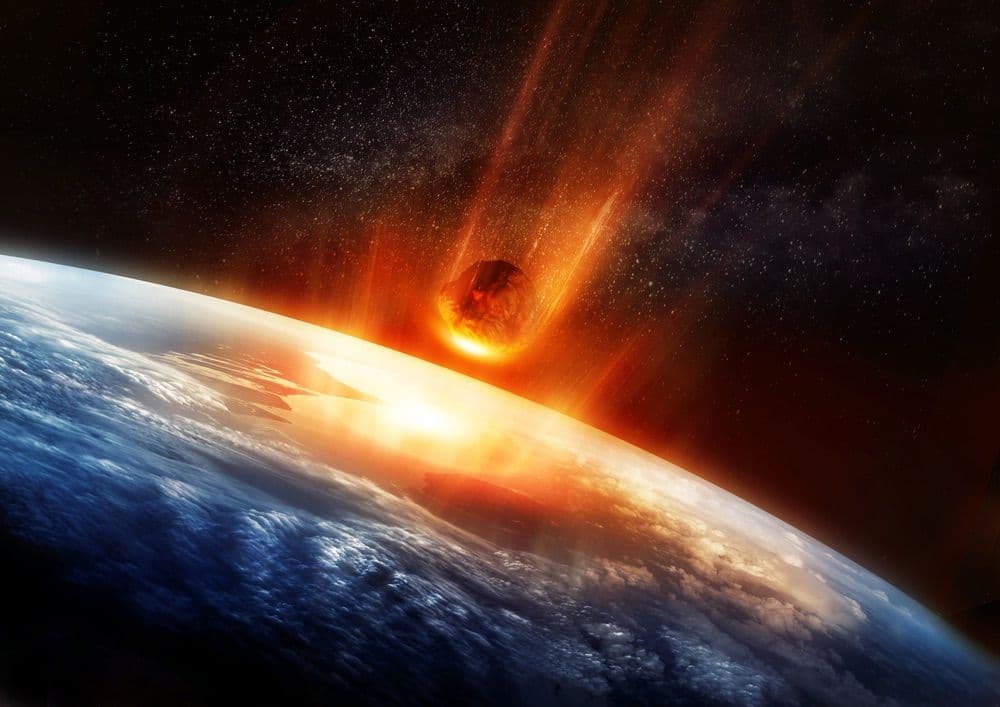
Extensive near-Earth object monitoring by NASA and international observatories drives the 98.7% market-implied probability against a 1-megaton meteor strike in 2026, as no cataloged asteroids or comets show collision trajectories matching that energy threshold. Continuous radar and optical surveys, combined with precise orbital modeling, have ruled out known threats well in advance, reflecting the low historical frequency of such events. While trader consensus remains near-certain, realistic variables include potential discovery of a previously undetected small body via new surveys or last-minute trajectory shifts from non-gravitational effects, though current detection capabilities make these scenarios highly improbable before year-end.
Résumé expérimental généré par IA à partir des données Polymarket. Ceci n'est pas un conseil de trading et ne joue aucun rôle dans la résolution de ce marché. · Mis à jour1 mégatonne de météorite en 2026 ?
1 mégatonne de météorite en 2026 ?
Oui
1% chance
$116,329 Vol.
$116,329 Vol.
31 déc. 2026
Oui
1% chance
$116,329 Vol.
$116,329 Vol.
31 déc. 2026
This market will resolve to "Yes" if a natural meteoroid (bolide) explodes in Earth's atmosphere with a total impact energy greater than or equal to 1 megaton (1000 kilotons) of TNT equivalent between January 1 and December 31, 2026, 11:59 PM ET. Otherwise, this market will resolve to “No”.
The object must be classified as a natural meteoroid; events involving artificial objects or reentry vehicles do not qualify.
The primary resolution source will be the NASA JPL Fireball and Bolide Data repository: https://cneos.jpl.nasa.gov/fireballs/. The relevant field for determining impact energy is the “Impact Energy (kt)” column. If this dataset has not been updated to include all relevant dates by February 28, 2027, or if the NASA JPL Fireball and Bolide Data repository becomes permanently unavailable, this market may resolve based on a consensus of credible sources including the European Space Agency (ESA), the International Asteroid Warning Network (IAWN), the U.S. Department of Defense, or credible reporting of a scientific consensus, such as a NASA press release.Extensive near-Earth object monitoring by NASA and international observatories drives the 98.7% market-implied probability against a 1-megaton meteor strike in 2026, as no cataloged asteroids or comets show collision trajectories matching that energy threshold. Continuous radar and optical surveys, combined with precise orbital modeling, have ruled out known threats well in advance, reflecting the low historical frequency of such events. While trader consensus remains near-certain, realistic variables include potential discovery of a previously undetected small body via new surveys or last-minute trajectory shifts from non-gravitational effects, though current detection capabilities make these scenarios highly improbable before year-end.
This market will resolve to "Yes" if a natural meteoroid (bolide) explodes in Earth's atmosphere with a total impact energy greater than or equal to 1 megaton (1000 kilotons) of TNT equivalent between January 1 and December 31, 2026, 11:59 PM ET. Otherwise, this market will resolve to “No”.
The object must be classified as a natural meteoroid; events involving artificial objects or reentry vehicles do not qualify.
The primary resolution source will be the NASA JPL Fireball and Bolide Data repository: https://cneos.jpl.nasa.gov/fireballs/. The relevant field for determining impact energy is the “Impact Energy (kt)” column. If this dataset has not been updated to include all relevant dates by February 28, 2027, or if the NASA JPL Fireball and Bolide Data repository becomes permanently unavailable, this market may resolve based on a consensus of credible sources including the European Space Agency (ESA), the International Asteroid Warning Network (IAWN), the U.S. Department of Defense, or credible reporting of a scientific consensus, such as a NASA press release.
The object must be classified as a natural meteoroid; events involving artificial objects or reentry vehicles do not qualify.
The primary resolution source will be the NASA JPL Fireball and Bolide Data repository: https://cneos.jpl.nasa.gov/fireballs/. The relevant field for determining impact energy is the “Impact Energy (kt)” column. If this dataset has not been updated to include all relevant dates by February 28, 2027, or if the NASA JPL Fireball and Bolide Data repository becomes permanently unavailable, this market may resolve based on a consensus of credible sources including the European Space Agency (ESA), the International Asteroid Warning Network (IAWN), the U.S. Department of Defense, or credible reporting of a scientific consensus, such as a NASA press release.
Marché ouvert : Jan 2, 2026, 2:24 PM ET
Volume
$116,329Date de fin
31 déc. 2026Marché ouvert
Jan 2, 2026, 2:24 PM ETResolver
0x65070BE91...This market will resolve to "Yes" if a natural meteoroid (bolide) explodes in Earth's atmosphere with a total impact energy greater than or equal to 1 megaton (1000 kilotons) of TNT equivalent between January 1 and December 31, 2026, 11:59 PM ET. Otherwise, this market will resolve to “No”.
The object must be classified as a natural meteoroid; events involving artificial objects or reentry vehicles do not qualify.
The primary resolution source will be the NASA JPL Fireball and Bolide Data repository: https://cneos.jpl.nasa.gov/fireballs/. The relevant field for determining impact energy is the “Impact Energy (kt)” column. If this dataset has not been updated to include all relevant dates by February 28, 2027, or if the NASA JPL Fireball and Bolide Data repository becomes permanently unavailable, this market may resolve based on a consensus of credible sources including the European Space Agency (ESA), the International Asteroid Warning Network (IAWN), the U.S. Department of Defense, or credible reporting of a scientific consensus, such as a NASA press release.Extensive near-Earth object monitoring by NASA and international observatories drives the 98.7% market-implied probability against a 1-megaton meteor strike in 2026, as no cataloged asteroids or comets show collision trajectories matching that energy threshold. Continuous radar and optical surveys, combined with precise orbital modeling, have ruled out known threats well in advance, reflecting the low historical frequency of such events. While trader consensus remains near-certain, realistic variables include potential discovery of a previously undetected small body via new surveys or last-minute trajectory shifts from non-gravitational effects, though current detection capabilities make these scenarios highly improbable before year-end.
This market will resolve to "Yes" if a natural meteoroid (bolide) explodes in Earth's atmosphere with a total impact energy greater than or equal to 1 megaton (1000 kilotons) of TNT equivalent between January 1 and December 31, 2026, 11:59 PM ET. Otherwise, this market will resolve to “No”.
The object must be classified as a natural meteoroid; events involving artificial objects or reentry vehicles do not qualify.
The primary resolution source will be the NASA JPL Fireball and Bolide Data repository: https://cneos.jpl.nasa.gov/fireballs/. The relevant field for determining impact energy is the “Impact Energy (kt)” column. If this dataset has not been updated to include all relevant dates by February 28, 2027, or if the NASA JPL Fireball and Bolide Data repository becomes permanently unavailable, this market may resolve based on a consensus of credible sources including the European Space Agency (ESA), the International Asteroid Warning Network (IAWN), the U.S. Department of Defense, or credible reporting of a scientific consensus, such as a NASA press release.
The object must be classified as a natural meteoroid; events involving artificial objects or reentry vehicles do not qualify.
The primary resolution source will be the NASA JPL Fireball and Bolide Data repository: https://cneos.jpl.nasa.gov/fireballs/. The relevant field for determining impact energy is the “Impact Energy (kt)” column. If this dataset has not been updated to include all relevant dates by February 28, 2027, or if the NASA JPL Fireball and Bolide Data repository becomes permanently unavailable, this market may resolve based on a consensus of credible sources including the European Space Agency (ESA), the International Asteroid Warning Network (IAWN), the U.S. Department of Defense, or credible reporting of a scientific consensus, such as a NASA press release.
Volume
$116,329Date de fin
31 déc. 2026Marché ouvert
Jan 2, 2026, 2:24 PM ETResolver
0x65070BE91...Extensive near-Earth object monitoring by NASA and international observatories drives the 98.7% market-implied probability against a 1-megaton meteor strike in 2026, as no cataloged asteroids or comets show collision trajectories matching that energy threshold. Continuous radar and optical surveys, combined with precise orbital modeling, have ruled out known threats well in advance, reflecting the low historical frequency of such events. While trader consensus remains near-certain, realistic variables include potential discovery of a previously undetected small body via new surveys or last-minute trajectory shifts from non-gravitational effects, though current detection capabilities make these scenarios highly improbable before year-end.
Résumé expérimental généré par IA à partir des données Polymarket. Ceci n'est pas un conseil de trading et ne joue aucun rôle dans la résolution de ce marché. · Mis à jour
Méfiez-vous des liens externes.
Méfiez-vous des liens externes.
Questions fréquentes